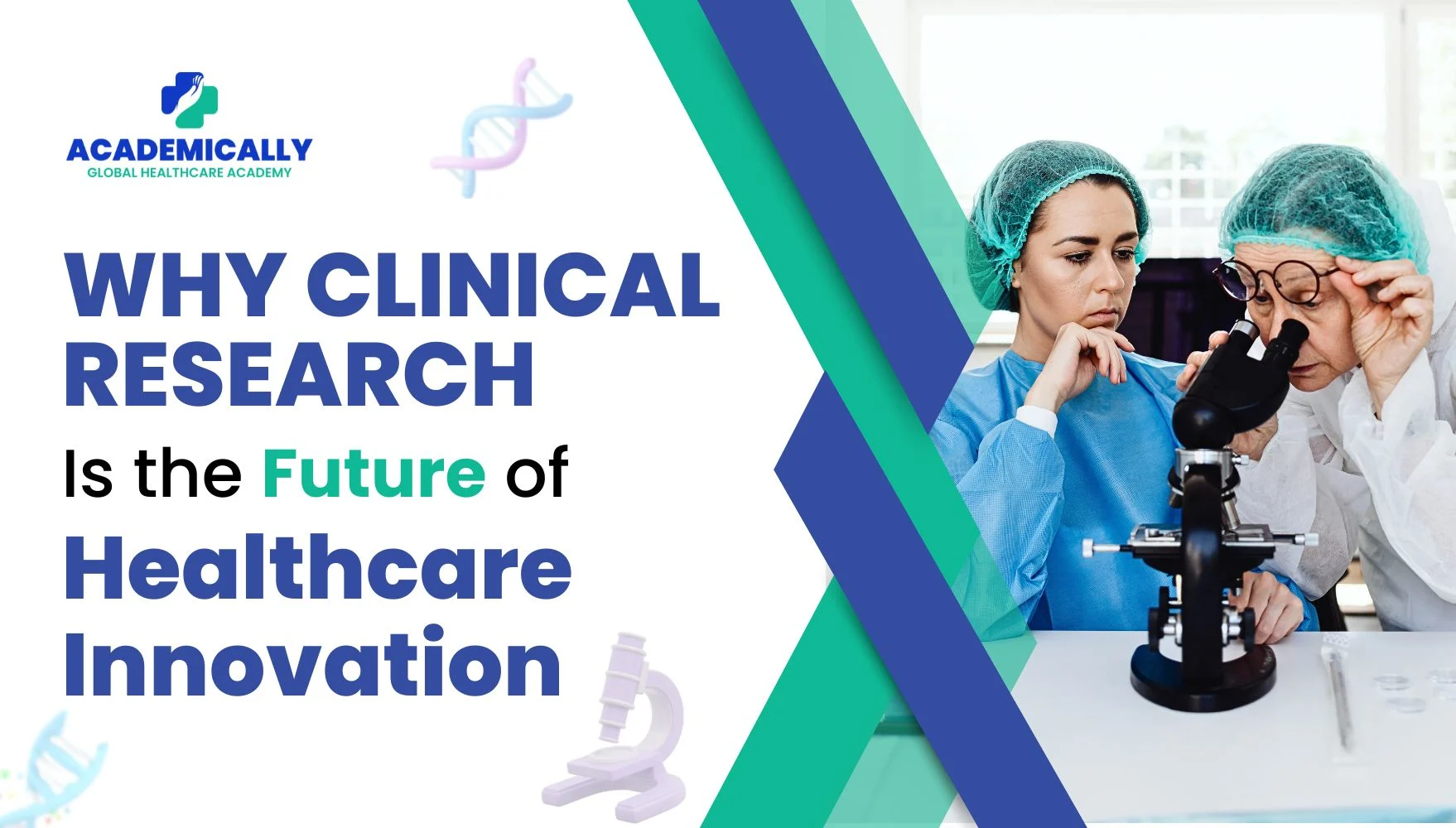
Healthcare is changing faster than ever before. New diseases emerge, old treatments lose effectiveness, and patients expect faster, safer, and more personalised care. In the middle of all this transformation, one force is reshaping medicine from the ground up: clinical research. It’s the engine that powers medical breakthroughs, drives innovation, and turns bold scientific ideas into life-saving realities.
If you’ve ever wondered why experts call clinical research the heartbeat of modern medicine, you’re in the right place. Let’s explore why Clinical Research is the Future of Healthcare Innovation and how it’s quietly building a healthier tomorrow for all of us.
Understanding Clinical Research
Clinical research is the structured process of studying health, diseases, treatments, and interventions to determine what works best for patients. It’s not just about testing new medicines; it’s about understanding human biology on a deeper level and turning insights into real solutions.
At its heart, clinical research focuses on:
- Improving patient outcomes
- Advancing medical knowledge
- Ensuring treatment safety and effectiveness
It introduces a cycle where innovation grows through continuous learning and validation.
Evolution of Clinical Studies Over Time
Decades ago, research was slow and reserved for large academic institutions. Today, tech companies, hospitals, startups, and even patient communities are contributing to study designs and innovation.
Milestones in Medical Advancements
| Medical Breakthrough | Year | Impact on Healthcare |
| Penicillin | 1928 | Revolutionized infection treatment |
| Polio Vaccine | 1955 | Nearly eradicated polio worldwide |
| Human Genome Mapping | 2003 | Opened doors to precision medicine |
| mRNA COVID-19 Vaccines | 2020 | Fastest vaccine development in history |
The Role of Data-Driven Medicine in Shaping the Future
AI-driven algorithms, machine learning, big data analytics, and real-world evidence have become essential tools in modern research. These technologies allow scientists to:
- Predict treatment responses
- Shorten trial timelines
- Identify rare biomarkers
- Reduce research costs
Data-driven medicine is no longer optional—it’s the new gold standard.
Real-World Evidence and Its Impact
Wearables, home-monitoring devices, and digital health platforms allow researchers to gather accurate patient data in real time. This means trials no longer depend solely on clinic visits. The result? Faster insights, better safety monitoring, and more reliable outcomes.
Why Clinical Research Is the Future of Healthcare Innovation
Now let’s explore the heart of the matter, why clinical research holds the key to a healthier, more technologically advanced tomorrow.
1. It Bridges the Gap Between Lab Discoveries and Real Patient Care
Without research, discoveries would sit on shelves. Clinical studies turn laboratory concepts into real-world treatments that save or improve lives.
2. It Enables Personalized Treatment Plans
Precision medicine, treatments tailored to DNA, lifestyle, and medical history, is only possible because of ongoing clinical research. This approach:
- Improves treatment success
- Reduces side effects
- Helps patients receive targeted therapies
Do you want to become a part of this? Then, become a Certified Clinical Research Professional in just 4 months by enrolling in Academically’s Post Graduate Certificate in Clinical Research Course.
Innovation Through Collaboration
Healthcare innovation thrives when multiple stakeholders come together. Pharmaceutical companies, universities, biotech firms, and government agencies now co-develop treatments faster than ever.
Patient-Centric Trials: The New Normal
Remote digital trials remove barriers like travel, time, and cost. Patients can participate safely from home, increasing diversity and inclusion.
Diversity Matters
| Group | Historic Participation | Target Participation |
| Women | 38% | 50%+ |
| Elderly | 12% | 30%+ |
| Minority Groups | 9% | 40%+ |
Economic Impact of Clinical Research
Clinical research doesn’t just save lives, it boosts economies.
Key Contributions Include:
- Job creation
- Lower hospitalization costs
- New market opportunities
- Growth in biotechnology hubs
Technology Transforming Clinical Research
Advancements like AI, 3D organ printing, robotics, and digital twins are dramatically accelerating medical discovery.
Wearables & Remote Monitoring
Smartwatches, biosensors, and health apps generate continuous health data, making trials more accurate and accessible.
Digital Twins & Simulation Models
Scientists can now simulate human organs or systems digitally, reducing trial risk and improving drug testing accuracy.
Common Challenges in Clinical Research
Despite all the progress, challenges remain:
- Slow patient recruitment
- High development costs
- Complex data management
- Regulatory delays
Solutions and Future Opportunities
AI-based recruitment tools, decentralized trials, and adaptive study designs are actively solving these issues.
Final Thoughts
Clinical research isn’t just part of healthcare; it is the future of healthcare innovation. From AI-powered discoveries to patient-centered trials and precision medicine, research is propelling humanity toward faster cures, smarter treatments, and a healthier world. The transformation has already begun and we’re only scratching the surface of what’s possible.
If you are curious to know more and have lots of questions to ask before making up your mind, then reach out to us. The experts at Academically will help you figure out the career that’s right for you.