Every year more than 20,000-30,000 medical aspirants apply for USMLE in the hope of getting into the most coveted US medical system. But it is very competitive and often candidates are not aware how to prepare for it. Preparing for the USMLE 2026 requires far more than self-study. With evolving exam patterns, emphasis on clinical reasoning, and increasing competition, a structured, mentor-driven preparation strategy is critical for success. In this blog, we have outlined a systematic, coaching-oriented roadmap for USMLE aspirants targeting Step 1, Step 2 CK, and Step 3.
Understand the USMLE Exam Structure
The United States Medical Licensing Examination (USMLE) consists of three steps:
- Step 1 assesses foundational medical sciences and application of concepts
- Step 2 CK (Clinical Knowledge) tests clinical reasoning and patient-centred decision-making
- Step 3 evaluates readiness for independent medical practice in the US
Experts advise aspirants preparing for USMLE 2026 must focus on conceptual clarity, integration of knowledge and exam-oriented clinical thinking, rather than rote learning.
Build a Long-Term Preparation Timeline
USMLE Step 1
- Recommended preparation duration: 5–6 months
- Focus areas:
- Core medical sciences
- Pathophysiology-based understanding
- Integrated systems approach
- Coaching advantage:
- Faculty-guided concept building
- Structured revision cycles
- Continuous performance tracking
USMLE Step 2 CK
- Recommended preparation duration: 4–5 months
- Focus areas:
- Clinical reasoning
- Diagnosis and management pathways
- Case-based learning
- Coaching advantage:
- Specialty-wise clinical frameworks
- Real-world case discussions
- Mentored clinical decision-making practice
USMLE Step 3
- Recommended preparation duration: 2–3 months
- Focus areas:
- Patient management
- Ethics, safety, and continuity of care
- Coaching advantage:
- Case simulations
- Decision-making under time constraints
- Guided exam strategy sessions
Adopt a Coaching-First Study Strategy
Phase 1: Concept Foundation
- Faculty-led lectures covering high-yield concepts
- System-wise integration of subjects
- Emphasis on why and how, not just what
Phase 2: Application & Practice
- Daily exam-style questions
- Structured review of mistakes
- Guided interpretation of clinical scenarios
Phase 3: Assessment & Refinement
- Regular full-length mock exams
- Performance analytics to identify weak areas
- Personalized remediation plans
A coaching environment ensures discipline, accountability, and clarity, which self-study alone often lacks. A structured USMLE Exam Preparation Course, led by experienced instructors, provides a well-framed curriculum, comprehensive materials, AI-based mock test and personalised support. The sole aim of a well-structured course is to help globally trained doctors ace the exam with a tailored study plan and foolproof access to qualified physician guidance.
Daily Study Framework to Crack USMLE 2026
A typical high-performing study day must include:
- Concept session (faculty-guided)
- Clinical application practice
- Error analysis and discussion
- Active recall and revision
- Mentor check-ins or progress reviews
This structured format prevents burnout and increases retention.
Importance of Mentorship in USMLE Preparation
USMLE success is not just about knowledge; it is about strategy.
With guided coaching, students benefit from:
- Exam-oriented thinking
- Personalised study plans
- Timely course correction
- Motivation and psychological support
- Insights from experienced mentors familiar with USMLE expectations
Books you need for USMLE Preparation 2026
Bookmark the book suggestions our experts have given below. Ensure you do not mug up, but understand each and every concept from these books before appearing in the exam.
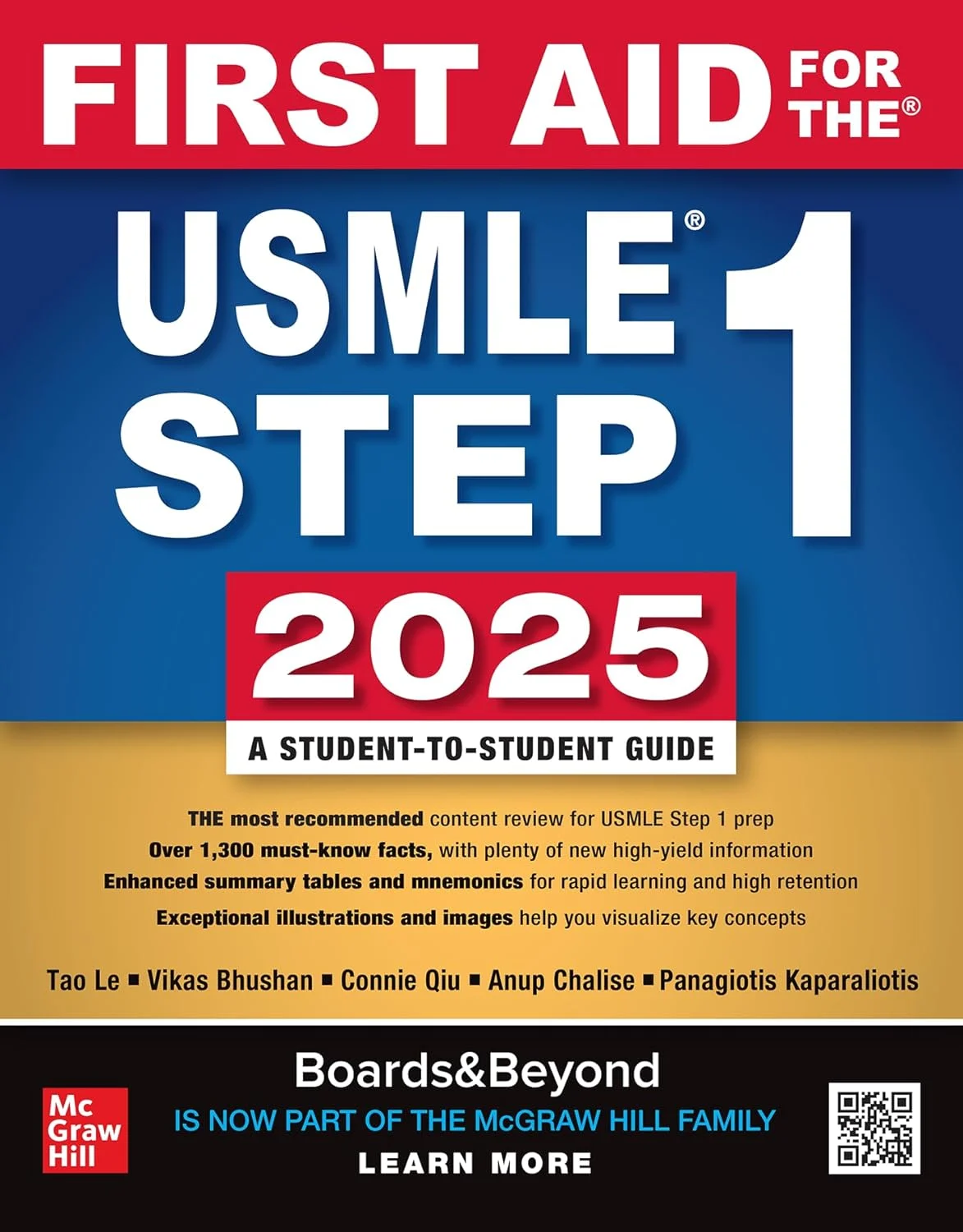
First Aid for the USMLE Step 1
An essential blueprint for the USMLE Step 1 exam. Written by high-scoring students and reviewed by top faculty, the text is high-yield, relevant, and accurate. The new edition features 1,000 color clinical images (including more diverse patients), 1,300+ high-yield facts and mnemonics organized by principles and organ system, and valuable test-taking advice. This indispensable resource's enduring success speaks for itself.
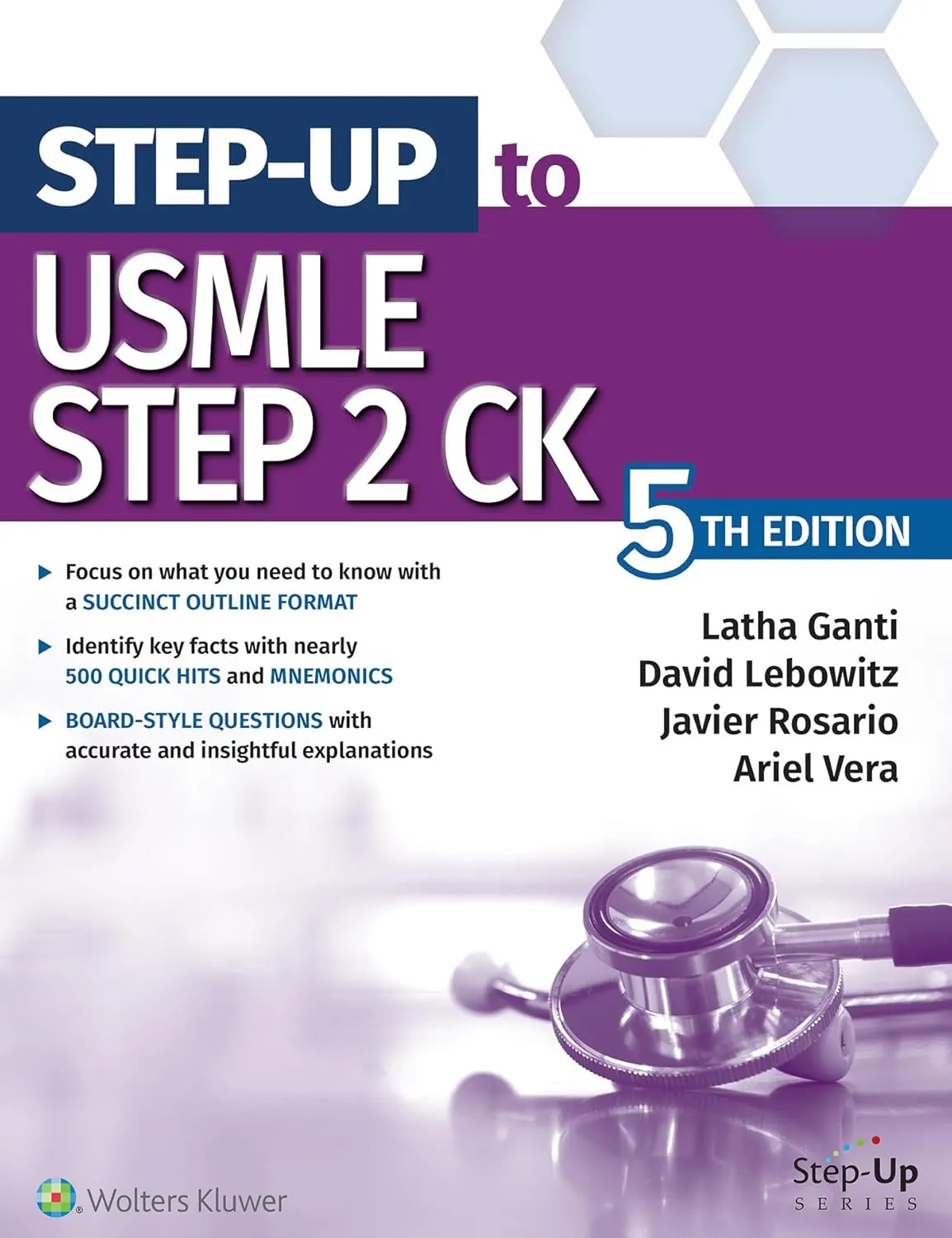
Step-Up to USMLE Step 2 CK
The updated fifth edition of Step-Up to USMLE Step 2 CK is a concise, high-yield, system-based review designed for busy medical students to ace the USMLE Step 2 CK and confidently transition to clinical practice. It features Step 2 practice questions with explanations for each chapter, reflecting the current exam. The book uses a Step-Up outline approach, full-colour illustrations, "Quick Hits," and mnemonics to clarify essential information on common diseases and disorders (causes, risk factors, history/physical exam, labs/radiology, treatment, complications). "Next Steps" margin notes offer practical patient workup tips, and algorithms demonstrate clinical reasoning. An interactive, searchable eBook is also available.
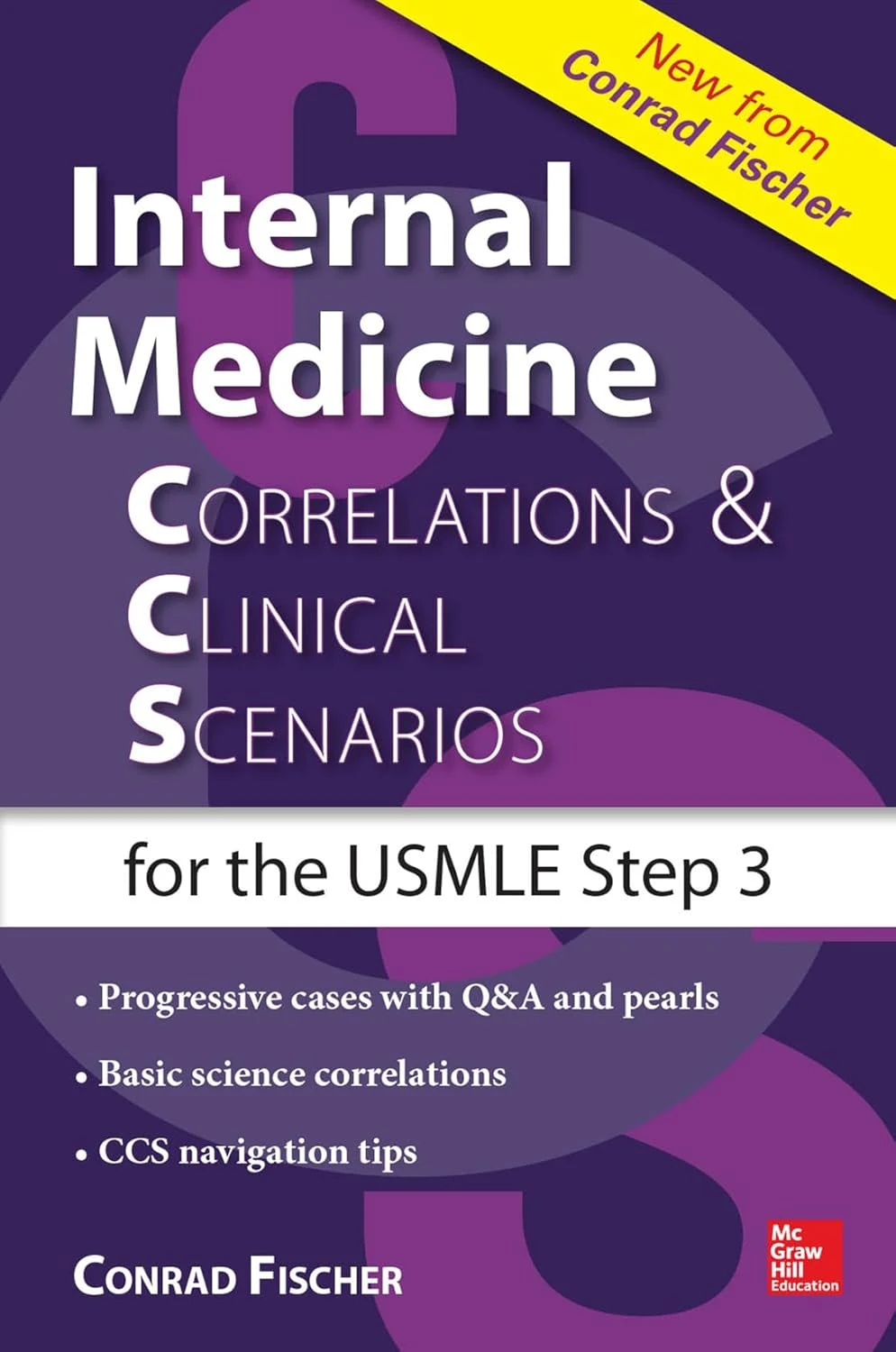
Internal Medicine Correlations and Clinical Scenarios for Step 3
Dr. Conrad Fischer's Internal Medicine Correlations & Clinical Scenarios offers a comprehensive review for the USMLE Step 3, specifically addressing concerns about basic science, CCS cases, and general internal medicine. This resource provides an engaging learning experience through progressive clinical cases, correlating foundational science principles, and offering tips for the Computer-based Case Simulations (CCS) exam. It features 100 medicine cases with Q&A for the multiple-choice section, embedded basic science correlations, integrated CCS navigation advice, and high-yield coverage across all major internal medicine subspecialties.
Track your Progress for USMLE 2026
Effective coaching programmes include:
- Baseline diagnostic assessments
- Periodic performance reviews
- Trend-based improvement tracking
- Adaptive study plans based on results
This ensures measurable improvement, not guesswork.
Avoid Common USMLE Preparation Mistakes
- Studying without a structured plan
- Overloading with unfiltered material
- Delaying assessment and feedback
- Ignoring weak areas until the end
- Preparing without expert guidance
A coaching-led approach helps eliminate these risks early.
Final 6-8 Weeks Before the Exam
- Focus on high-yield revision
- Intensive mock exam practice
- Strategy sessions for time management
- Stress management and exam readiness training
At this stage, guidance matters more than volume of study.
Conclusion
Preparing for USMLE 2026 demands a strategic, disciplined, and mentor-driven approach. With structured coaching, expert faculty, continuous assessment, and personalised guidance, aspirants can significantly improve their chances of clearing the USMLE with confidence.