Clinical research is expanding at a pace the world has never seen. As per the latest reports, over 550,000 registered studies across 224+ countries. This encompasses oncology, vaccines, rare diseases, device trials, and digital health. With this increase in global research activity, the demand for professionals with strong and relevant clinical research skills has skyrocketed.
Do you want to become a Clinical Research Associate (CRA), Clinical Research Coordinator (CRC) or a Clinical Research Scientist? Or would you rather want to get into specialised domains like data management, pharmacovigilance, or regulatory affairs? Well, your skills decide your career growth, salary potential, and employability. In this blog, we present you the most comprehensive breakdown of clinical research skills, with examples, resume-specific keywords, and career pathways.
What are Clinical Research Skills?
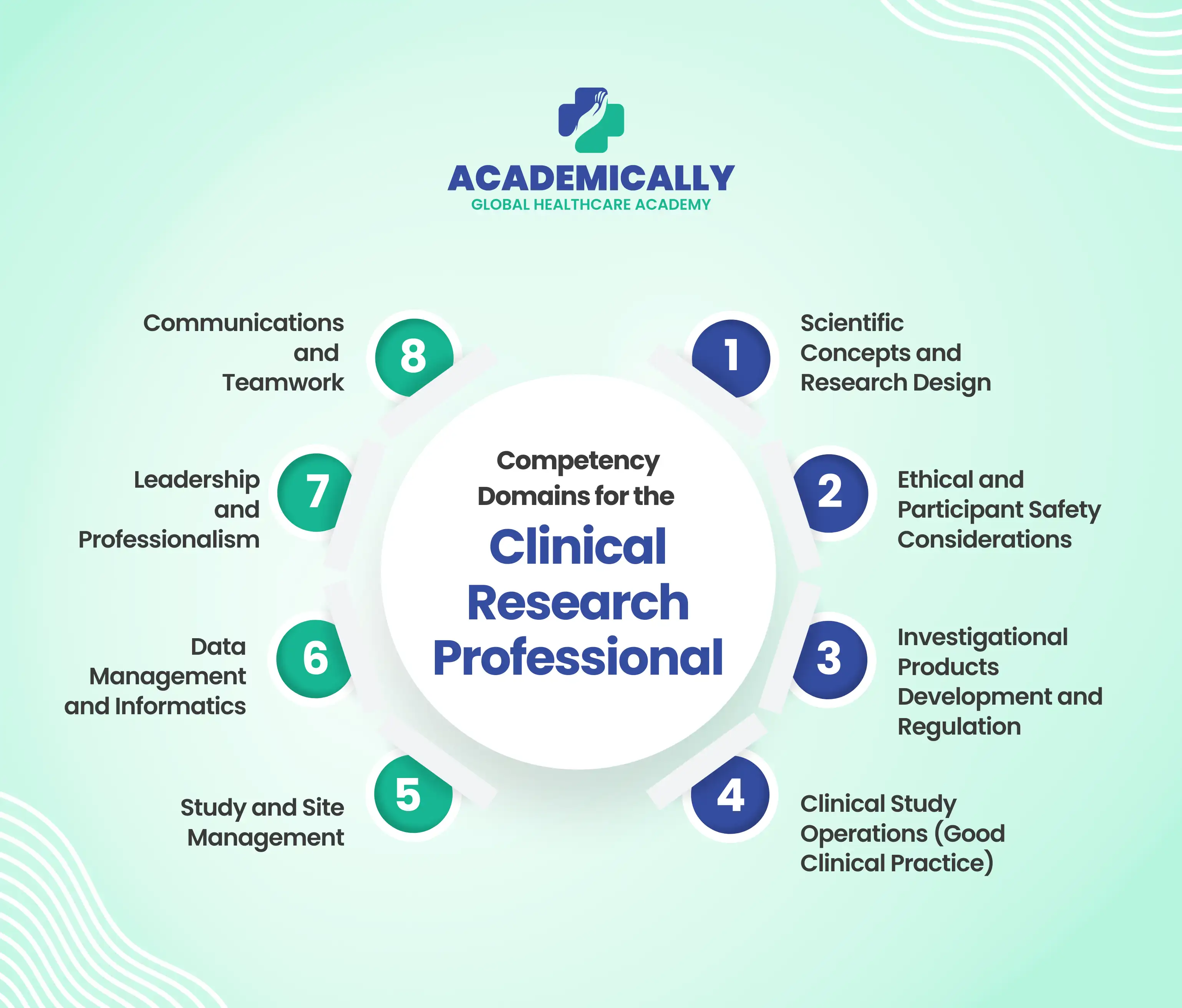
Clinical research skills include the technical, operational, regulatory, and interpersonal competencies required to conduct clinical trials safely, ethically, and efficiently. These skills ensure that studies produce reliable data, maintain regulatory compliance, and protect patient safety.
You’ll find them mentioned frequently in:
- Resumes
- Job descriptions
- Norms and guidelines
- Skill assessment tools used by CROs
Professionals with strong, validated skills consistently land higher salaries and career growth.
Why Skill Development Matters Today
Three major shifts are redefining what today’s professionals need:
1. Trial complexity has exploded
Adaptive designs, biomarker-driven studies, AI-enabled analytics and decentralised trial models demand stronger technical and analytical skills than before.
2. Global expansion of research sites
Countries like India, China, and Australia have become major clinical research hubs. Coordinating across cultures requires stronger communication and documentation skills.
3. Digitalisation of clinical research
EDC systems, remote monitoring, eConsent, wearables, and real-world evidence have made technical and digital skills non-negotiable.
Core Clinical Research Skills You Must Develop
1. Good Clinical Practice (GCP) & Regulatory Knowledge
This is the foundation of every clinical research career. You must understand:
- ICH-GCP principles
- FDA, EMA and CDSCO regulations
- IRB/IEC submissions
- Protocol compliance
- Safety reporting requirements
These skills appear on nearly every clinical research skills resume and are tested in most clinical research skills assessment exams.
2. Study Design, Biostatistics & Epidemiology
You don’t need to be a statistician but you do need to understand:
- Randomization
- Endpoints
- Sample size basics
- Bias and confounding
- Statistical significance
- Survival analysis
3. Data Management & EDC Skills
With trials becoming digital, these skills are essential:
- REDCap
- Medidata Rave
- Oracle Clinical
- eCRF design
- Query management
- Data cleaning
- CDISC (SDTM, ADaM)
These are critical technical skills for Clinical Research Associate and data management roles.
4. Clinical Documentation & Medical Writing
A significant percentage of clinical research errors stem from poor documentation. Key skills include:
- Source data documentation
- Informed consent writing
- Protocol amendments
- Case narrative writing
- MedDRA & WHO-DRUG coding
These skills feature prominently in clinical research coordinator skills resumes.
5. Risk-Based Monitoring (RBM) & Quality Management
Modern clinical trials rely extensively on RBM.
You’ll need:
- Critical data identification
- Root cause analysis
- CAPA development
- Monitoring visit planning (SMV, IMV, COV)
CRA job descriptions heavily emphasise these skills under the section, “Skills required for Clinical Research Associate”.
6. Soft Skills: The Differentiators
Many candidates have technical knowledge, but few master the soft skills that CROs value:
Communication
Explaining complex data to investigators, patients, and vendors.
Time Management
Managing overlapping timelines for submissions, follow-ups, SDV, and monitoring activities.
Stakeholder Management
Navigating sponsors, site staff, labs, vendors, and global teams.
Problem-Solving
Handling deviations, missing data, unplanned site issues, and recruitment challenges.
These skills appear under both clinical research associate skills and clinical research coordinator skills.
Role-Specific Clinical Research Skills
Skills Required for Clinical Research Associate (CRA)
CRAs require a unique mix of technical and operational skills:
- Monitoring visit planning (PSV, SIV, IMV, COV)
- Source data verification
- Investigator site file (ISF) management
- Adverse event & SAE reconciliation
- Risk-based monitoring
- Protocol compliance checks
- Vendor collaboration
These are the most commonly searched technical skills for Clinical Research Associate and appear on all CRA resumes.
Skills Required for Clinical Research Coordinator (CRC)
CRCs are the backbone of site operations. Key skills include:
- Patient screening & recruitment
- Informed consent administration
- Site-level documentation
- Sample collection and lab coordination
- Visit scheduling
- Handling monitors’ queries
Recruiters often search for clinical research coordinator skills resume, so ensure these appear in your CV.
ATS-Optimised Phrases for Your Resume
Recruiters look for the exact keywords that make your resume the first choice. Here are some ATS-optimised phrases for your resume that have great chances to land a job:
- “Proficient in ICH-GCP, protocol adherence & safety reporting.”
- “Experienced in EDC platforms including REDCap and Medidata Rave.”
- “Skilled in patient recruitment, screening, and informed consent.”
- “Strong documentation skills, including source notes, CRFs & site logs.”
- “Proven expertise in risk-based monitoring and query resolution.”
- “Ability to collaborate across investigators, study teams, and vendors.”
How to Become a Clinical Researcher: Step-by-Step Process
- Complete a relevant degree (Pharmacy, Medicine, Nursing, Life Sciences).
- Upskill yourself with Academically’s Post Graduate Certificate Course in Clinical Research that covers trial operations, GCP, EDC, pharmaceutical research, drug development and regulatory basics.
- Gain practical experience through internships or on-site exposure. Don’t worry, our team will help you with that.
- Start in entry-level roles (CTA, CRC, Clinical Data Assistant).
- Grow into CRA, Clinical Trial Lead, Regulatory Specialist, or Safety Scientist roles.
- Add specialisations: data management, medical writing, HEOR, or pharmacovigilance through short-term courses.
Clinical Researcher Salary Trends
India:
- Clinical Research Associate: ₹5 to ₹15 LPA
- Clinical Research Coordinator: ₹4 to ₹13 LPA
- Clinical Research Scientist: ₹12 to ₹45+ LPA
- Medical Writer: ₹10 to ₹20+ LPA
- Pharmacovigilance Associate: ₹9 to ₹24 LPA
USA:
- CRA: $65,000 to $115,000
- Clinical Research Scientist: $90,000–$150,000
Specialised technical skills = higher income.
Future Skills to Invest In (2027–2030)
- AI-enabled monitoring
- Remote source verification
- Decentralised clinical trial platforms
- Real-world evidence analytics
- Digital biomarkers & wearable data
- Advanced biostatistics & statistical programming
Conclusion
Becoming a successful clinical researcher today requires more than scientific interest. It demands a well-rounded blend of technical expertise, analytical thinking, ethical judgment, and strong interpersonal skills. Whether you’re a fresher or advancing your career, mastering these clinical research skills will help you stand out in a highly competitive industry. With the right training, hands-on exposure, and continuous learning, you can build a future-ready career that contributes meaningfully to safer, faster, and more efficient medical innovation.