Have you ever wondered about the journey of the medicine in your hands? But perhaps, the most interesting question is, how do you know it works and is safe?
Well, I can tell you that. The medicine works because it was made to go through really rigorous tests during clinical research. It is safe because Clinical Research professionals made sure that it was.
The most important of these roles is that of the Clinical Research Coordinator.
So, who is a Clinical Research Coordinator and what are their responsibilities?
They are the heartbeat of every study. The bridge between science and people. The reason groundbreaking medical advancements reach the world.
In this blog, we will discuss the roles and responsibilities of a CRC in detail.
Let’s get started.
Who is a Clinical Research Coordinator (CRC)?
A Clinical Research Coordinator is the professional who manages day-to-day activities of a clinical trial at a research site. They work closely with
- Principal Investigators (PIs)
- Sponsors
- CROs, and
- Participants
They ensure the study runs smoothly and ethically.
Think of them as the
- Project manager
- Patient advocate
- Documentation expert
- Logistics master of clinical trials
Key Roles and Responsibilities of a CRC
Here’s a structured breakdown of what CRCs actually do.
1. Study Preparation and Start-Up
Before a clinical trial begins, CRCs lay the foundation.
Responsibilities:
- Assist the Principal Investigator in reviewing the study protocol
- Prepare essential regulatory documents
- Coordinate with ethics committees for study approvals
- Arrange site initiation visits
- Ensure there are adequate supplies like:
- Lab kits
- Devices
- Documentation templates
Why it matters:
A smooth start-up ensures the site is fully ready and compliant. It needs to align with sponsor expectations.
2. Participant Recruitment and Screening
This is one of the most human-centered responsibilities.
Responsibilities:
- Advertising the study ethically
- Flyers
- Calls
- EMR screening
- Explain study procedures to potential participants
- Check eligibility criteria
- Schedule screening visits
Why it matters:
Accurate recruitment ensures participant safety and the scientific validity of study results.
3. Informed Consent Process
The CRC ensures participants fully understand what they’re signing up for.
Responsibilities:
- Explain study risks and benefits
- Answer participant questions
- Document consent properly
- Ensure consent is obtained before any study-related procedures
Why it matters:
Ethical conduct starts with transparent communication.
4. Conducting Study Visits
CRCs manage the journey of the participants through the trial once they are enrolled.
Responsibilities:
- Schedule and conduct study visits
- Coordinate with:
- Physicians
- Pharmacists
- Labs
- Monitor participants for adverse events
- Maintain visit timelines
Why it matters:
The study can be made compliant and efficient through consistent and accurate visit management.
5. Data Collection and Source Documentation
This is the core part where accuracy is everything.
Responsibilities:
- Recording data in the electronic case report form or eCRF
- Ensuring source documentation matches eCRF entries
- Handling queries raised by data managers
- Maintaining protocol compliance in every data point
Why it matters:
Good data means credible research and impactful medical breakthroughs.
6. Safety Reporting
CRCs play a crucial role in safeguarding participants.
Responsibilities:
- Identifying adverse events (AEs) and serious adverse events (SAEs)
- Reporting safety events within required timelines
- Maintaining communication with the PI about participant safety
- Following reporting guidelines
- GCP
- Regulatory bodies
- Sponsor SOPs
Why it matters:
Safety reporting prevents harm and builds trust.
7. Regulatory and Documentation Management
Clinical research is a lot of paperwork that needs to be handled smartly.
Responsibilities:
- Maintaining essential documents in the
- Trial Master File (TMF), or
- Investigator Site File (ISF)
- Updating delegation logs
- Ensuring protocol amendments are implemented
- Handling audits and monitoring visits
Why it matters:
Proper documentation protects both the site and the participants.
8. Study Close-Out Activities
CRCs ensure proper closure after the trial ends.
Responsibilities:
- Completing final data entries
- Archiving study documents
- Preparing for site close-out visits
- Returning or destroying unused study supplies
Why it matters:
A well-organized closure of the trial supports compliance and readiness for future trials.
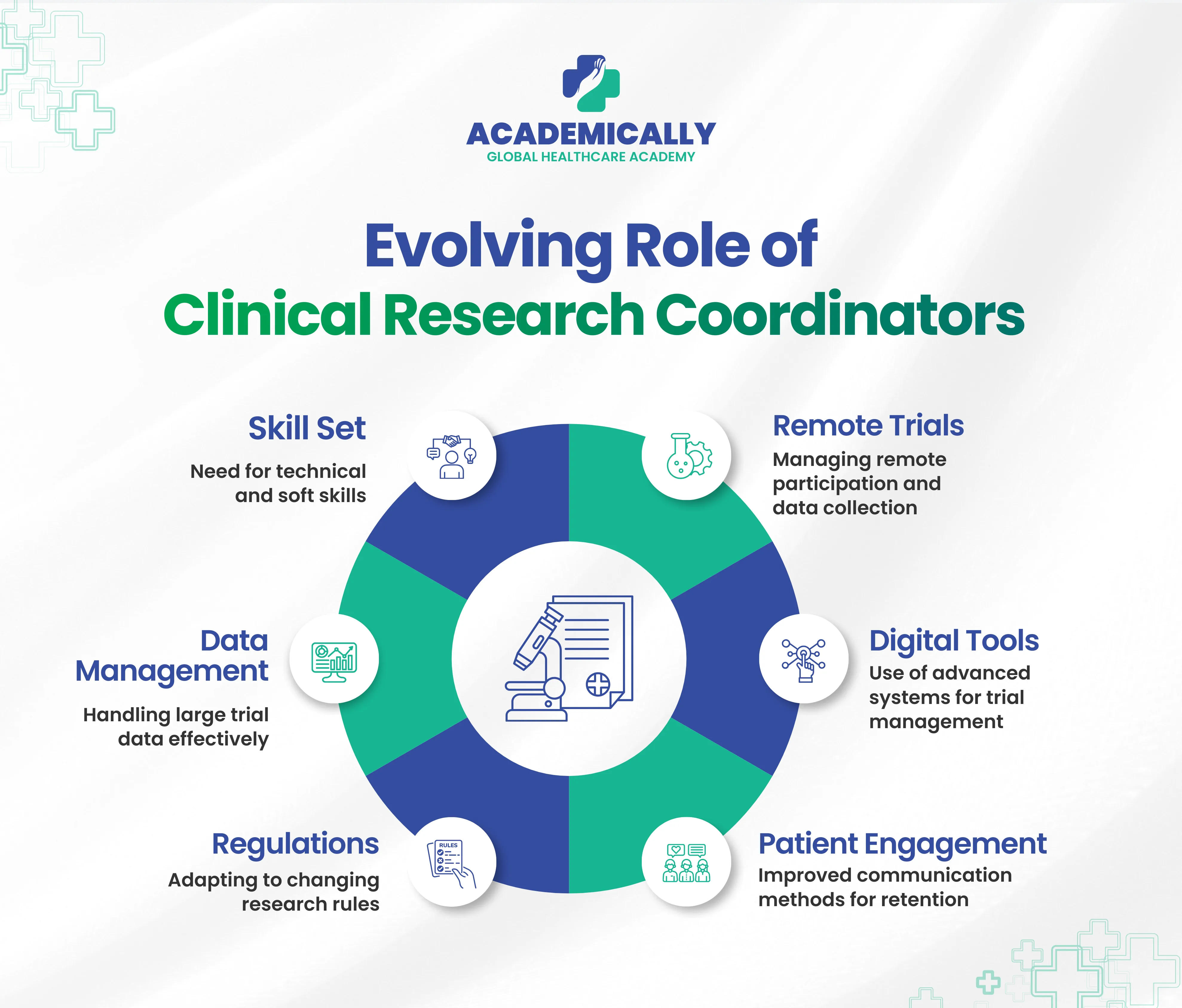
CRC Responsibilities Summary Table
| Area | Key Responsibilities |
| Study Start-Up | Ethics submission SIV coordination Regulatory docs |
| Recruitment and Screening | Participant outreach Eligibility checks |
| Informed Consent | Participant education Consent documentation |
| Study Visits | Scheduling Assessments Participant follow-up |
| Data Management | eCRF entry Resolving queries Source documentation |
| Safety Reporting | AE/SAE identification Reporting timelines |
| Regulatory Compliance | ISF maintenance Logs Audits |
| Close-Out | Archiving Final reports Reconciliations |
Why Being a CRC is an Amazing Career
CRC might be perfect for you if you’re someone who loves
- Healthcare
- Communication
- Coordination, and
- Organized chaos
You learn the science behind cutting-edge medicines
You work on trials involving niche and real innovation:
- Oncology
- Vaccines
- Rare diseases
- Digital therapeutics
You help patients directly
Many participants join trials as a last hope. CRCs support, guide, and reassure them.
Fast career growth
You can grow into:
- Clinical Research Associate
- Project Manager
- Regulatory Specialist
- Medical Writer
- Drug Safety Associate
High demand globally
Skilled CRCs are highly demanded in various industries:
- Pharmaceutical
- CROs
- Hospitals
- Academic institutes
Attractive earning potential
Entry-level salaries are strong. Tthe growth curve is exponential as you gain experience.
Skills Needed to Succeed as a CRC
A CRC succeeds when science, empathy, and organization meet.
Must-have skills:
- Excellent communication
- Attention to detail
- Understanding of GCP guidelines
- Documentation accuracy
- Multitasking & time management
- Comfort working with patients
Good-to-have skills:
- Basic medical knowledge
- Familiarity with CTMS/eCRF platforms
- Ability to handle stress in fast-paced environments
Is This Career Right for You?
The role of a Clinical Research Coordinator could be your perfect entry into the world of clinical research if you:
- enjoy meaningful work,
- love interacting with people,
- want to grow fast in healthcare,
- and are excited by the idea of being part of medical breakthroughs
The world of clinical research is more than just testing drugs. It can be the answer to someone's prayer and an opportunity that can give a new life to a patient. Certification courses in Clinical Research can act as the perfect stepping stone for you in this exciting and meaningful field.
The role of a Clinical Research Coordinator is one filled with a few challenges and a lot of satisfaction. Start your career in Clinical Research today.