Why So Many Indian Students Choose MBBS Abroad
When NEET results don’t go as planned, a lot of students look outside India for options. For many, MBBS abroad feels like a second chance, especially when private medical colleges in India are either too expensive or hard to get into.
Countries like Russia, Ukraine, China, Kazakhstan, Georgia, and the Philippines offer medical courses with durations ranging from 4 to 7 years.
On paper, it looks manageable: lower fees, no donation, and the hope of returning to India, clearing FMGE, and starting practice.
But what’s often missing from this picture is the fine print, about degree recognition, clinical training, and what the NMC and other licensing bodies actually require.
And that’s where the real risk begins.
The Hidden Risks of Studying MBBS Abroad
False Sense of Security
Many students are told their university is “NMC-approved” or listed in the World Directory of Medical Schools (WDoMS), so they think they’re safe. They often skip or delay the mandatory internship abroad, assuming they can complete it in India, which is no longer allowed.
Low FMGE Pass Rate
The FMGE (Foreign Medical Graduate Examination) is tough. With a pass rate between 13–20%, most students who return from abroad struggle to clear it. Those who fail often turn to other countries like the US, UK, Australia, or New Zealand.
Problems with Global Recognition
This is where things get worse. When students attempt to move to countries like the US (via USMLE), UK (PLAB), Australia (AMC), or New Zealand (NZREX), they face another hurdle: degree verification through ECFMG or similar authorities.
How To Verify Your MBBS Degree?
Before you apply for MBBS abroad, you must check whether your degree (nomenclature) is recognised and listed properly. If it’s not, your skills assessment may be rejected, even if you studied at a listed university.
Here’s how to verify your degree with ECFMG:
If your specific degree nomenclature is missing or incorrect, your credentials might not be accepted by global licensing authorities.
This simple check can save you years of wasted effort and lakhs of rupees.
For Example: MBBS from Kazakhstan
Let’s take Asfendiyarov Kazakh National Medical University as an example.
This university shows up on WDoMS. When you follow the ECFMG and AMC verification process, here’s what you’ll find:
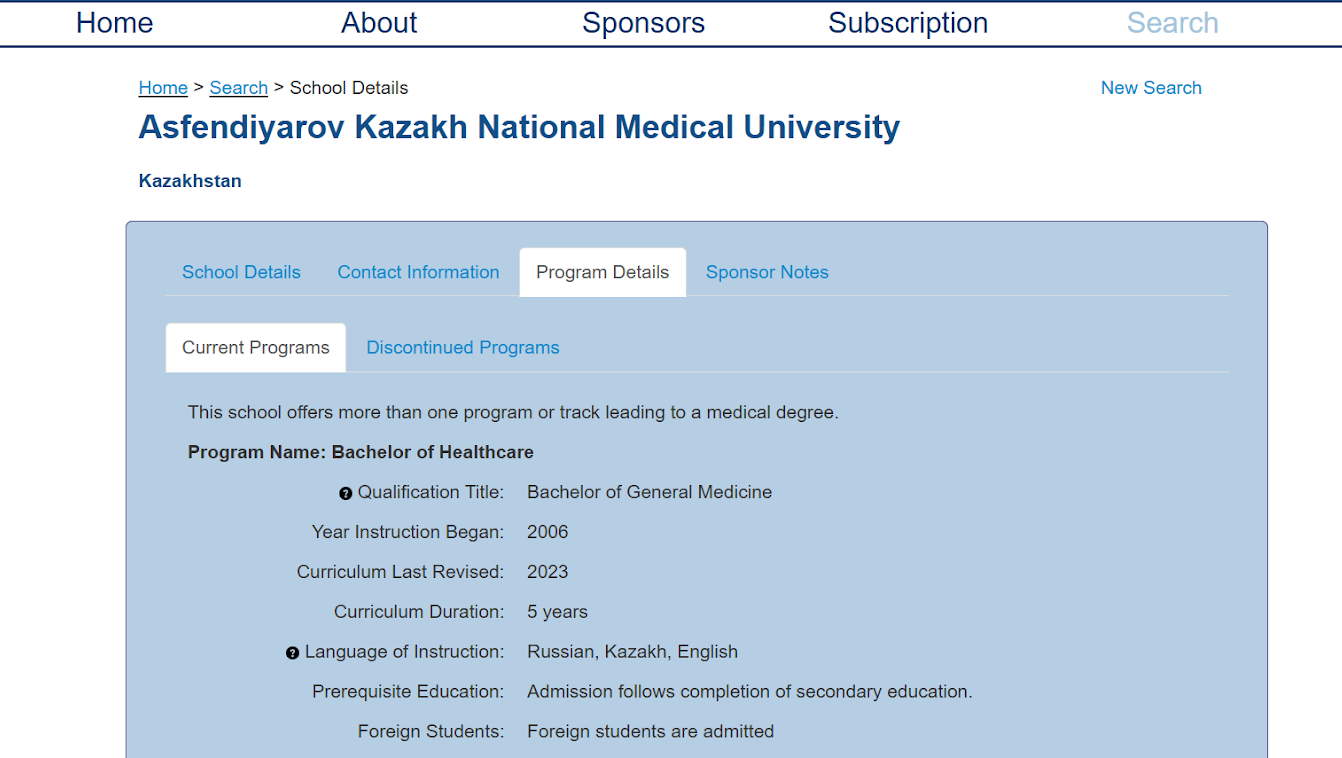
The reference guide states:
- Program Name: Bachelor of Healthcare
- Degree Title: Bachelor of General Medicine
- Duration: 5 years
- Language: English, Russian, Kazakh
- ECFMG Eligibility: For graduates from 1953 onwards
But here’s the catch:
This university also offers other programs like:
- General Practitioner (6 years)
- General Practitioner (7 years)
These aren’t always mentioned in global directories. If your degree title doesn’t exactly match the one listed (e.g., Bachelor of General Medicine), you could be rejected for USMLE or AMC registration.
Therefore, you will need to go to the sponsor details and check the information.
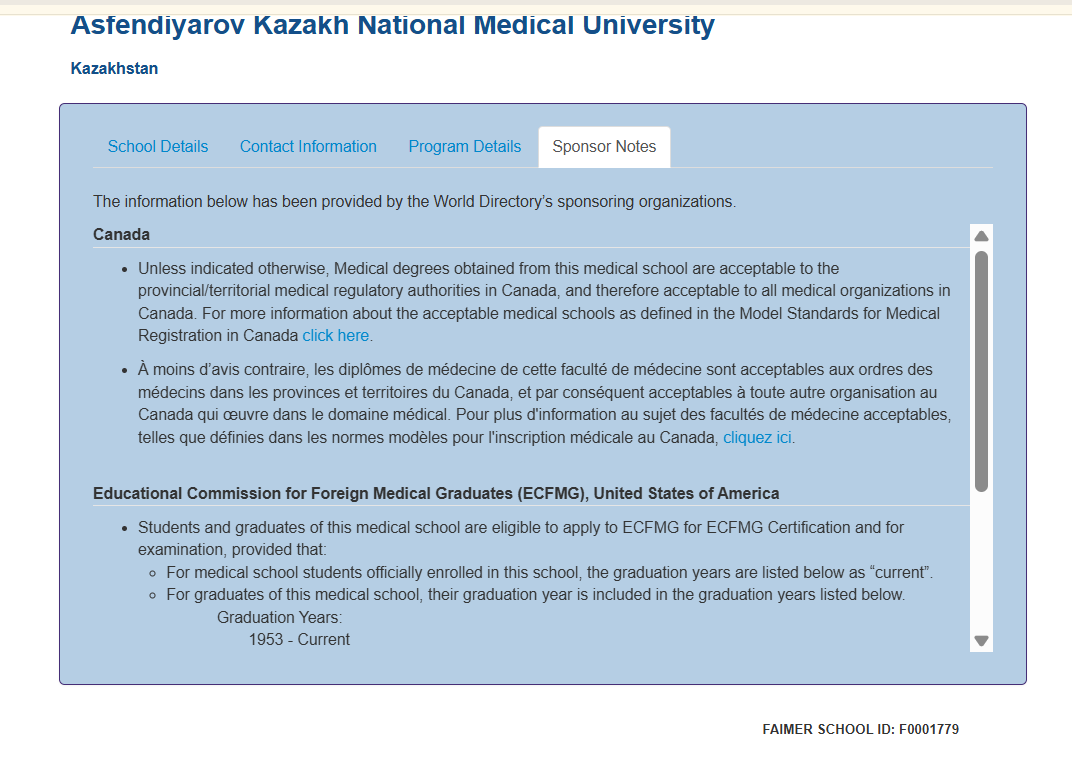
If you scroll down a bit, you will find a link, open the link and enter the
1. Your university
2. Your degree name
3. Your graduation year
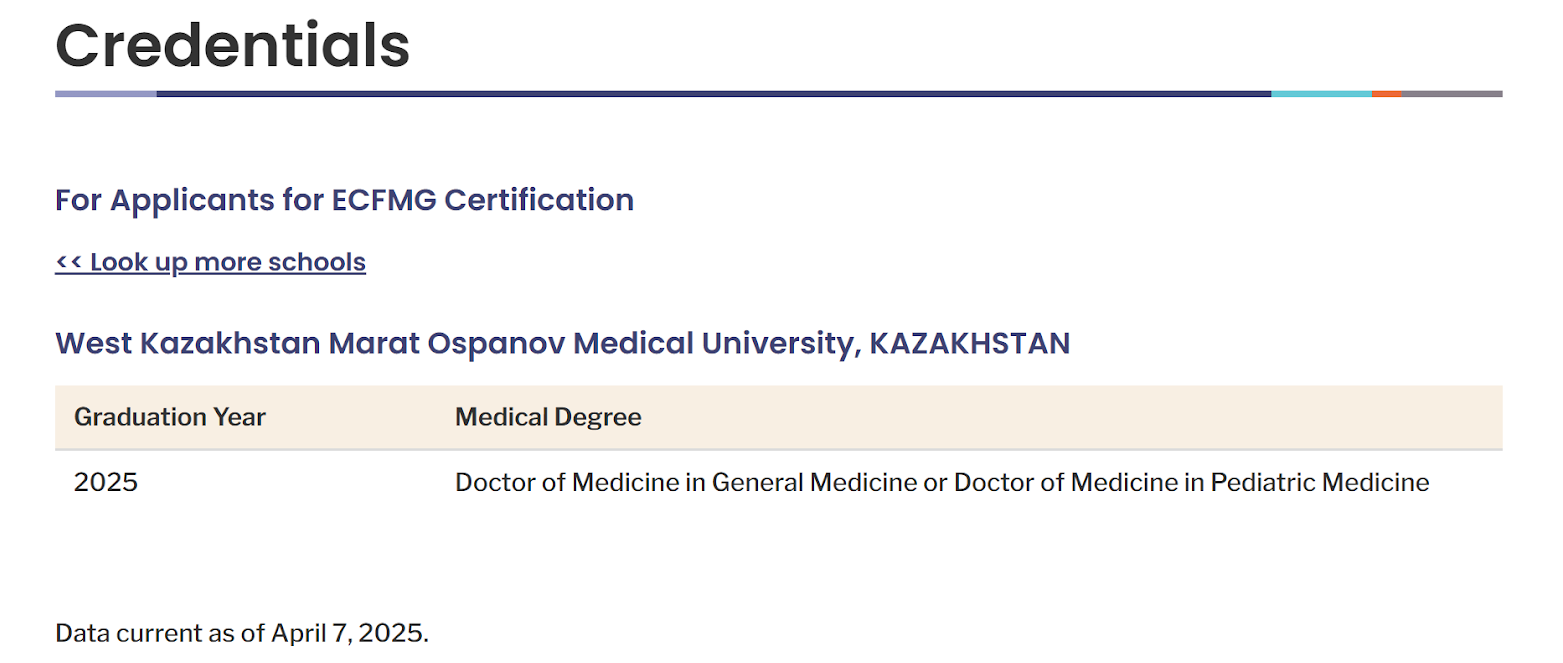
Now, you can see a list of medical degrees valid under ECFMG for USMLE and AMC pathways.
Why Does This Matter?
A mismatch in the degree title has led to real-world rejections by authorities like ECFMG and AMC.
This is not about whether your university is listed. It’s about whether your exact program and degree title are accepted by global licensing bodies.
And most students have no idea about this until it’s too late.
Already Studying MBBS Abroad? Here’s What You Can Do
If you’ve already started or completed your MBBS abroad, here’s how you can protect your future:
- Check your degree title now through ECFMG or AMC.
- Make sure your internship meets NMC guidelines.
- Start early FMGE/USMLE/PLAB preparation and don't wait until graduation.
- Keep documents ready: transcripts, course duration, syllabus, etc.
- Join trusted coaching platforms that understand licensing exam patterns.
Academically provides comprehensive coaching for medical licensure exams like FMGE, USMLE, PLAB, AMC and more. You can get access to expert-led live+recorded sessions, AI-based mock tests, support groups and more.
Final Thoughts
MBBS abroad isn’t a scam, but blind trust is.
If you’re considering medical education abroad, don’t just rely on agents or vague promises. Do your own research. Verify your degree, your program, and the country’s licensing outcomes.
One small mismatch can cost you lakhs of rupees and years of effort.
If you have any questions about this, feel free to get in touch with one of our experts.