Is Academically OPRA Exam Course the Best Choice for Preparation?

Reviewed by

Dr. Akram Ahmad
Academically OPRA Exam Course the Best Choice
Created On : Apr 08, 2026 Updated On : Apr 08, 2026 4 min read

Specially curated for international pharmacy graduates/working professionals from India, Pakistan, Nepal, UAE & worldwide

Thousands of pharmacists across India, Pakistan, the UAE, and beyond are making the same calculation every year. What's the fastest and most reliable route to make it big in Australia? Of course, without a doubt, it is Overseas Pharmacist Readiness Assessment (OPRA). If you've spent even 5 minutes googling for the OPRA exam preparation, you've encountered Academically for sure.

People are searching for the course's real strengths, its genuine limitations, a fair comparison against alternatives, and a clear sense of whether it's the right fit for your specific situation. That's what this blog is aiming to provide you. Let’s keep reading to make a smart choice for your future.

What is the OPRA Exam and Why Does It Matter?

The Overseas Pharmacist Readiness Assessment (OPRA) replaced the two-paper KAPS exam at the end of 2024. Administered by the Australian Pharmacy Council (APC), it is the single most important gateway for internationally trained pharmacists seeking provisional registration in Australia.

120

MCQs in a single paper, 2.5 hours

45%

Therapeutics & Patient Care weighting

Exam sessions per year (Mar, Jul, Nov)

Unlimited attempts

Unlike the old KAPS, OPRA uses the Rasch measurement model. It is an adaptive and ability-based methodology to assess exam papers. There is no fixed pass percentage. Your result reflects how consistently and accurately you perform across questions of varying difficulty. This has one important implication for preparation: rote learning alone is insufficient. You need conceptual depth.

Key Eligibility Criteria for OPRA

No prior work experience is required to apply for the OPRA exam, making it accessible even for fresh graduates. Candidates must hold a B.Pharm, M.Pharm, or Pharm.D degree (in Pakistan, D.Pharm).

In addition, having an active pharmacist registration in your home country is mandatory. With these basic requirements fulfilled, you are eligible to begin your OPRA journey without waiting years for experience.

About Academically & the Founder

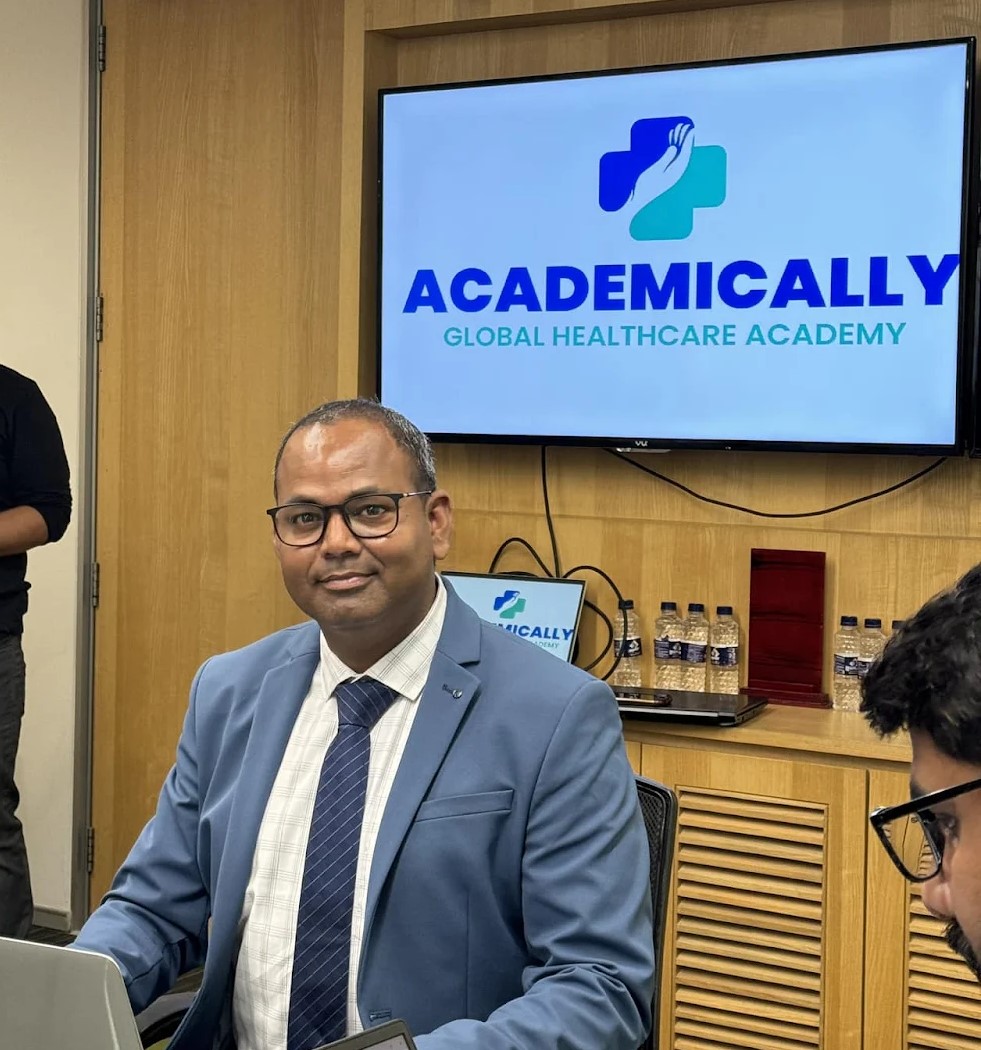
Dr Akram Ahmad Founder Academically

Academically was founded by Dr Akram Ahmad, a pharmacist holding B.Pharm, Pharm.D, and a PhD from the University of Sydney. He consistently focuses on bridging the gap between South Asian pharmacy education and Australian clinical standards. The organisation positions itself not merely as a coaching platform but as an end-to-end migration support system for pharmacists, covering exam preparation, documentation guidance, CV building, and job-market orientation.

This background matters. A founder who trained and practised in Australia brings an insider perspective on what the APC actually expects, rather than what South Asian curricula traditionally emphasise. Multiple students mention this contextual framing as one of the most valuable elements of the course. The best part is that the faculty members themselves are based in Australia, AHPRA-registered, and they first-hand mentor the candidates using Australian guidelines.

What the Course Includes

This comprehensive program is designed to cover every aspect of your OPRA preparation and career readiness. It includes 120+ hours of live and recorded lectures, along with structured PDF handouts for systematic learning.

You’ll get access to AI-adaptive mock tests based on Rasch methodology, personalized one-on-one feedback sessions, and continuous doubt support via Discord and Telegram. The course also supports your career with CV-building webinars, job readiness guidance, and detailed performance analytics to track your progress.

Syllabus & Domain Mapping: How Does the OPRA Exam Course Align?

The OPRA syllabus has 5 domains, and Academically's curriculum claims to cover all of them. Here is how the official weightings look, and what that means for your study priorities:
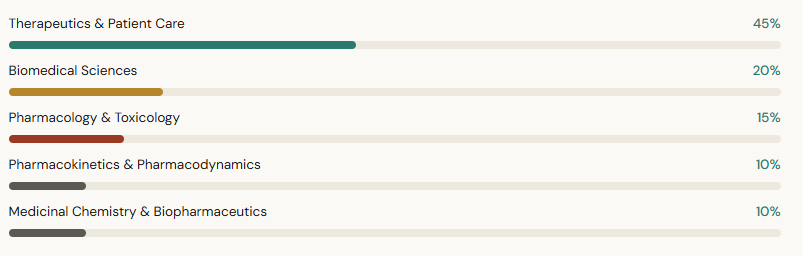
Nearly half the exam lives in Therapeutics. Clinical case scenarios, drug counselling, and treatment guideline application. This is precisely the domain where pharmacists trained in South Asia most commonly feel underprepared, since BPharm curricula in India and Pakistan have historically leaned heavily on pharmaceutical sciences and chemistry. Academically's clinical faculty orientation appears well-targeted to this gap.

OPRA questions test three cognitive levels: approximately 55% recall, 30% comprehension, and 15% application. Most candidates self-report struggling with the application tier, clinical reasoning under unfamiliar Australian guidelines. This is the tier where coached exposure to case-based questions (mock tests, grand tests) makes a tangible difference over pure textbook revision.

Head-to-Head Comparison: Academically vs Other Course Providers

It is wise to have a look at why candidates prefer Academically over others:

FeatureAcademicallyOther Course Providers
FormatLive + recorded, 1:1 doubt clearing sessionsMostly recorded sessions, lags during live sessions
Content hours120+ hours + Recorded lecturesLimited-time lectures
Mock testsAI-adaptive (Rasch methodology- exact format you face in the real-time exam)Traditional, old-school question bank
Faculty profilePhD-led, OPRA/KAPS-Qualified, mentors are teaching from Australia, AHPRA-registered pharmacistsMostly registered pharmacists in the home country or KAPS-qualified, but returned home to practice
Duration4-6 months (structured roadmap and personalised support)~3.5 months
Access periodExtended access even after the examVaries from one platform to another
Pricing transparencyEnquiry-basedPublicly listed
Post-exam supportCV building, job support, English exam preparation. Career counsellingNot prominent
1:1 feedbackYesVaries from one platform to another
Best forB.Pharm/M.Pharm/Pharm.D or Pakistani D.Pharm candidates or working pharmacists looking for a global career and structured, mentor-led guidance and mock tests simulating exam conditionsSelf-study; those just looking for question banks

Total Cost Breakdown: What Does the OPRA Pathway Actually Cost?

Here is the realistic full picture for a candidate based in India aiming for Australian registration in 2026:

Cost ComponentApprox. Amount (AUD)
APC skills assessment fee~AUD 1,100
OPRA exam fee~AUD 2,245
Preparation course (Academically)Enquiry-based (Contact directly for pricing)
Estimated pathway total~AUD 3,600–4,500+ (Excluding internship/English proficiency test and travel costs)

ROI Perspective

A registered pharmacist in Australia typically earns between AUD 90,000–110,000 annually (approximately ₹58–71 lakh), making it one of the most financially rewarding healthcare pathways globally.

Even after accounting for the full licensing and migration costs, most candidates recover their investment within the first few months of employment. In this context, the course fee becomes a relatively small component—though it’s always fair and important to evaluate pricing transparently before enrolling.

Can you self-study for free?

Technically, yes. The APC publishes official sample questions, Pearson VUE offers practice modules, and resources like the Australian Medicines Handbook (AMH), Therapeutic Guidelines, and Rang & Dale's Pharmacology are standard references. 

However, most candidates who attempt self-study report the same difficulty: knowing what to focus on within a vast syllabus, and calibrating their preparation to Australian clinical standards rather than their home country's framework. Whether a paid course is worth it depends largely on your existing clinical exposure and self-discipline.

Students’ Review for Academically’s OPRA Exam Course

India’s first-ever OPRA coaching centre prides itself on an over 90% success rate in OPRA and other licensure examinations.

Here are a few documented student journeys spanning across countries:

“The exam was on a medium level. I was both nervous and excited. OPRA is not limited to toppers or postgraduates—with the right strategy, even average students can succeed.”

Karthika S.
Kerala → Australia · MPharm background · Passed 1st attempt

“I did not treat weekends as rest days. Short-term sacrifice for long-term stability. Working full time is not a disadvantage with discipline and the right strategy.”

Sailaja L.
Telangana · Full-time hospital pharmacist · 12-month prep

“On exam day, 30–40 questions came directly from the mocks. I finished in 1 hour 15 minutes. The key is not the hardness of the exam but our preparation and mindset.”

Ramakrishna K.
Dubai · 8 years experience · Passed 1st attempt

“Taking mock exams regularly is a foolproof way of ensuring success. Don't forget simple topics—they are most commonly asked. Focus on what pharmacists actually do.”

Dr. Shan M.
PhD, University of Sydney · Exam after 15-year gap · Passed 1st attempt

“It's not about whether it is easy or hard. You know what you can expect after the right preparation.”

Kruti & Sridivya
Gujarat → Australia · Fresh graduates · Two contrasting preparation journeys · Both passed 1st attempt
Kruti landed her first job even before results. Sridivya, with no work experience and only a BPharm, studied 4–5 hours/day for two months, scaling to 10–12 hours in the final stretch.

Who Is Academically's Course Really Best For?

Strong fit

You'll likely get strong value if you are…
Weaker fit

You may want to consider alternatives if…
A fresh BPharm/PharmD (or D.Pharm in Pakistan) graduate with no work experience.You have a D.Pharm from India, and are looking for medical store jobs within the country
Working full-time and needing flexible, recorded access.You prefer maximum question volume over structured content.
First-generation migrant navigating Australian docs alone.You are highly self-disciplined and work best independently.
Someone who needs structured accountability to stay consistent.Cost is a primary constraint, and you can commit to self-study.
Aiming for a first-attempt pass with limited risk tolerance.You are just browsing and not serious about your future.

What Happens After You Pass the OPRA Exam 2026?

Most course reviews stop at "pass the exam." That's where the journey actually begins. Here's what the pathway looks like after OPRA:

  • Provisional registration with AHPRA: Applied through the Pharmacy Board of Australia. Requires passing OPRA plus meeting English language requirements (IELTS 7/6.5, OET B/C+, or PTE 66/56).
  • Paid pharmacy internship: 1,575 hours (approximately one year). Internships can include visa sponsorship. Rural and regional placements often have higher availability and can support PR points.
  • Intern Written & Oral Examinations: Assessed after completing 75% of internship hours. Focus on clinical decision-making, communication, and pharmacy competence.
  • General registration: Full status as a registered pharmacist. From here, you can work independently, change employers, and pursue further career development.

Planning Your OPRA Preparation?

Drop your questions, preparation timeline, or experience while speaking with our friendly team.

To Conclude with…

Academically's OPRA course is a well-structured, clinically oriented preparation programme with genuine strengths in its mock test quality, mentoring model, and post-exam support ecosystem. The aggregated student outcomes are compelling. A diverse set of candidates with very different starting points, all passing on the first attempt, is not easily dismissed as cherry-picked marketing.

Is it the best choice for every candidate? For the majority of internationally trained pharmacists, particularly those with limited clinical exposure, working full-time, or navigating the registration process for the first time, Academically represents one of the most thoughtfully designed preparation environments currently available for the OPRA exam.

About Us

Academically is a global Ed-Tech healthcare platform, led by Dr. Akram Ahmad (PhD in Medicine, University of Sydney, Global Healthcare Career Coach) and his expert team, that helps pharmacists, doctors, dentists, physiotherapists, and other allied healthcare professionals to achieve their career goals in India and abroad. We provide complete career guidance, like skill assessment, Visa, PR and coaching for International licensure exams such as AMC, OPRA, APEP, ADC, DHA, SPLE, OCANZ COE and more for countries like Australia, New Zealand, Gulf countries, the US, the UK, and Canada. We have trained more than 8,000 students across 30+ countries, with a 90%+ success rate on international healthcare licensure exams. We are India’s first healthcare Ed-Tech platform to introduce AI-based mock tests, to help students study smarter and track progress effectively. Beyond exam preparation, we also offer job assistance programmes, such as Upskill by Academically, covering clinical drug development and MSL (Medical Science Liaison). To help you land your dream job, we have recently launched our job platform Jobslly by Academically, only for healthcare professionals for both India and abroad.

FAQs

Q: Is the OPRA exam harder than the old KAPS?

A: OPRA is considered more clinically focused than KAPS, but not necessarily harder if you prepare specifically for its format. KAPS had two papers with heavier theory. OPRA is a single paper heavily weighted toward Therapeutics and clinical reasoning. Candidates with pharmacy practice backgrounds often find OPRA more intuitive.

Q: How long does it realistically take to prepare for OPRA?

A: Most candidates report 3–6 months at 3–4 hours per day. Those with strong clinical backgrounds (postgraduate pharmacy practice training) can sometimes be ready in 3–4 months. Fresh graduates with limited clinical exposure may need 5–6 months. What matters most is consistency, not total hours.

Q: Can I prepare for OPRA while working full-time?

A: Yes, several successful candidates (including Sailaja and Ramakrishna) did exactly that. The key is a structured daily routine rather than marathon study sessions. Academically's recorded class format is specifically helpful here, as you can access content at times that suit your schedule.

Q: Do I need post-graduate pharmacy qualifications to pass?

A: No. Multiple candidates in this review, including fresh BPharm graduates with no work experience, passed on the first attempt. A postgraduate pharmacy practice background does help, particularly for the Therapeutics domain, but it is not a prerequisite for success.

Q: What is Rasch methodology, and how should it affect my preparation?

A: Rasch is an adaptive, ability-based scoring model where there is no fixed passing percentage. Your result reflects how consistently and accurately you perform across questions of varying difficulty. In practice, this means you should focus on conceptual understanding rather than trying to guess a cut-off score. If you get easier questions right and harder ones wrong consistently, that pattern matters.

Q: How many questions from Therapeutics should I expect?

A: Therapeutics & Patient Care accounts for 45% of the exam, roughly 54 of the 120 questions. Topics include drug-drug interactions, counselling scenarios, OTC vs prescription decisions, food-drug interactions, treatment guidelines, and adverse drug reaction management.

Q: Does Academically offer a refund if I don't pass?

A: This is not publicly documented and should be clarified directly with Academically before enrolment. Ask specifically about the refund policy, access duration after the exam, and what happens if you need to defer your exam date.

Q: How important are mock tests vs lectures?

A: Based on all five student accounts in this review, mock tests consistently ranked as the most impactful preparation activity. Lectures build conceptual foundations; mocks build exam temperament, time management, and the ability to apply knowledge under pressure. Don't skip mocks, and attempt them under real exam conditions.

Q: Can I take the OPRA exam outside India?

A: Yes. OPRA test centres exist in over 35 countries including the UAE (Dubai), Saudi Arabia (Riyadh, Jeddah, Dammam), Pakistan (Lahore, Karachi), Nepal, Singapore, and Australia itself. Book your preferred centre early as availability varies.

Q: What books should I use alongside a coaching course?

A: Standard references include: Australian Medicines Handbook (AMH), Therapeutic Guidelines (eTG), Rang & Dale's Pharmacology, and the APC's official sample questions. Your coaching provider will typically specify which sections of these are exam-relevant, saving you from reading them cover to cover.

Q: Does the APC endorse Academically or any other course?

A: No. The APC does not endorse, recommend, or accredit any preparation course. Course providers may not claim APC endorsement. All courses operate independently of the examination body. However, all the course materials, including lectures and guidance, are aligned with APC standards.

Q: What English score do I need for Australian pharmacist registration?

A: IELTS Academic: minimum 7.0 in Listening, Reading, and Speaking; 6.5 in Writing. OET: minimum B in Reading, Listening, and Speaking; C+ in Writing. PTE Academic: minimum 66 in Reading, Listening, and Speaking; 56 in Writing. Results must be valid at the time of registration application.

Q: How long is the provisional registration and internship period?

A: The internship requires 1,575 hours, typically completed over approximately one year. Once 75% of the internship is complete, you become eligible for the Intern Written and Oral Examinations. After passing these, you can apply for general registration.

Q: What is the job market like for pharmacists in Australia in 2026?

A: Strong. There are currently over 3,000 active openings for registered pharmacists in Australia. Rural and regional areas have higher demand, and placements there can support skilled migration (PR) applications. Starting salaries for registered pharmacists typically fall between AUD 90,000 and AUD 110,000.

Q: Is there a limit to how many times I can sit the OPRA exam?

A: Candidates who do not pass may reattempt at subsequent exam windows. There is no publicly documented lifetime attempt limit, but check the APC guidelines directly for the most current information.

Aritro Chattopadhyay
about the author

Aritro Chattopadhyay is a seasoned content professional, lifestyle blogger, and English language teacher with 9 years of experience. His expertise ranges from education, healthcare, food, and travel. Featured in Amar Ujala, Vistara in-flight magazine, and The Dehradun Street. Having worked with 270+ brands, he continues to fulfil his passion with words that influence thoughts, minds, and actions. Currently, Aritro is heading the content team at Academically Global.

Build a Successful Global Healthcare Career
Academically

Get Complete Details & Expert Guidance

Our experts will contact you soon

Free guidance • No spam • No obligation

Students
Trusted by 50,000+ healthcare aspirants