Indian Doctor with 14 Years Clinical Experience Bags a 14 LPA Offer in IQVIA
The demand for high paying work from home jobs for MBBS doctors is growing as experienced doctors increasingly explore alternatives to traditional hospital-based careers. Beyond OPDs, emergency duties and clinical practice, opportunities in clinical research, clinical drug development, medical affairs, pharmacovigilance and medical data review can allow doctors to apply their medical expertise in non-clinical roles while pursuing greater career flexibility and work-life balance.
Dr. Sireesha's career journey is one such example. An Indian MBBS doctor with 14 years of clinical experience, she had worked across government and private hospitals, emergency care, primary health centres, diabetology, critical care and HIV/AIDS programmes. Years of unregulated working hours, low salary and recognition made her crave for better career growth and greater work-life balance.
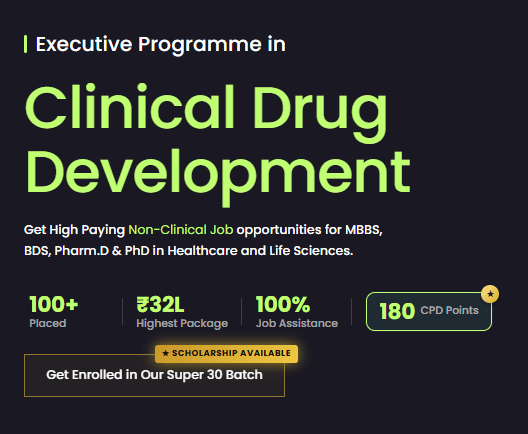
Her career change search eventually led her to clinical drug development. With no previous pharmaceutical or medical-review experience, she upskilled through Academically Global's Executive Programme in Clinical Drug Development and subsequently secured an Associate Medical Data Review Manager role at IQVIA with a reported ₹14 LPA package.
In this exclusive interview with Dr. Akram Ahmad (PhD from the Faculty of Medicine and Health, University of Sydney, Founder & CEO, Academically Global), Dr. Sireesha explains how she moved from clinical practice into a non-clinical healthcare career. Let's read and get inspired.
Can MBBS Doctors Move From Clinical Practice to Non-Clinical Jobs?
Yes. An MBBS degree can provide a strong clinical foundation for several healthcare careers outside direct patient care. Doctors can explore roles in areas such as:
- Clinical research
- Clinical drug development
- Medical data review
- Pharmacovigilance
- Medical affairs
- Clinical data management
- Medical writing
- Regulatory affairs
- Real-world evidence
However, an MBBS degree alone does not automatically qualify a candidate for every non-clinical position. Employers may look for additional industry knowledge, relevant experience, technical skills and familiarity with pharmaceutical or clinical research processes.
Dr. Sireesha's experience illustrates this distinction. She already had extensive medical experience. What she lacked was exposure to the pharmaceutical and clinical drug development ecosystem. That became the focus of her career transition.
Why Doctors With Clinical Experience Are Looking for Non-Clinical Careers
Clinical medicine can be deeply rewarding, but it can also involve demanding schedules, emergency responsibilities, long working hours and limited flexibility. For some doctors, these factors become particularly important when family responsibilities change. Dr. Sireesha reached this point after years of clinical work. She had accumulated approximately 14 years of experience but was increasingly looking for:
- Better work-life balance
- Career growth
- Greater flexibility
- Opportunities to work from home
- A way to continue using her medical knowledge outside traditional clinical practice
Her daughter was around 20 months old when the need for flexibility became particularly important. She recalls leaving home for a meeting while her child was crying. That experience made her think more seriously about whether there were professional opportunities that could give her greater control over her working environment.
She began searching online. That search eventually brought her to Academically Global.
Work-Life Balance and Career Growth
Dr. Sireesha's career change was not simply about leaving clinical medicine. It was about finding a professional model that better matched her priorities. For doctors with family responsibilities, work-from-home or hybrid opportunities can be an important consideration. However, remote work is not guaranteed in healthcare. It depends on the role, organisation, project and employment arrangement.
Non-clinical pharmaceutical roles can sometimes provide greater location flexibility than patient-facing positions because the work may involve data, documentation, research, analysis or scientific communication rather than physical patient care. This was one of the reasons Dr. Sireesha became interested in clinical drug development. She wanted to remain connected to healthcare while exploring a different way of working.
What Is Clinical Drug Development and Why Is It a Career Option for Doctors?
Clinical drug development involves the systematic process of evaluating medicines and other interventions for safety, efficacy and appropriate use. It connects several functions across the pharmaceutical and life sciences ecosystem, including:
- Clinical research: Designing, conducting and supporting clinical studies.
- Clinical data management: Managing and ensuring the quality of clinical study data.
- Medical data review: Applying medical expertise to review and interpret clinical data.
- Pharmacovigilance: Monitoring and evaluating medicine safety.
- Medical affairs: Supporting scientific and medical engagement around healthcare products.
- Regulatory affairs: Preparing and managing information required for regulatory interactions.
- Medical writing: Creating scientific and clinical documents.
This makes clinical drug development relevant to doctors who want to apply their medical knowledge in a non-patient-facing environment. Instead of diagnosing and treating individual patients, doctors may use their clinical understanding to assess study data, review medical information, support research teams or contribute to medicine development.
Can an MBBS Doctor Enter Clinical Drug Development Without Pharma Experience?
Dr. Sireesha did. During her interview with Dr. Akram Ahmad, she confirmed that she had no previous experience in the pharmaceutical industry, clinical trials or medical reviewing before beginning her transition.
Her experience was entirely clinical. That makes her starting point particularly relevant to doctors who assume that pharmaceutical careers are only accessible after years of industry experience.
The important distinction is between clinical experience and industry experience. Her 14 years of clinical practice gave her medical knowledge. But she needed to understand how that knowledge was applied within clinical drug development. This is where structured upskilling became important.
How Does Clinical Experience Help in Medical Data Review Jobs?
A medical data review role can require professionals to examine patient-level information and assess whether clinical data makes medical sense. A doctor may already understand:
- Diseases and their progression
- Symptoms and clinical presentation
- Laboratory investigations
- Treatment approaches
- Adverse events
- Medical terminology
- Clinical decision-making
These skills can provide a useful foundation for medical review. IQVIA describes clinical data review as involving the review of clinical data, identification of anomalies and issues, assessment of data quality and support for clinical study teams. Its Associate Medical Data Review Manager roles can involve medical review expertise, project coordination and evaluation of patient data.
For Dr. Sireesha, her years of clinical practice became relevant in a completely different professional setting. She was no longer primarily examining patients. She was applying her medical understanding to clinical data.
What Does an Associate Medical Data Review Manager Do at IQVIA?
An Associate Medical Data Review Manager works within the clinical research and data environment. Responsibilities can include reviewing clinical data from a medical perspective, identifying inconsistencies or anomalies, assessing medical plausibility, supporting study teams and contributing to project-related activities.
This requires an understanding of both medicine and clinical research processes. That combination explains why doctors can find medical data review an interesting non-clinical career option.
The role allows them to remain connected to clinical science while moving away from conventional patient-facing work. For Dr. Sireesha, this became her next professional step at IQVIA. She secured the role of Associate Medical Data Review Manager with a reported ₹14 LPA package.
How Can MBBS Doctors Prepare for Medical Data Review Jobs?
A doctor moving into medical data review may need to develop knowledge beyond the MBBS curriculum. Important areas can include:
- Clinical trial fundamentals
- Drug development
- Clinical research methodology
- Clinical data management
- Good Clinical Practice
- Medical terminology used in research
- Regulatory requirements
- Patient safety
- Pharmacovigilance
- Medical data interpretation
- Pharmaceutical industry workflows
Dr. Sireesha describes this as one of the biggest benefits of her training. She knew how to approach a patient clinically. She did not initially know how the pharmaceutical industry worked. The programme helped give her a structured understanding of this new environment.
Clinical Drug Development Course for Doctors: What Should You Learn?
A clinical drug development programme should ideally go beyond theoretical pharmaceutical knowledge. Doctors considering this transition can look for training that covers the complete drug development ecosystem while also providing practical exposure.
Academically Global's Executive Programme in Clinical Drug Developmentcourse currently covers areas including clinical trials, regulatory affairs, pharmacovigilance, medical affairs, clinical data management, biostatistics, medical writing, Good Clinical Practice, ethics and real-world evidence.
The programme also includes practical assignments, case studies, clinical trial simulations and a capstone component designed around industry-oriented work. For a doctor with no previous pharma experience, this type of structured learning can help answer an important question:
“What exactly does a doctor do outside the hospital?”
Instead of trying to understand dozens of pharmaceutical roles independently, learners can build an overview of the drug development lifecycle and then identify areas that align with their experience and career goals.
What Skills Do Doctors Need to Move Into Pharmaceutical Jobs?
Clinical knowledge is only one part of the transition. Doctors also need to understand how their medical expertise translates into corporate and pharmaceutical environments. Some important skills for building the perfect CV for non clinical pharma jobs include:
Clinical Research Knowledge
Understanding clinical trial phases, protocols, endpoints, study design and research methodology.
Data Interpretation
Being able to evaluate clinical information systematically and identify inconsistencies.
Regulatory Awareness
Understanding the role of regulatory standards and documentation in drug development.
Scientific Communication
Communicating medical and scientific information clearly to different stakeholders.
Documentation
Working accurately with structured reports, clinical documents and study information.
Corporate Communication
Presenting clinical experience in a way that aligns with the requirements of pharmaceutical roles. This last skill can become particularly important during interviews.
How Interview Preparation Helps Doctors Switch to Non-Clinical Careers
A doctor with 10 or 15 years of clinical experience can still struggle during an interview for a pharmaceutical position if the candidate cannot explain how their experience applies to the new role. Dr. Sireesha says interview preparation was one of the useful parts of her learning experience.
She participated in interview sessions designed to demonstrate how recruitment discussions could take place. This helped her understand how to approach interviews for non-clinical roles. That preparation is particularly valuable when a candidate is making a career transition because the interviewer may ask questions such as:
- Why are you leaving clinical practice?
- Why do you want to enter pharma?
- How does your clinical experience apply to this role?
- Why should we hire a doctor without previous industry experience?
- What do you know about clinical drug development?
A successful transition therefore requires more than adding a course to a CV. The candidate needs to build a credible professional story. Dr. Sireesha's story was:
14 years of clinical experience → targeted industry upskilling → interview preparation → transition into medical data review.
MBBS Doctor Salary in Non-Clinical Jobs: What Can Doctors Expect?
Compensation varies according to role, employer, location, experience, industry, skills and selection criteria for MBBS doctors moving to non clinical practice. Dr. Sireesha's outcome provides one specific example. After 14 years of clinical experience and targeted upskilling, she secured an Associate Medical Data Review Manager position at IQVIA with a reported ₹14 LPA package.
| Qualification | Experience | Predicted CTC |
| MBBS (Indian) | Fresher | Around 10 LPA |
| 2 to 4 years | 10 to 12 LPA | |
| 5 to 8 years | 12 to 14 LPA | |
| >10 years | 14 to 24 LPA | |
| MBBS (FMG) | Fresher | 6 to 8 LPA |
| 2 to 4 years | 8 to 10 LPA | |
| 5 to 8 years | 10 to 12 LPA | |
| >10 years | 12 to 15 LPA |
Note: Her result should not be interpreted as a guaranteed salary benchmark for every MBBS doctor. Instead, it demonstrates that experienced doctors can potentially move into pharmaceutical roles where their clinical background has commercial and scientific relevance.
Can Doctors Get Work-From-Home Jobs in Clinical Research and Pharma?
Some pharmaceutical, clinical research and life sciences roles can offer remote or hybrid work arrangements. However, work-from-home availability depends on the employer, position, project, geography and organisational policies.
Patient-facing clinical roles naturally require physical presence. By contrast, some activities involving clinical data, medical review, documentation, medical writing, research and other non-clinical functions may be performed remotely or through hybrid models.
This distinction was central to Dr. Sireesha's decision. She had been specifically looking for a work-from-home opportunity because of her family responsibilities.
Clinical drug development therefore appealed to her not simply because it was a new career field, but because it appeared more compatible with the professional flexibility she wanted.
Career Options for MBBS Doctors Beyond Clinical Practice
An MBBS doctor does not have only one possible career route. Depending on qualifications, skills and employer requirements, doctors can explore:
| Career area | How medical knowledge can be applied |
| Clinical Research | Clinical knowledge and study processes |
| Medical Data Review | Medical assessment of clinical data |
| Pharmacovigilance | Medicine safety and adverse-event assessment |
| Medical Affairs | Scientific and clinical communication |
| Clinical Data Management | Clinical data processes and quality |
| Medical Writing | Scientific and medical communication |
| Regulatory Affairs | Clinical and regulatory documentation |
| Real-World Evidence | Analysis of healthcare and patient data |
Note: Not every role will offer remote work, and not every role will suit every doctor. The right choice depends on the individual's experience, interests, preferred work environment and long-term career objectives.
How to Transition From Clinical Practice to the Pharmaceutical Industry
Dr. Sireesha's journey can be translated into a practical roadmap for doctors considering a drug development career:
Step 1: Identify Your Career Goal
Decide what you want to change. Is it working hours? Career growth? Income? Location flexibility? Reduced patient-facing responsibility? A clear objective makes the transition more focused.
Step 2: Research Non-Clinical Healthcare Roles
Explore clinical research, medical review, pharmacovigilance, medical affairs, clinical data management and other pharmaceutical careers. Understand the responsibilities before choosing a course or role.
Cut through the insane competition because every other job portal nowadays returns job results that are either saturated with irrelevant job posts or scams or no response. Log on to Jobslly, India's first healthcare-only job portal where you will only get 100% verified job listings for doctors, pharmacists, physiotherapists, dentists and other allied professionals.
Step 3: Identify Your Knowledge Gap
Your MBBS gives you medical knowledge. Ask what else your target job requires. This could include clinical research, GCP, pharmacovigilance, clinical data or pharmaceutical industry processes.
Step 4: Build Industry-Relevant Skills
A structured programme, practical projects, case studies and simulations can help convert theoretical learning into usable skills.
Step 5: Prepare Your CV for the New Role
Do not present 14 years of clinical experience as a list of hospital duties alone. Highlight skills relevant to the target position, including clinical decision-making, data interpretation, documentation, multidisciplinary communication and medical expertise.
Step 6: Practise Pharmaceutical Interviews
Learn how to explain your career transition confidently and connect your clinical experience with the requirements of the target role.
Step 7: Apply Strategically
Look for roles where your existing medical background provides an advantage rather than applying randomly across the pharmaceutical industry.
What Can MBBS Doctors Learn From a Clinical Career Transition?
Dr. Sireesha's experience highlights a broader point about medical careers. A career transition does not necessarily require doctors to start again. It can involve repositioning existing expertise.
Her clinical years gave her a foundation. Her CDD training helped her understand an unfamiliar industry. Interview preparation helped her approach recruitment. And her new position allowed her to apply medical knowledge in a non-clinical setting. That sequence matters. The transition was not:
MBBS → completely unrelated career.
It was:
MBBS → clinical experience → targeted upskilling → pharmaceutical role.
Is Clinical Drug Development a Good Career Option After MBBS?
Clinical drug development can be an option for MBBS doctors who want to explore careers beyond direct patient care. It can be particularly relevant to doctors interested in clinical research, pharmaceuticals, medical data, drug safety, medical affairs and related areas. But the decision should depend on the individual's goals. Doctors should evaluate:
- The type of work they want
- Whether they prefer patient-facing or non-patient-facing roles
- Required qualifications
- Potential career growth
- Work location
- Salary expectations
- Employer requirements
- Skills they need to acquire
Dr. Sireesha's story demonstrates one possible route rather than a universal formula. Her career change worked because she identified a specific problem in her professional life, explored alternatives and invested in learning the skills required for the new direction.
To Conclude with...
Dr. Sireesha's transition from 14 years of clinical practice to an Associate Medical Data Review Manager role at IQVIA is ultimately a story about career adaptability. She did not have pharmaceutical experience when she began. She had an MBBS degree. She had years of clinical experience. She had a young family and she had a clear desire for greater flexibility and career growth.
The next step was learning. Through the Executive Programme in Clinical Drug Development, she gained exposure to the pharmaceutical ecosystem, received guidance from clinical professionals and participated in interview preparation.
She eventually secured a reported ₹14 LPA role at IQVIA. Her story does not mean every doctor will receive the same offer or work arrangement. But it does answer an important question for experienced MBBS doctors: Can years of clinical experience become the foundation for a new healthcare career?
Dr. Sireesha's journey shows that it can. For doctors who want to explore the pharmaceutical industry without abandoning their medical foundation, clinical drug development can provide one possible bridge between clinical expertise and non-clinical healthcare careers.