Clinical research is one of the fastest-growing sectors globally. As this industry grows, so does competition. Did you know… your resume determines 80% of your success in clinical research hiring? Yes, you heard it right. According to sector hiring studies and major ATS providers, over 90% of large clinical organisations, CROs and global pharma companies now use Applicant Tracking Systems to filter resumes before a recruiter actually screens them. Thousands of graduates are applying for the same roles and employers are relying heavily on automation. So you need a strategically structured, keyword-optimised, data-driven resume to clear interviews. In our blog, we will show you exactly how to build a strong, ATS-friendly resume.
Why Clinical Research Resumes Are Different From Other Industries
Unlike generic corporate roles, Clinical Research resumes must demonstrate:
- Regulatory literacy: ICH-GCP, protocol adherence, IRB/IEC processes
- Therapeutic area exposure: oncology, metabolic disorders, cardiology
- Experience with clinical systems: Medidata Rave, Oracle Clinical, REDCap
- Trial phases: Phase I–IV
- Patient-facing skills: especially for CRC roles
- Quality and compliance: documentation, audit readiness, deviation handling
- Quantifiable results: recruitment, retention, SDV completion, query closure
Additionally, recruiters often search for resumes using Boolean strings like:
“CRA” AND “GCP” AND “site monitoring” and “Phase III”
If your resume doesn’t contain the exact keywords, it may never appear in search results.
Your goal is simple: Show that you understand clinical operations and meet compliance, safety, and documentation standards.
Resume Structure That Performs Best in Clinical Research
Use this order unless a job description specifies otherwise:
1. Header
Include:
- Name
- Professional title (e.g., Clinical Research Coordinator)
- Phone number
- Professional email
- LinkedIn URL
- City & Country (no full address needed)
2. Professional Summary (2-4 lines)
Describe:
- Experience level
- Trial phases
- Therapeutic areas
- Key tools (EDC, eCRF, CTMS)
- A strong metric-driven achievement
3. Core Competencies/Technical Skills
A keyword-rich section that boosts ATS matching. Examples are:
- GCP, ICH, SDV
- Medidata Rave, Oracle Clinical
- SAE reporting
- Informed consent
- EDC/eCRF management
- Query resolution
4. Professional Experience
Reverse-chronological.
Each role needs:
- Job title
- Organisation
- Dates
- 4-6 bullet points with metrics
- Tools used
- Trial/phase details
5. Education
List degrees + institutions.
Academic Degrees
Relevant degrees include:
- BSc/MSc in Life Sciences
- BPharm/MPharm
- MBBS
- Biotechnology
- Nursing
- Physiotherapy (for CRC roles)
6. Certifications & Training

7. Additional Sections
Optional but valuable:
- Trials handled
- Publications
- Workshops attended
- Languages
- Memberships
How to Write a Compelling Professional Summary
First impression is the last impression. It is important to write the professional summary strategically so that it explains your work with measurable outcomes
For Freshers:
Certified Clinical Research professional with GCP training and hands-on experience in patient handling, data documentation, and informed consent through internships and academic projects. Skilled in EDC tools, regulatory documentation, and protocol adherence.
For Experienced CRAs/CRCs:
“Clinical Research Associate with 4+ years of experience in Phase II–III trials across oncology and metabolic disorders. Proficient in GCP, Medidata Rave, SDV, monitoring visits, and SAE reporting. Managed 15+ study sites and improved query closure rates by 30%.”
For Data/Regulatory/PV Roles:
Clinical Data Manager with expertise in CDISC-SDTM, database lock, EDC setup, data cleaning, and audit readiness. Experienced in managing large multi-site trial datasets with a focus on quality and compliance.
Crafting a Strong Skills Section
This section helps you pass ATS keyword checks and gives hiring managers a quick scan of your capabilities.
Technical Skills to Include
- ICH-GCP
- SDV
- CTMS
- EDC / eCRF
- Medidata Rave
- REDCap
- Oracle Clinical
- Trial Master File (TMF)
- SAE/AE reporting
- IRB/IEC submission
- CDISC (SDTM/ADaM)
- SAS/R (for data roles)
Soft Skills
- Documentation accuracy
- Time management
- Communication skills
- Patient interaction
- Cross-functional coordination
- Compliance mindset
Professional Experience: The Section That Cracks Most Interviews
Most candidates struggle here. Hiring managers don’t want job descriptions. They want results that you are confident of bringing in.
Use this formula:
Action Verb + Task + Tools/Method + Quantifiable Result
Examples for CRC (Coordinator)
- Coordinated 120+ patient visits for Phase III diabetes study; achieved 92% retention across 18 months.
- Conducted informed consent processes for 80+ participants, ensuring 100% compliance during audits.
- Managed source documentation and eCRF entries, reducing query backlogs by 25%.
Examples for CRA
- Conducted 48 monitoring visits (SIV, IMV, COV) across 10 oncology sites; improved site compliance scores from 78% to 92%.
- Implemented SDV plan improvements, resulting in 30% faster query closure.
- Ensured timely SAE reporting with zero protocol deviations.
Examples for Data Manager
- Designed and validated eCRF for multi-site cardiology trial using Medidata Rave; reduced first-pass queries by 22%.
- Oversaw database lock for 450-participant Phase II study, achieving lock 5 days ahead of schedule.
Examples for PV/Drug Safety
- Processed 600+ ICSRs using Oracle Argus with 99.8% accuracy.
- Supported PSUR preparation and signal detection activities for the autoimmune portfolio.
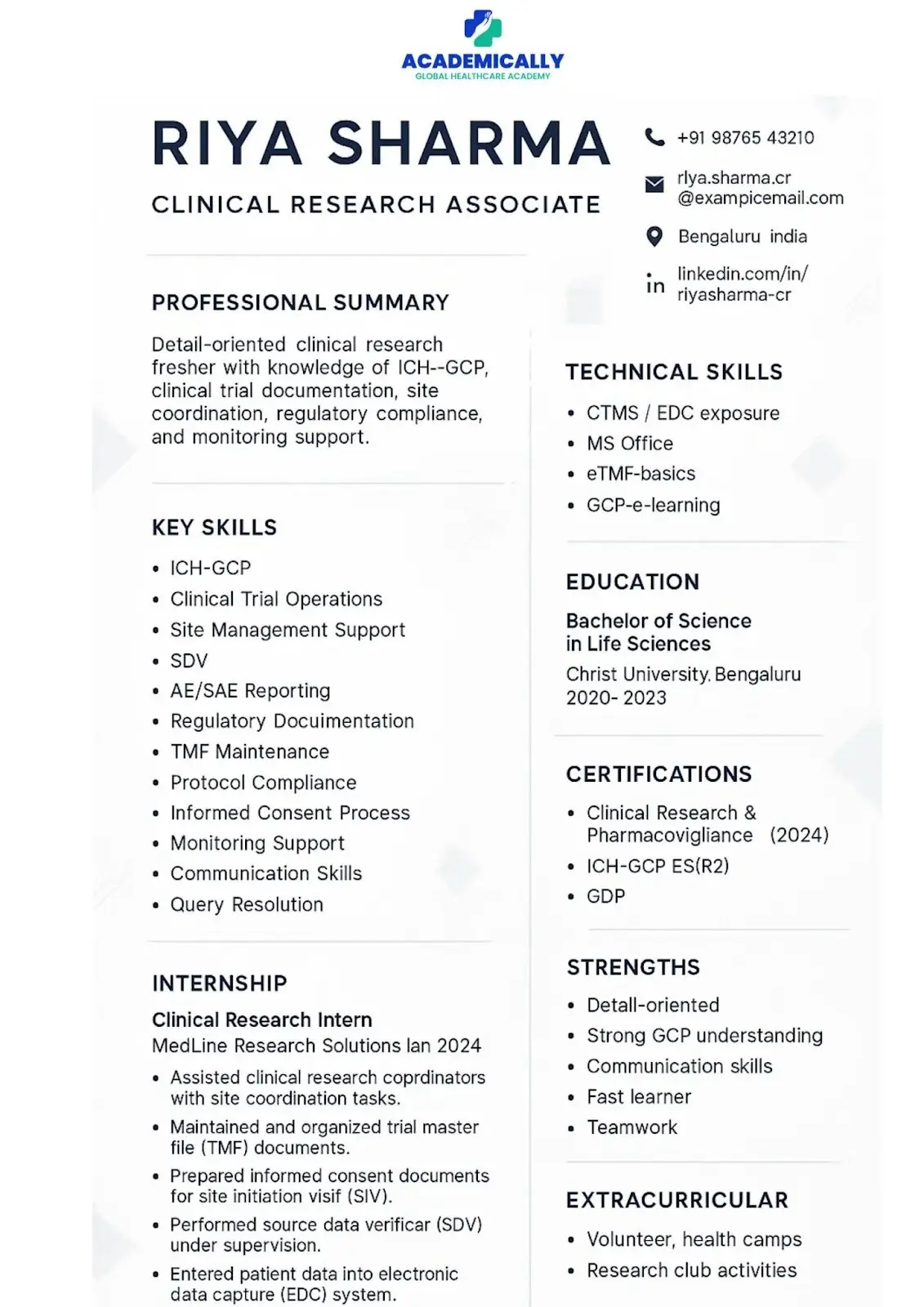
Here’s a sample CV of a fresher profile. Have a look at it to get an idea.
Resume Formatting Rules for ATS
ATS systems are picky. To ensure your resume parses properly:
Do:
- Use DOCX or PDF depending on job requirements
- Use simple formatting
- Use standard headings (Experience, Education, Skills)
- Use bullet points
- Use 10–12 pt font
- Keep margins clean
Avoid:
- Images
- Tables (light use is fine but risky)
- Icons
- Columns
- Text boxes
- Fancy fonts
Length:
- Freshers: 1 page
- Experienced: 1–2 pages
- Senior/Manager roles: 2 pages
Clinical Research Keywords You MUST Include
ATS and recruiters often search for the following terms:
Regulatory & Compliance
- GCP
- ICH
- Protocol adherence
- CRF completeness
- Source documentation
- Informed consent
- SAE/AE reporting
- IRB/IEC
Technical/Tools
- Medidata Rave
- Oracle Clinical
- REDCap
- CTMS
- eCRF
- EDC
- TMF
Clinical Skills
- Monitoring
- Site initiation
- SDV
- Query management
- Recruitment & retention
- Data cleaning
- Audit readiness
Data Management Keywords
- CDISC
- SDTM
- ADaM
- SAS
- Data validation
- Edit checks
Use these terms naturally throughout your resume, without sacrificing your sanctity.
Resume Guidelines based on Individual Roles
For CRC Roles
- Show patient interaction skills
- Mention recruitment and retention metrics
- Highlight the consent process handling
- Include sample storage/handling
- Show IRB submission knowledge
For CRA Roles
- Monitoring visit numbers
- Trial phases
- Therapeutic areas
- SDV percentage
- Protocol deviation management
- SAE reporting
For PV Roles
- ICSR volume
- Databases (Argus, ArisG)
- Case triage
- Narrative writing
- PSUR/DSUR contributions
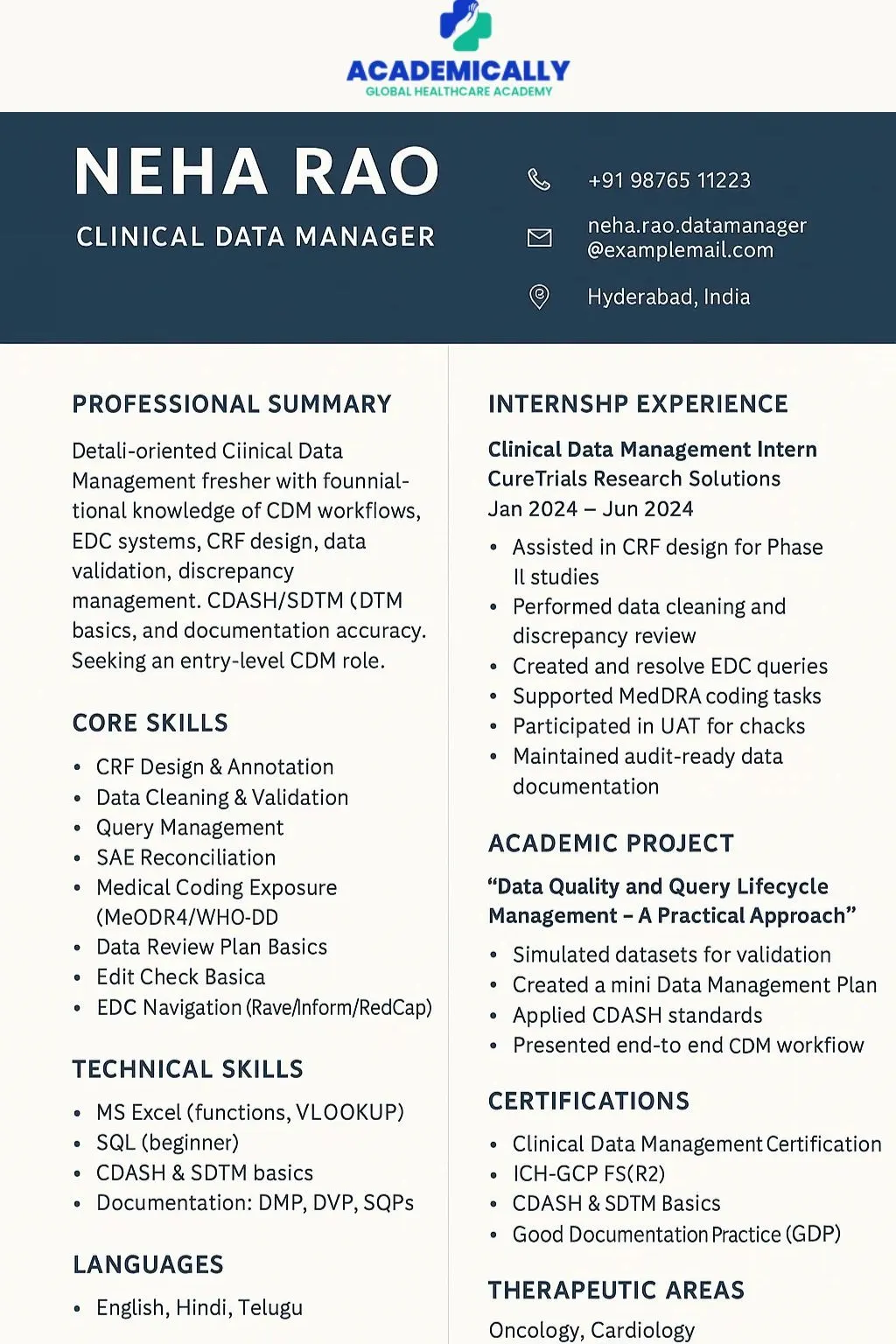
For Data Managers
- EDC setup
- CRF design
- Data cleaning
- Query management
- CDISC mapping
- Database lock timelines
For Regulatory Professionals
- Dossier compilation
- eCTD
- Submission timelines
- Regional regulatory frameworks
Mistakes That Can Lead to Instant Rejection
Avoid these:
- Overly general resume (“Hardworking, passionate…”)
- No clinical keywords
- Not listing tools (Rave, Argus, EDC tools)
- Long paragraphs instead of bullets
- Including unrelated roles (retail, BPO) without linking transferable skills
- Using vague sentences (e.g., “Handled many responsibilities…”)
- Spelling mistakes
- Exaggerating experience (easily caught during interviews)
One-Page Clinical Research Resume Checklist
Before sending your resume, verify:
- Includes a targeted professional title
- 2–4 line summary with metrics
- Keyword-rich skills section
- Experience shows measurable results
- GCP certification listed
- ATS-friendly formatting
- Clinical tools mentioned
- Trial phases specified
- Bullet points start with strong verbs
- No spelling/grammar errors
To Conclude with…
A strong resume is a strategic tool, not just a document. In a field driven by regulatory compliance, precision, and documentation quality, your resume must demonstrate your ability to perform in exactly those areas.
- measurable impact
- technical tools
- regulatory knowledge
- clear, ATS-friendly structure
Whether you are a fresher or an experienced CRA/CRC/Data Manager, this blog gives you the structure to stand out and land interviews. If you need personalised guidance, feel free to contact us. Our expert team will assist you in your clinical research career.