Big Career Opportunity for FMGE Candidates to Make a Global Medical Career
“The future depends on what you do today.”: Mahatma Gandhi
The journey after MBBS is often filled with uncertainty for thousands of international medical graduates (IMGs). Confusion, delays and years lost navigating the wrong path. But every once in a while, a story cuts through that noise. This is one of them.
In a candid conversation between Dr. Akram Ahmad and Dr. Megha, a recent graduate who cleared the AMC exam in her first attempt, we uncover what actually works, what doesn’t, and how you can avoid wasting years in the process.
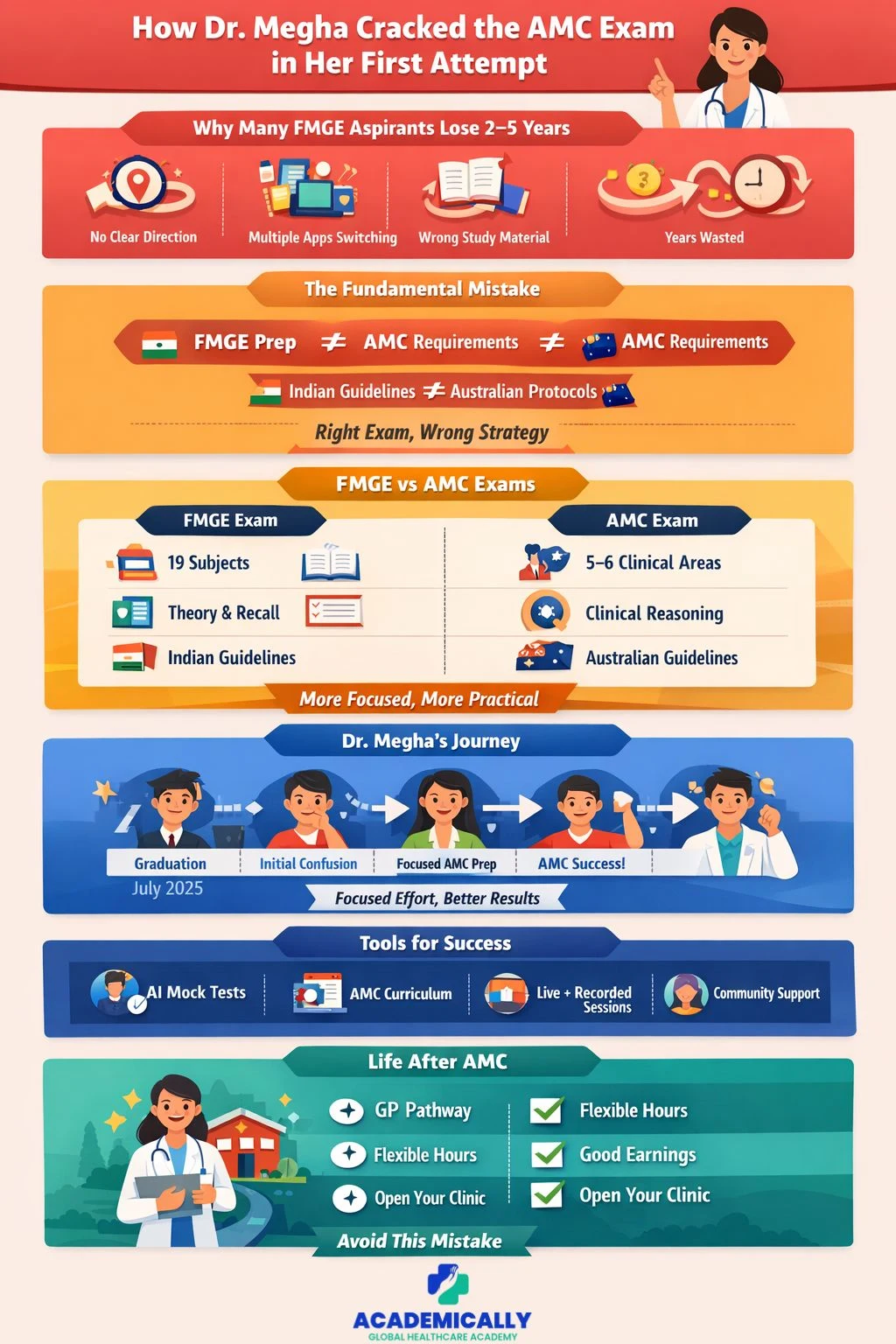
The Hidden Crisis: Why Many FMGE Aspirants Lose 2–5 Years
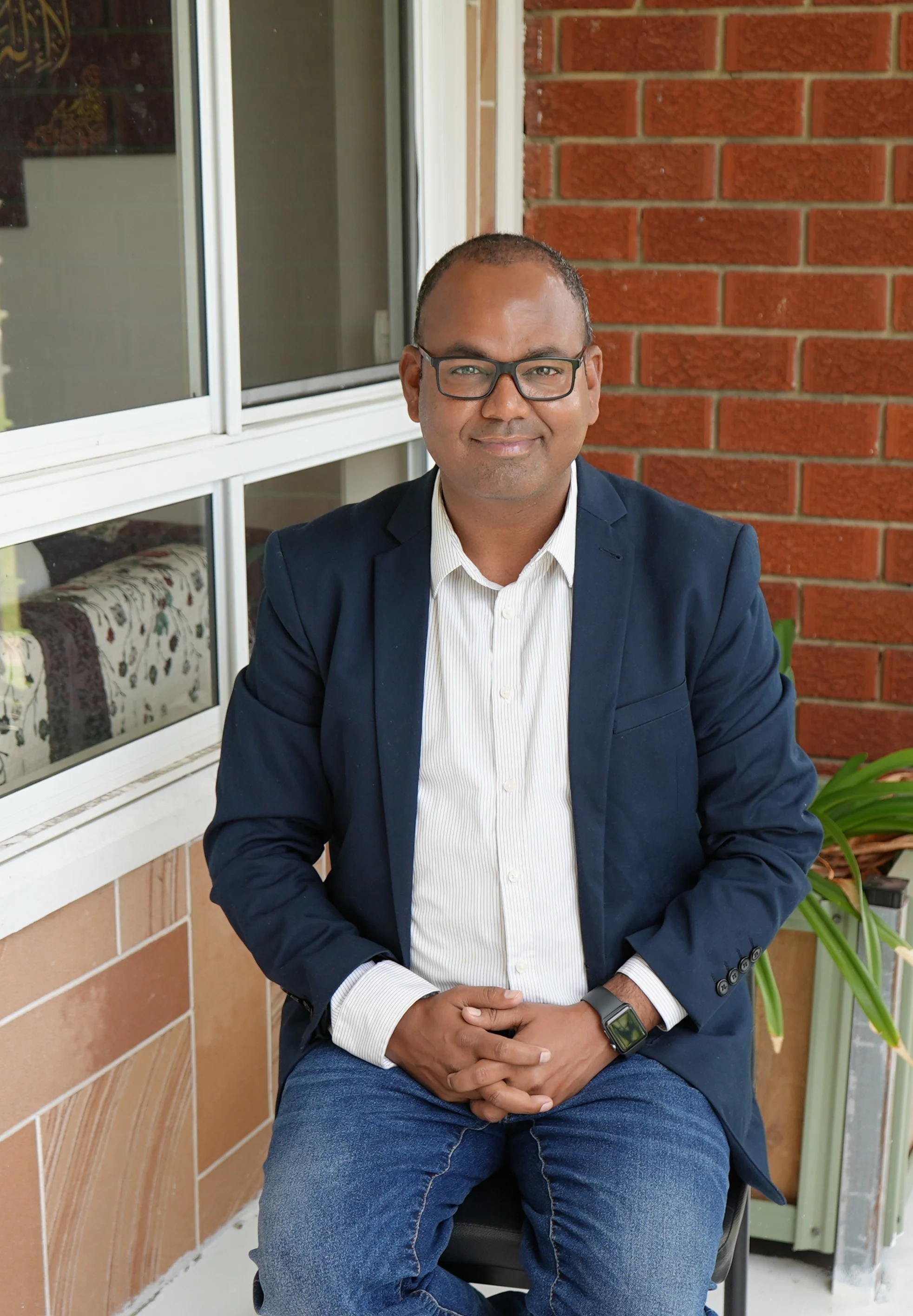
Dr. Akram Ahmad opens with a stark reality. Many students spend 2 to 5 years preparing for FMGE exams, often without structured guidance.
- They switch between multiple apps and resources
- They follow scattered strategies
- They lack clarity on exam-specific requirements
The result? Confusion, burnout, and career stagnation. This is where most candidates go wrong. They assume all licensing exams follow the same preparation logic. They don’t.
Dr. Akram Ahmad highlights a very important point often ignored. Avoid CV gaps at all costs. If you are stuck in exam preparation:
- Work in clinical roles
- Explore non-clinical jobs (medical science liaison, clinical drug development, drug safety physician)
- Build relevant experience
Australian recruiters prioritise:
- Recency of work
- Continuous professional engagement
Not just exam scores.
Comparative Overview: FMGE vs. AMC Exam Preparation
| Aspect | FMGE | AMC Exam |
| Number of Subjects | ~19 subjects | 5-6 clinical subjects |
| Focus | Broad medical knowledge | Clinical reasoning, Australian guidelines |
| Guideline Source | Indian or generic materials (not suitable for Australia) | Australian-specific guidelines |
| Study Approach | Memorisation of many topics | Clinical application and thinking |
| Recommended Study Materials | FMGE preparation apps (not ideal for global licensure exams) | Academically app, AMC Handbook, Anthology of Medical Conditions, Oxford Handbook of Clinical Medicine |
| Examination Difficulty | Considered broad and less clinically focused | More clinically oriented, tests practical knowledge |
Dr. Megha explains it clearly:
“AMC forces you to think like a clinician.”
This is not just an exam. It is a mindset shift.
How can IMGs Transition to AMC Pathway Easily?
Dr. Megha graduated in July 2025 from Tbilisi State Medical University. Like many IMGs, she started with:
- No clarity about AMC guidelines
- No structured study plan
- Exposure to mixed preparation resources
She describes her early phase as:
“It was very confusing. I was just joining anything and everything.”
That changed when she shifted to a focused, AMC-specific preparation strategy.
What She Did Differently
- Started serious preparation in September
- Attended live classes consistently
- Revisited recorded sessions for revision
- Created structured personal notes
- Focused only on relevant AMC material
Within 3 to 4 months, her preparation transformed. So did her results.
Is the AMC Exam Difficult?
Here is the hard truth: You cannot clear AMC using FMGE or Indian preparation materials.
Why?
- Guidelines differ significantly
- Clinical protocols are country-specific
- Question patterns test application, not recall
Dr. Megha initially tried using FMGE resources. It didn’t work. Only when she switched to AMC-focused materials did things start making sense.
What Actually Works: Proven AMC Preparation Strategy
Dr. Megha’s success wasn’t accidental. It followed a clear system.
1. Use Dedicated AMC-Focused Resources
Generic apps create confusion. You need a single, structured platform aligned with Australian guidelines.
2. Combine Learning Modes
Effective preparation is not passive.
She used:
- Live classes for concept clarity
- Recorded lectures for reinforcement
- Self-made notes for retention
3. Practice with High-Quality Question Banks
She used:
- Question banks
- AMC-focused question practice
This helped her:
- Understand clinical scenarios
- Improve decision-making speed
- Identify weak areas
4. Take Mock Tests Seriously
Mock tests simulate real exam pressure.
They help you:
- Build confidence
- Improve time management
- Reduce exam anxiety
How Structured Platforms Like Academically Help in AMC Preparation
One of the biggest advantages Dr. Megha had was access to a structured AMC preparation ecosystem.
Key features that made a difference:
AI-Based Mock Tests
- Personalised performance analysis
- Smart insights into weak areas
- Adaptive difficulty levels
Live + Recorded Sessions
- Learn concepts in real-time
- Revise anytime without missing content
Focused AMC Curriculum
- Based strictly on Australian guidelines
- No irrelevant or outdated material
Discord Community Support
- Peer learning and discussion
- Instant doubt resolution
- Motivation through shared progress
This removes the biggest problem IMGs face which is, lack of direction.
Medicine is not about memorising textbooks. It is about thinking, reasoning, and making decisions that impact lives. That is exactly what AMC evaluates. That is why your preparation must reflect it.
Career After AMC: Why GP Pathway Stands Out
Dr. Megha is considering the General Practice (GP) pathway in Australia. Why is it a popular choice?
- Better work-life balance
- Flexible working hours
- Strong earning potential
- Opportunity to open your own clinic
- Shorter training duration compared to specialties
For many IMGs, this is the most practical and rewarding route.
To Conclude with…
Clarity is your biggest advantage. Dr. Megha’s story is not about luck. It is about:
- Choosing the right path early
- Avoiding unnecessary detours
- Following a structured system
Most students don’t fail because they lack ability. They fail because they lack direction. If you’re preparing for AMC, focus on Australian clinical guidelines. Always prioritise concept clarity over memorisation. Consistent practice, revision and structured learning systems matter. Do this right, and you won’t need 5 years. You might just need 4 months.