“Success can come to you by courageous devotion to the task lying in front of you.”: Sir C. V. Raman
Truly said, scientific success is rooted in focus. Perseverance and disciplined effort are essential for every Pharm. D graduate in India. Relevant clinical knowledge, patient safety and regulatory competence matter the most in the world of pharmacy. Global opportunities reward those who stay committed to their professional journey despite early challenges.
This belief is brought to life by the inspiring story of Dr. Martin. He is an Indian Pharm. D graduate who turned his international career aspirations into reality by clearing the Saudi Pharmacist Licensure Exam (SPLE) in his very first attempt. At a time when many pharmacy professionals feel discouraged by limited growth and compensation in India, Dr. Martin’s journey reinforces a truth.
In this blog, we are sharing with you Dr. Martin’s inspiring journey. We have uncovered details about studying Pharm. D across multiple Indian states and work as a clinical pharmacist and successfully navigate the SPLE process. He also reveals common mistakes aspirants must avoid, practical preparation strategies for working professionals. Bonus is, you also get a realistic roadmap for building a long-term pharmacy career in Saudi Arabia and other GCC countries. Keep reading.
An Indian Pharmacist’s Background that Shaped His International Career
Dr. Martin hails from Kerala. He completed his six-year Pharm. D programme in Andhra Pradesh. He currently works as a clinical pharmacist in Chennai. His journey itself is a lesson in adaptability. After completing 1.5 years of clinical experience, he decided to pursue international licensure. So, he appeared for the Saudi Pharmacist Licensure Exam (SPLE). It is a mandatory license exam that you need ot clear to work as a registered pharmacist in Saudi Arabia.
Guess what, he cleared the SPLE eczema in his first attempt. Such a big feat! Congratulations to him.
Is PharmD Still Worth It? An Honest Perspective from an Indian Pharmacist
One of the most debated questions among pharmacy students today is whether PharmD is still a valuable course. Dr. Martin addresses this head-on. According to him, PharmD is undoubtedly demanding, but far from outdated. In fact, when aligned with the right clinical exposure and career planning, it offers strong global relevance, especially in countries that value clinical pharmacy practice.
He emphasises that:
- The value of PharmD depends on how students utilise the course
- Clinical skills matter far more than just completing academics
- Globally, PharmD professionals are well-recognised and well-paid
For those who feel discouraged due to low starting salaries or limited roles in India, his message is clear: “PharmD opens international doors, only if you prepare strategically.”
In an eye-opening interview with Dr. Akram Ahmad (B. Pharm, Pharm. D, PhD, University of Sydney), Dr. Martin Shahji discusses everything about his journey and shares important tips for budding pharmacists.
How is the Clinical Experience of a Pharmacist in India?
Dr. Martin completed his internship at a well-known medical college hospital. While the infrastructure and exposure were strong, he admits that hands-on involvement was limited. This is the grim reality for many pharmacy interns in India. Recognising this gap, he made a conscious decision to work in a JCI-accredited hospital after graduation. This move significantly strengthened his clinical foundation and helped him align his knowledge with real-world pharmacy practice. It served as a critical factor for him to clear his international licensing exams like SPLE.
The Reality of Pharmacist Salaries in India
Dr. Martin candidly discusses the harsh truth about pharmacist salaries in India. Entry-level clinical pharmacists typically earn between ₹8,000 to ₹15,000 per month. Even experienced professionals often struggle to see proportional growth. This disparity between effort, qualification and compensation is a major reason why many PharmD graduates look abroad. In contrast, GCC countries offer:
- Better pay scales
- Respect for clinical roles
- Work-life balance
- Structured healthcare systems
Going abroad was not about permanent migration for Dr. Martin. It was about financial stability, professional growth, and long-term flexibility.
Why International Pharmacists Should Go to Saudi Arabia?
Saudi Arabia stands out among global pharmacy destinations for several reasons:
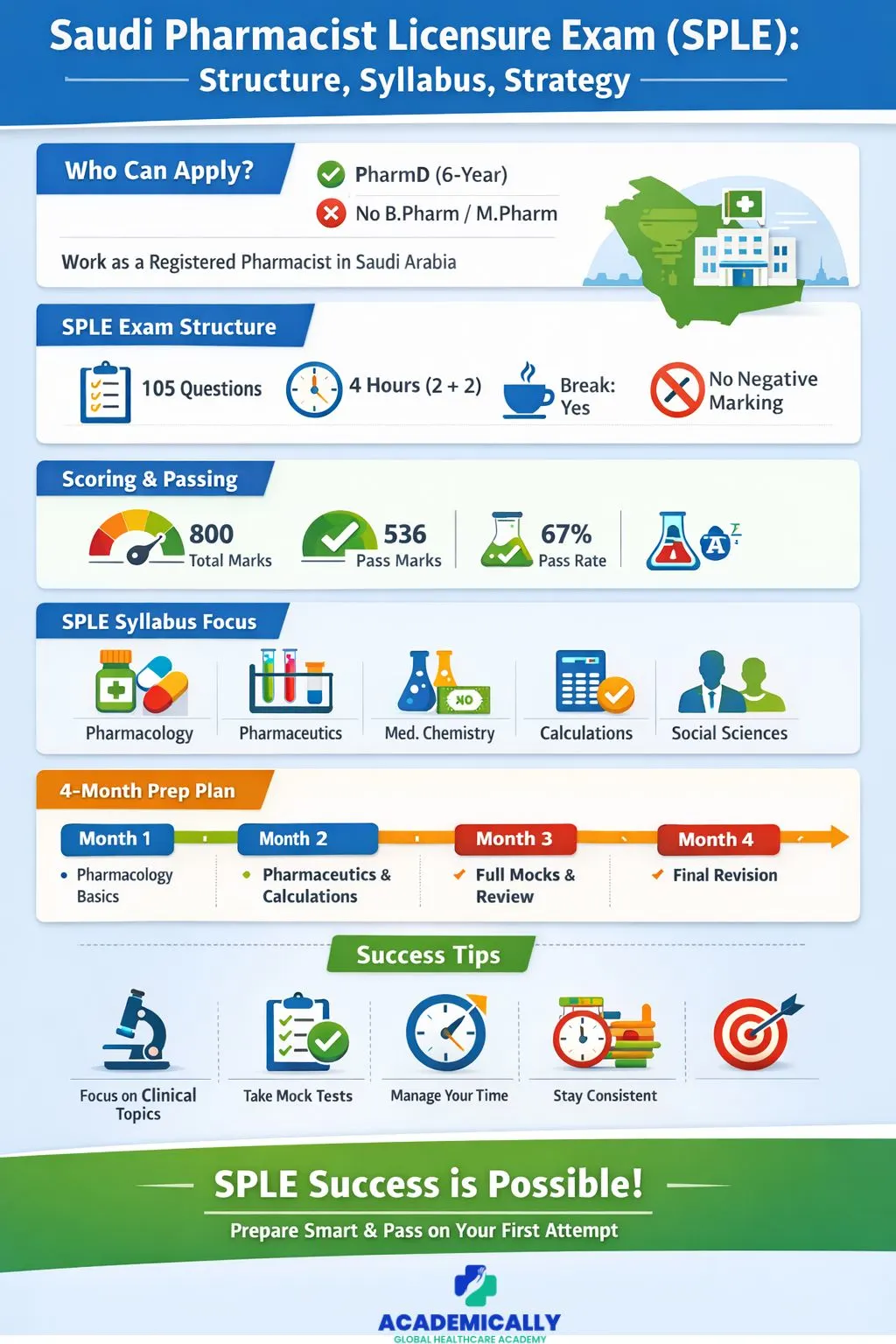
- Exclusive Recognition of Pharm. D graduates
Saudi authorities recognise only the six-year Pharm. D degree.- B.Pharm
- M.Pharm
- B.Pharm + Pharm. D (PB)
are not accepted for pharmacist licensure.
- Lower Experience Requirement
Unlike many countries that require 3+ years of experience, Saudi Arabia allows candidates to apply with as little as 1 year of experience. - Strong Earning Potential
Pharmacists in Saudi Arabia benefit from tax-free income and huge savings potential. - Career Flexibility
Professionals can work for 5-10 years, save significantly, and later migrate to countries like Australia, Ireland, Canada, or return to India to start their own pharmacy business.
What is the Saudi Pharmacist Licensure Examination (SPLE)?
The Saudi Pharmacist Licensure Examination (SPLE) is conducted by the Saudi Commission for Health Specialties (SCFHS). As the name implies, it is a licensure exam for internationally trained pharmacists who want to work in Saudi Arabia.
Exam Structure (Updated Pattern)
- Total Questions: 105 MCQs
- Total Duration: 4 hours
- Session 1: 2 hours
- Session 2: 2 hours
- Break: Provided between sessions
- Negative Marking: None
Passing Criteria
- Total score: 800
- Minimum passing score: 536
- Passing percentage: 67%
Candidates can skip questions and return to them later, making time management a key success factor.
SPL Syllabus & Weightage: What Should You Focus On
Dr. Martin highlights that the exam tests core pharmacy knowledge, not obscure facts. Major subject areas include:
- Pharmacology & Therapeutics (significant weightage)
- Pharmaceutics
- Medicinal Chemistry
- Pharmaceutical Calculations
- Social & Behavioural Sciences
While pharmacology and therapeutics form the backbone, balanced preparation across all subjects is essential.
Is the SPL Exam Really Tough?
Contrary to popular belief, Dr. Martin does not consider the SPL exam “extremely difficult.”
Here’s the reality:
- Anyone with basic Pharm. D knowledge can pass the exam
- Success depends on consistent preparation
- The exam is fair and clinically oriented
He strongly recommends 4 months of focused preparation, especially for working professionals.
How to Prepare for Saudi Pharmacists’ Licensure Exam While Working Full Time
One of the most inspiring aspects of Dr. Martin’s journey is that he never quit his job to prepare for the exam. His strategy includes:
- Studied 3-4 hours daily
- Maintained consistency over 4 months
- Focused heavily on mock tests and time-bound practice
He advises against quitting jobs unnecessarily, as work experience not only strengthens concepts but also boosts confidence.
Role of Structured Coaching & Mock Tests
Dr. Martin credits structured support from Academically for streamlining his preparation. According to him, the most valuable components were:
- Concise, exam-focused study material
- Regular live classes
- Topic-wise and full-length mock tests
- Doubt-clearing sessions
- Continuous guidance during the DataFlow process
AI-based mock tests, in particular, helped him master time management and understand the exam’s clinical approach.
Common Mistakes PharmD Graduates Must Avoid
Based on his experience, Dr. Martin warns against:
- Listening to negative opinions about PharmD
- Underestimating the SPL exam
- Quitting jobs too early
- Ignoring mock test practice
- Delaying document verification responses during DataFlow
He emphasises that positivity, discipline, and timely action make all the difference.
To Conclude with…
Dr. Martin’s final message to every Pharm. D graduate dreaming big is simple yet powerful:
“Be positive. Stay away from negativity. Work hard, gain experience, and prepare with vision.”
Whether your goal is Saudi Arabia, Ireland, Australia, or beyond, his journey proves that global pharmacy careers are achievable, even from modest beginnings.