There’s a quiet crisis that nobody talks about enough. Thousands of brilliant doctors, pharmacists, dentists, and scientists across India are stuck. Not because they lack talent. Not because they lack drive. But because nobody showed them the door that was always there, the one that leads straight into the heart of the pharmaceutical industry. Today, 26 of those professionals walked through it.
A Graduation Unlike Any Other
Academically just celebrated the graduation of its first batch of upskilling course students in Medical Science Liaison, Drug Safety Physician, and Pharmacovigilance. Every single student passed. Four have already secured industry roles. And three achieved Golden Honours by scoring above 95%.
But the numbers, as impressive as they are, only tell part of the story.
The real story is Dr. Laxmi Bhardwaj. MBBS, DNB, 15 years of practice, a doctor her neighbourhood children still chase down the street calling, “Doctor Mam! You are the best!”
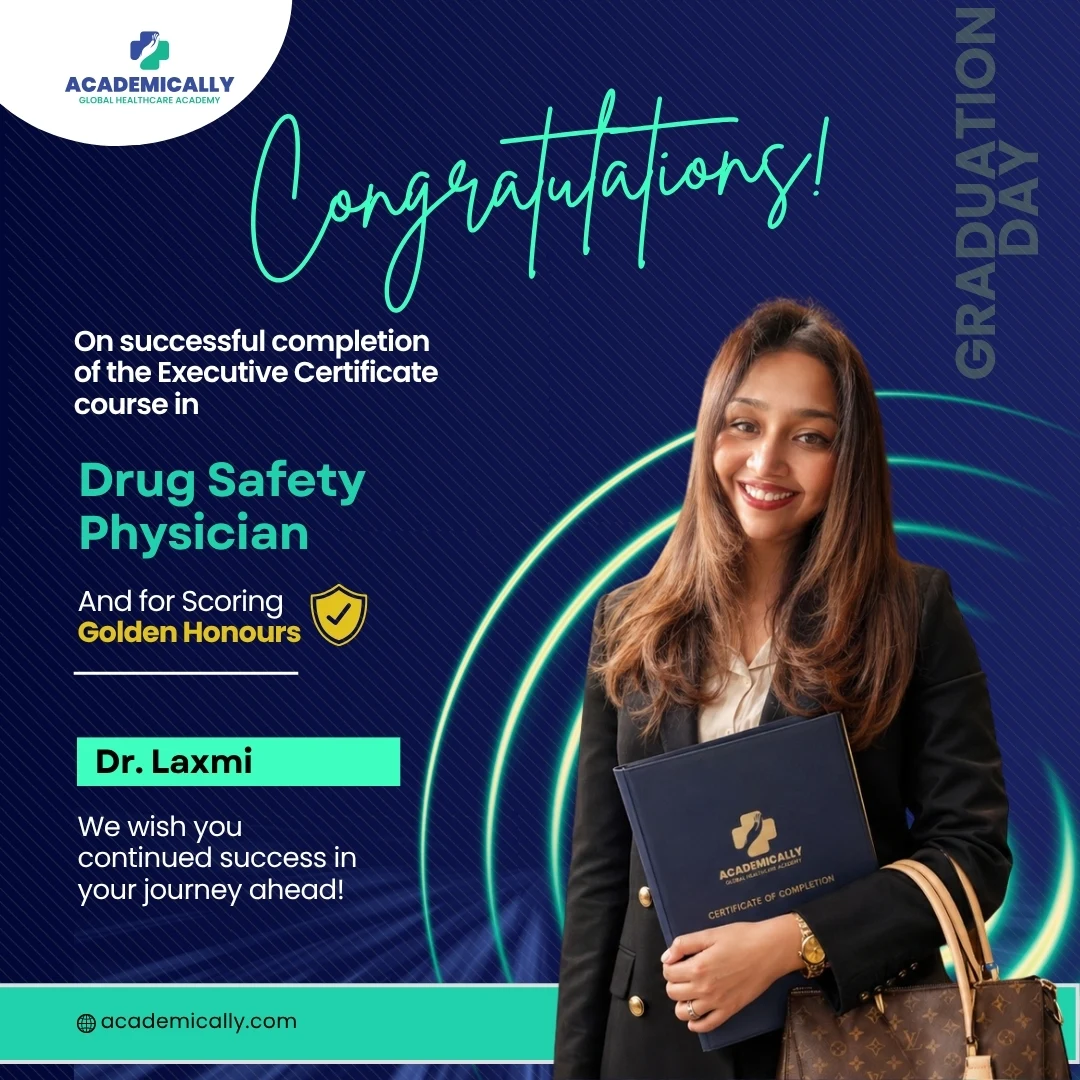
She loved medicine. She chose it with pride. But while she was building a successful clinical career, something quieter was slipping away: time with her child, presence at home, and a life that felt whole.
Stepping outside medicine after everything she had invested felt almost unthinkable. And yet, she did.
Through mock interviews, a capstone project, and mentorship that showed her exactly where her medical knowledge fits in the research world, she stopped feeling like she was entering unfamiliar territory and started feeling like she belonged.
Today she steps into a role as Clinical Safety Physician at TCS at 32 LPA. But what moves her most isn’t just the offer. It’s the realisation that she hasn’t left clinical medicine. She has expanded it.
“It’s no longer about choosing between career and personal life,” she says. “It’s about creating a structure where both can coexist.”
The story of Salman Junaid, a Pharm.D graduate who spent ten years building something real, and then spent one year in Saudi Arabia realising exactly what that something was.
Six years of clinical research across Phase II and Phase III trials in Hyderabad. Then Jeddah, a pharmacist role, more money, a different life. And every single day, the quiet weight of distance between what he was doing and what he knew he was capable of.
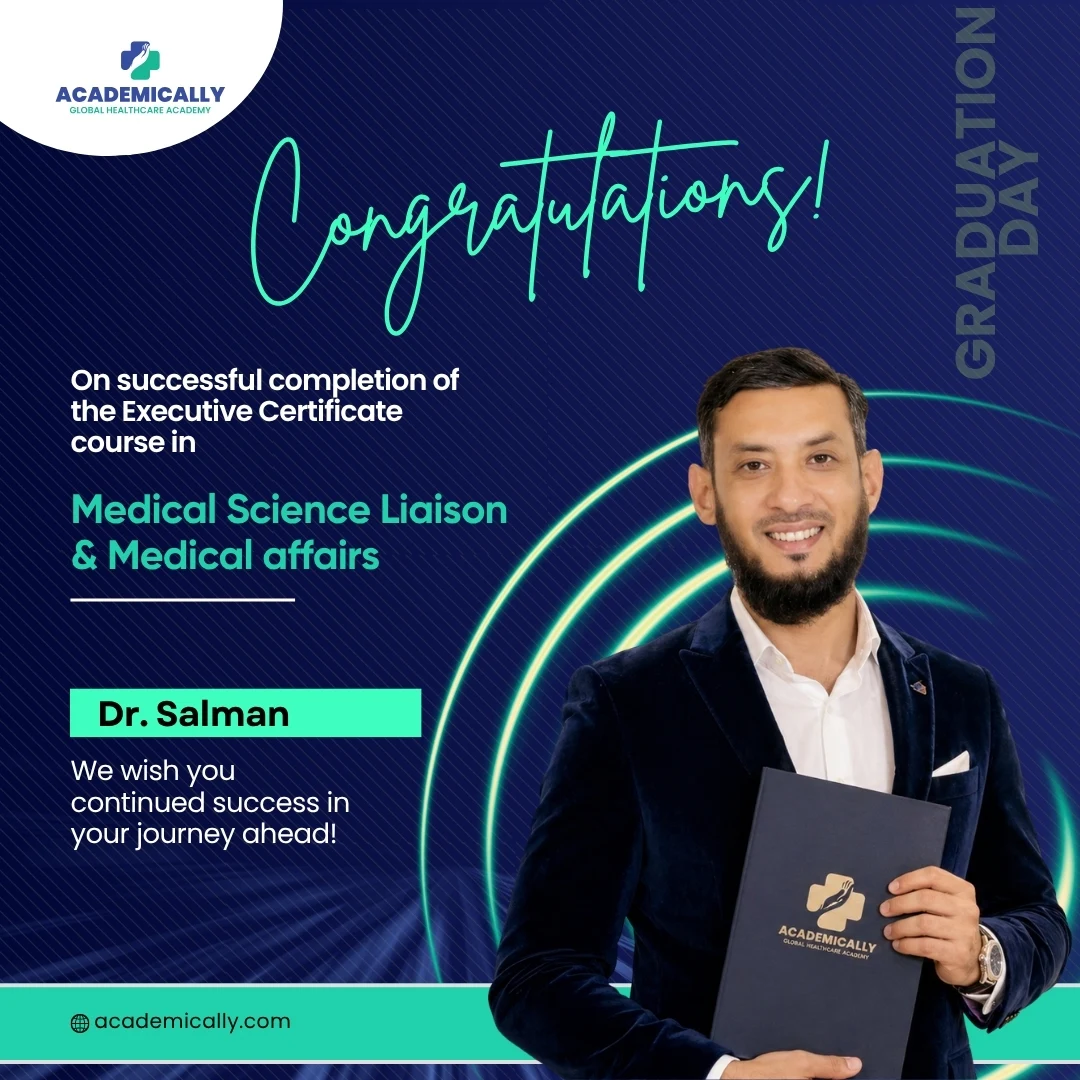
He came back sharper, not confused.
He knew he wanted Medical Science Liaison and Medical Affairs. He just needed to figure out how to get there properly.
The counselling session at Academically was the first time someone mapped his own journey back to him in a way that made sense. The clinical research years, the pharmacovigilance interest, even the Saudi Arabia chapter all connected into something solid.
The mock interviews made him uncomfortable in the best way. The capstone gave him something current to stand behind. He walked into interviews with confidence and got placed at Oviya Medsafe as a Pharmacovigilance Associate at 8 LPA.
“I went all the way to Saudi Arabia,” he says, “to realise that what I was looking for was always here. I just needed someone to help me see it.”
The next story is of Sheetal, a biotechnologist whose curiosity had always lived at the molecular level.
Cancer detection. CRISPR-based diagnostics. A co-authored publication in Cancer Genetics in 2025.
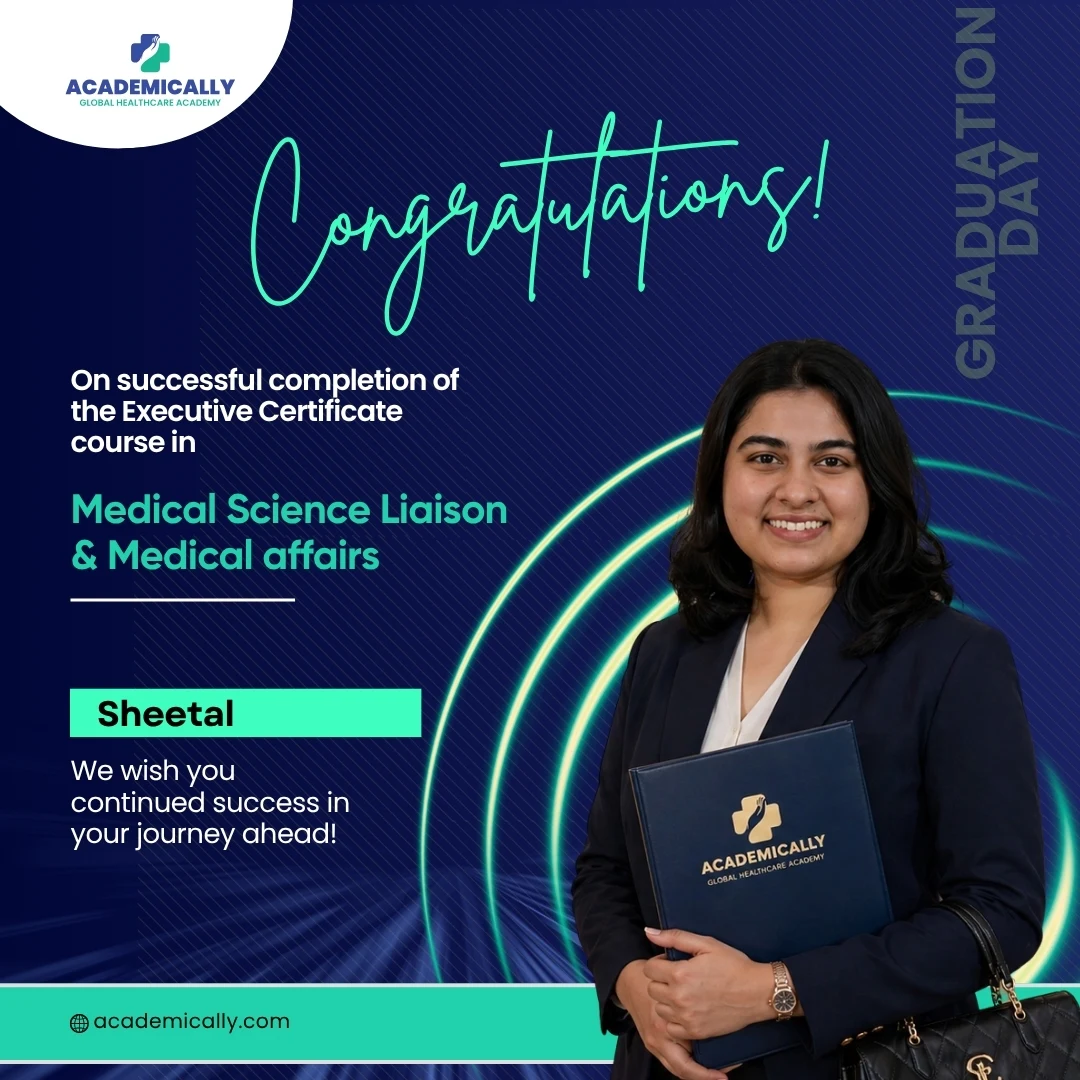
She had the research depth, the clinical exposure from coordinating trials at a cancer hospital, and the ability to translate complex science into conversations clinicians could act on.
She had everything. She just didn’t have a name for it yet.
“This wasn’t a career I was pivoting into,” she says. “This was a career I had already been practising without knowing it existed.”
Sheetal graduates today with her Postgraduate Certification in Medical Science Liaison and Medical Affairs.
The next story is of Dr. Rose, a dentist who married into the Indian Army and learned quickly that life in the military doesn’t wait for career plans.
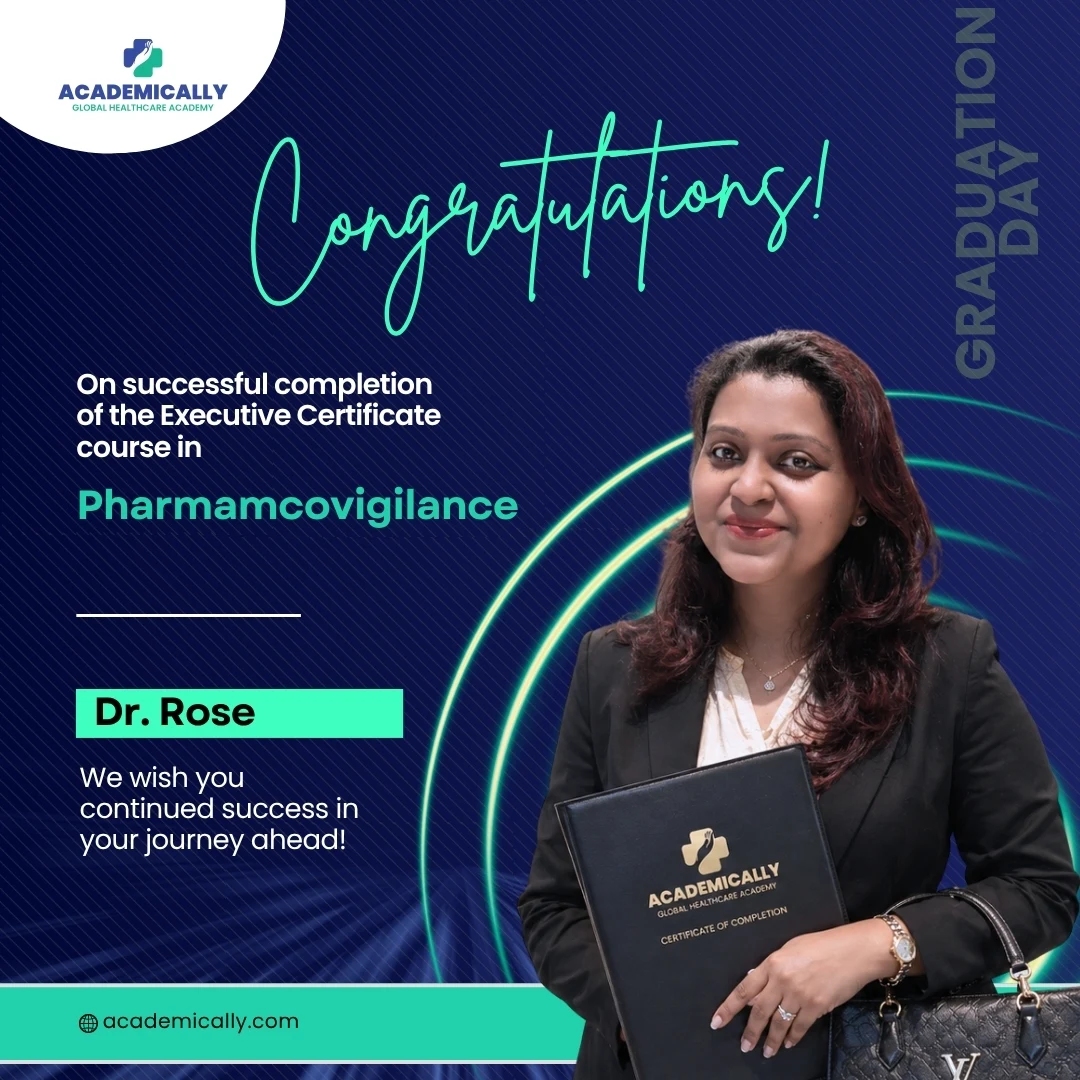
Postings to Srinagar. Then Jammu. A baby. A decade-long career pause.
And one very specific question she kept asking herself: what kind of career can actually work for my life?
She found her answer in Drug Safety and Pharmacovigilance, one of the few high-paying non-clinical domains where remote work is genuinely negotiable.
For someone whose life moves with the Army every few years, that wasn’t just a career benefit. It was the answer to everything.
“I didn’t put my career on hold,” she says. “Life just had other plans. And now, finally, so do I.”
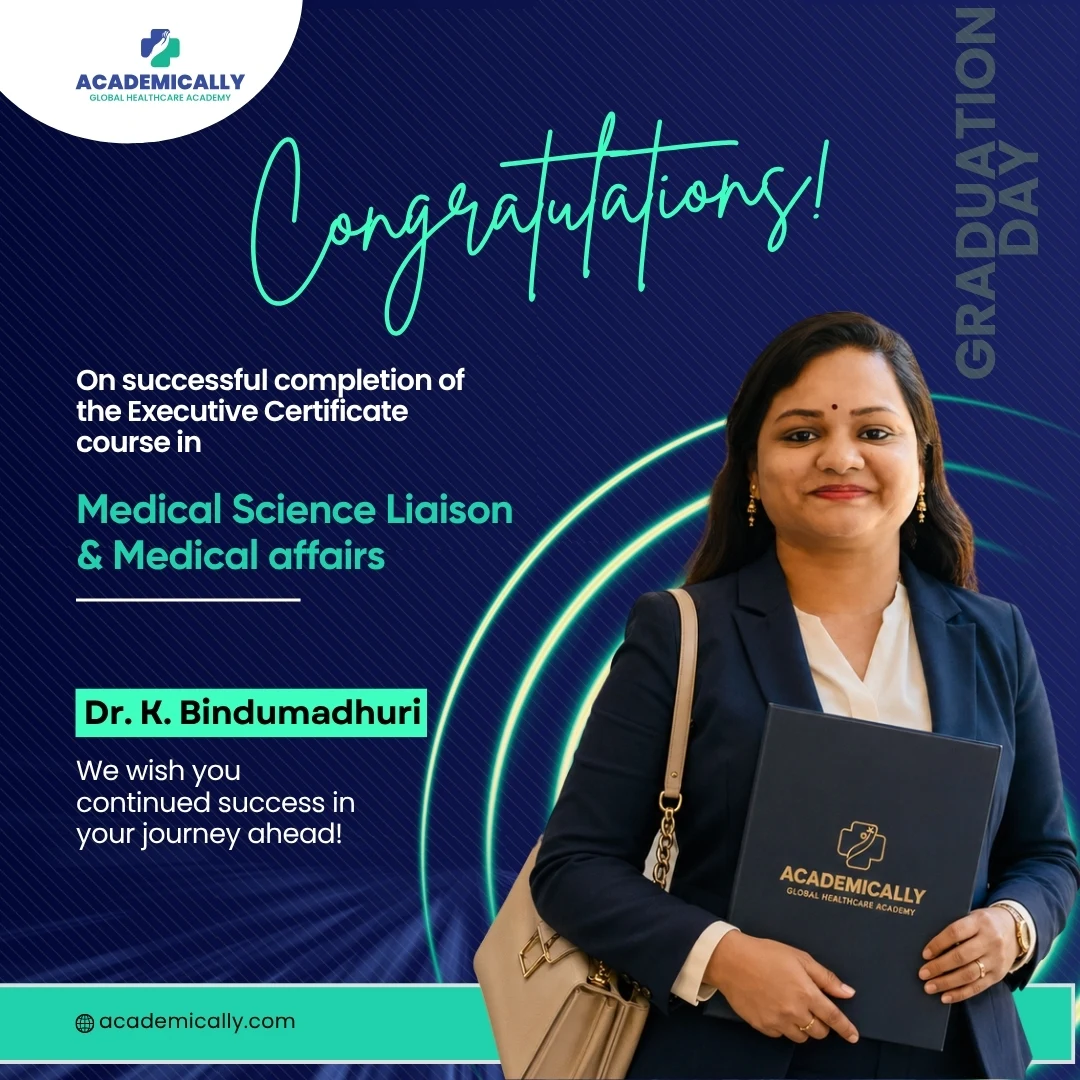
And the final story is of Bindhumadhri, a Pharm.D and PhD scholar who spent years teaching pharmacovigilance across some of India’s leading pharmacy colleges.
ADR monitoring, signal detection, drug safety reporting, regulatory frameworks. She taught it all. Brilliantly.
But a quiet question had been forming for years: she was preparing students for an industry she had never fully entered herself.
Every time a student asked what it actually feels like to work in drug safety at a real pharma company, she was answering from literature, not experience.
She knew pharmacovigilance deeply. She knew it from the outside.
The guest session with the VP of Cipla became her turning point. Sitting in that room, she realised the gap between what she had been teaching and what the industry actually looked like was smaller than she had feared.
Her academic depth, her research experience, and her ability to translate complex pharmacological data into clear insight were exactly what Medical Affairs needed. She just needed someone to help her position it.
Today she graduates with her Postgraduate Certification in Medical Science Liaison and Medical Affairs.
“I spent years making others ready for this industry,” she says. “Academically finally made me ready for it too.”
These are not comeback stories.
These are stories of people who were always capable. They just needed someone to show them where to go.
Why Pharma, and Why Now?
If you’re a healthcare professional who has never seriously considered the pharmaceutical industry, here is something worth knowing.
| Indicator | Detail |
| Global Pharmacovigilance Market (2035) | Projected to exceed USD 20 billion |
| India Market Growth Rate | Expanding at a CAGR of 7.9% |
| Key Trend | Global pharma companies actively outsourcing drug safety and medical affairs to India |
| Talent Gap | Industry demand is growing faster than the supply of industry-ready professionals |
That gap is your opportunity.
Roles like Medical Science Liaisons sit at the intersection of science, medicine, and strategy. They engage with key opinion leaders, support clinical research, and translate complex data into real conversations that shape how medicine is practised.
Drug Safety Physicians and Pharmacovigilance Specialists are the professionals ensuring that every medicine reaching a patient is as safe as it can possibly be.
These are not peripheral roles. They are core to how the pharmaceutical world functions.
And here’s the part most healthcare professionals don’t realise: your clinical background isn’t just relevant to these roles. It is one of the most valuable assets you could walk in with.
What Actually Makes the Difference
Academically was built on a single belief: a course only matters if it actually works.
Not in theory. In real interviews, at real companies, and in real careers.
| Course Feature | What It Means for You |
| Industry-Active Faculty | Learn from professionals working in pharma today, not academics teaching from outdated syllabi |
| Personalised Mentorship | Guidance tailored to your background. A fresh MBBS graduate and a 15-year veteran need completely different roadmaps |
| Capstone Projects | Leave with something tangible you built, something you can walk into an interview and own |
| Mock Interviews | Rigorous, honest practice designed to make the real thing feel familiar |
| Access to Industry Leaders | Direct sessions with senior leaders from Cipla, Pfizer, and Eversana, offering the inside view most professionals spend years trying to access |
Your Medical Background Was Never a Dead End
If you’re reading this as a healthcare professional who has wondered whether there’s more, more intellectual challenge, more career mobility, more life outside the clinic, the answer is yes.
Your years of training, your understanding of how medicine works in the real world, and your ability to think clearly under pressure are deeply valuable to the pharmaceutical industry.
It has always needed all of it. What was missing was a structured, honest, industry-aligned path to get you there. That path now exists.
The next Academically batch is open for enrolment across Medical Science Liaison, Pharmacovigilance, Drug Safety, Medical Writing, and other non-clinical roles.
If any part of this resonated, it’s worth exploring. Because somewhere in this story, there might just be yours.