Australia’s demand for medical and other healthcare professionals is booming. Doctors say the hardest part of their week is not the workload. It is telling new patients that they cannot register them. Their books are full. The nearest alternative clinic is over an hour away.
Just imagine.
In another town, a small hospital would rely on short-term locums to keep the emergency department functional. When one contract ended early, the roster almost collapsed.
These are ordinary conversations in parts of Australia right now.
For International Medical Graduates, this situation presents an opportunity. But it also demands clarity. Australia has jobs. It also has rules. Doctors who understand both tend to progress steadily. Those who rely on assumptions often lose time.
This blog looks at what is actually happening and how IMGs can get the best out of it.
The Current Shortage: What It Really Means
The impact shows up in predictable ways:
- Longer waits for primary care
- Greater pressure on emergency departments
- Delays in specialist referrals
- Increased strain on regional hospitals
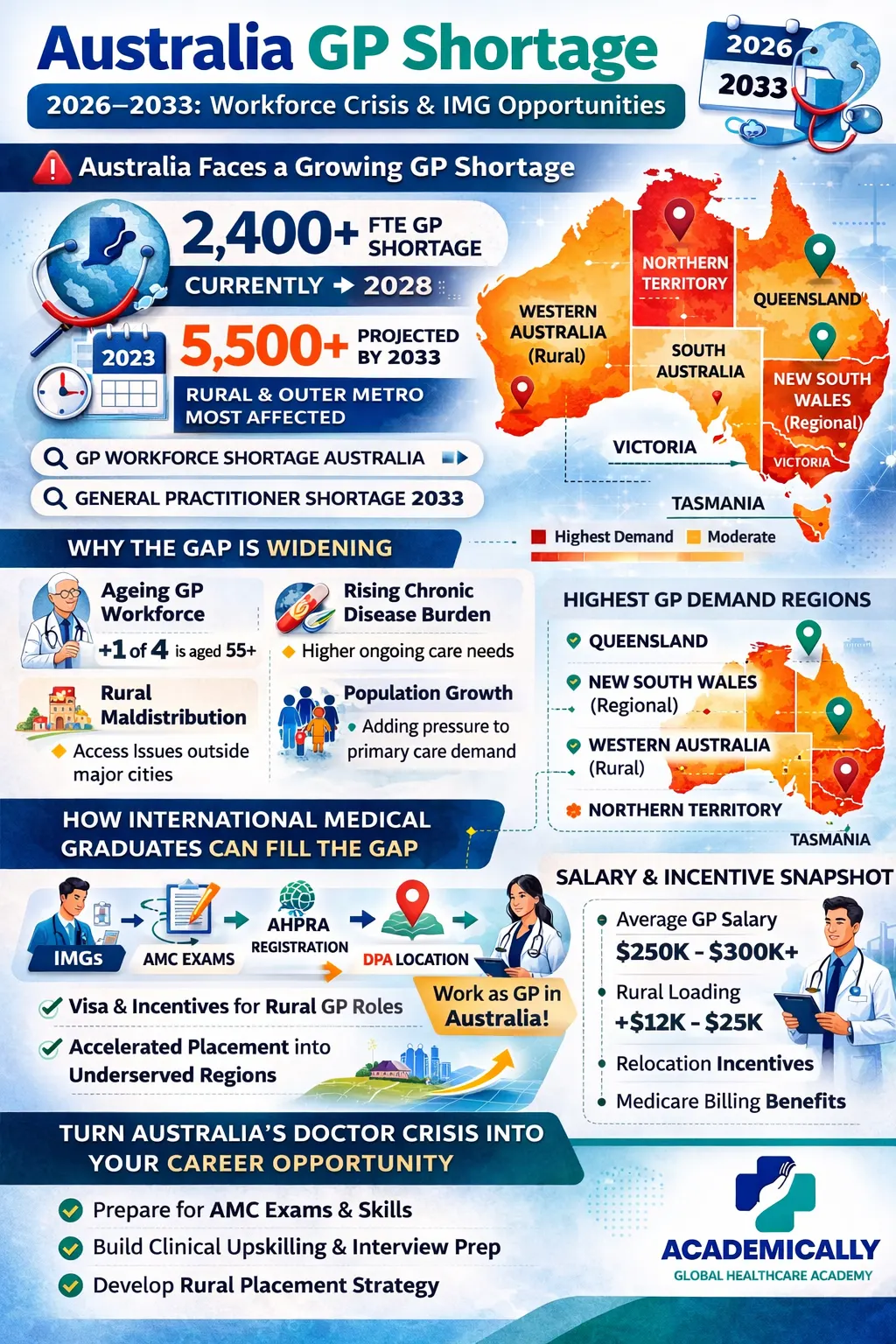
The issue is not evenly distributed. Major city centres still attract doctors. Smaller towns and outer regional communities struggle far more.
Australia also has an ageing population. Older patients require more regular reviews, medication management, and chronic disease monitoring. That increases demand for general practice and general medicine.
Where do IMGs Come to the Scenario?
Many IMGs imagine beginning their careers in Sydney or Melbourne. In reality, most overseas-trained doctors begin in areas classified under the Modified Monash Model as MM3 to MM7. These include regional cities, rural towns, and remote communities.
Across different states:
- Regional New South Wales continues to advertise GP roles repeatedly
- Parts of rural Victoria report extended waiting periods for appointments
- Communities in Queensland face recurring recruitment gaps
- Remote areas of the Northern Territory rely heavily on overseas-trained doctors
Recruitment in these areas often moves faster because employers genuinely need long-term staff.
Metropolitan hospitals, by contrast, attract large applicant pools. Competition increases, especially for subspecialty and consultant positions.
What are some of the Medical Specialties With High Demand?
Some disciplines show consistent workforce need:
- General Practice
- Psychiatry
- Emergency Medicine
- General Medicine, especially with a geriatric focus
- Obstetrics and Gynaecology
- Radiology
Regional emergency departments often manage high volumes with limited staff. Psychiatry services outside capital cities remain stretched. General physicians frequently treat elderly patients with multiple chronic conditions.
Subspecialties such as cardiology, oncology, or surgical fields still offer roles, but they tend to cluster in larger centres and require stronger local experience.
Why Good Candidates Sometimes Miss Out
In many cases, the challenge lies in expectations rather than ability.
Location Restrictions
Some IMGs search only within major cities. However, workforce policies frequently require overseas-trained doctors to work in designated shortage areas before accessing metropolitan billing privileges. Employers often select candidates who demonstrate flexibility.
Registration and Exam Assumptions
Doctors who pass the AMC Exam sometimes expect immediate employment. In reality, hospitals evaluate communication skills, teamwork, and cultural understanding alongside exam results.
Specialist pathway applicants may also need supervised practice and fellowship exams within specific timeframes. Delays in securing positions can complicate that process.
The 10 Year Moratorium
Section 19AB, often called the 10-year moratorium, limits Medicare billing access in certain metropolitan areas for eligible overseas-trained doctors.
This regulation affects where you start, not where you can eventually work. Many IMGs complete early career stages in regional settings and later transition to larger centres.
A Practical Way Forward
Rather than focusing on what seems restrictive, focus on what increases your control.
1. Prepare Properly for Exams
Treat licensing exams as professional milestones, not hurdles to rush through. Prepare for the AMC Exam from the best coaching centre. Structured mentorship and case-based learning can help you approach the exam with clarity and confidence.
2. Prioritise Entry Over Preference
Your first role does not define your entire career. Regional practice can provide Australian experience, referees, and familiarity with local systems. Many doctors who accept regional placements progress faster than those who wait for ideal city roles.
3. Strengthen Your Application Strategy
Australian employers expect clear and structured applications. Your CV should demonstrate:
- Safe clinical practice
- Team collaboration
- Adaptability
- Commitment to patient care
Interviews often focus on practical scenarios rather than theoretical knowledge. Targeted preparation can improve your confidence and presentation. Get your resume reviewed by experts and get guidance for cracking high-impact job interviews.
4. Build Long-Term Flexibility
Some IMGs expand their professional scope through postgraduate training in areas such as:
- Medical Science Liaison
- Clinical Drug Development
- Health Economics and Outcomes Research
- Medical Writing
These qualifications provide alternative or complementary career pathways within healthcare. Keep upskilling, develop skills that support both clinical and non-clinical growth.
The Long View
Most IMGs do not remain in their first posting forever. Over time, they complete supervision requirements, gain Australian references, and expand their professional networks. Mobility improves with experience and regulatory milestones.
Doctors who succeed in Australia often show three consistent qualities:
- Realistic expectations
- Steady exam preparation
- Willingness to adapt
Australia continues to rely on International Medical Graduates, particularly in regional and rural communities. The opportunity exists, but it rewards informed planning rather than assumption.
If you approach the process with patience and structure, you can build a stable and respected medical career in Australia. Australia’s doctor shortage creates a clear entry point for prepared IMGs. With realistic planning and steady effort, you can enter the system and build your career step by step.