Why are doctors choosing to migrate from their home countries abroad? No, it’s not just due to high salaries. Money isn’t everything. But the fact that you actually get to enjoy a respected career life, work-life balance and a quality lifestyle can only be possible in countries abroad like Australia. But making a move from your home country while already working full-time might seem cumbersome. Isn’t it? Well, this is exactly what Dr. Akash has conquered. Yes, you heard it right. He has cleared the Australian Medical Council (AMC) Part 1 exam while working full-time ICU night duties. Managing critically ill patients and surviving on interval sleep while preparing for exams; this is no small feat. His journey is not just a success story; it is a masterclass of discipline, strategic preparation, and mental resilience. In this blog, we will take inspiration from Dr. Akash’s AMC success story; how he balanced ICU responsibilities, licensing exams and AMC preparation with his smart strategy.
The Foundation of Clinical Skills: From Internship to ICU Wards
Dr. Akash completed his MBBS along with a one-year internship in Nepal. He graduated in June. Soon after, he cleared the FMGE in India in July. By August, he was already working as a Junior Doctor in an Intensive Care Unit (ICU). Many candidates choose to pause their ongoing schedule to prepare for the AMC exam. But, Dr. Akash chose a tougher path, working continuously in the ICU while studying. ICU postings are among the most demanding roles for a junior doctor:
- Night duties
- High-acuity patients
- Emergency procedures
- Constant decision-making under pressure
When asked about the hardest procedure he learned in the ICU, his answer was immediate: central line insertion. Along with intubations, sampling and chest tube management, this hands-on exposure significantly strengthened his clinical reasoning, a critical skill for AMC aspirants.
How does a medical graduate get awareness about AMC?
Like many international medical graduates, Dr. Akash’s AMC journey began through conversations with friends. The idea of working in Australia, structured training, better work-life balance, and global clinical exposure actually sparked his interest.
While exploring pathways online, he discovered Academically through Instagram. What followed was a structured, year-long AMC preparation journey that began in December and culminated in success the following November.
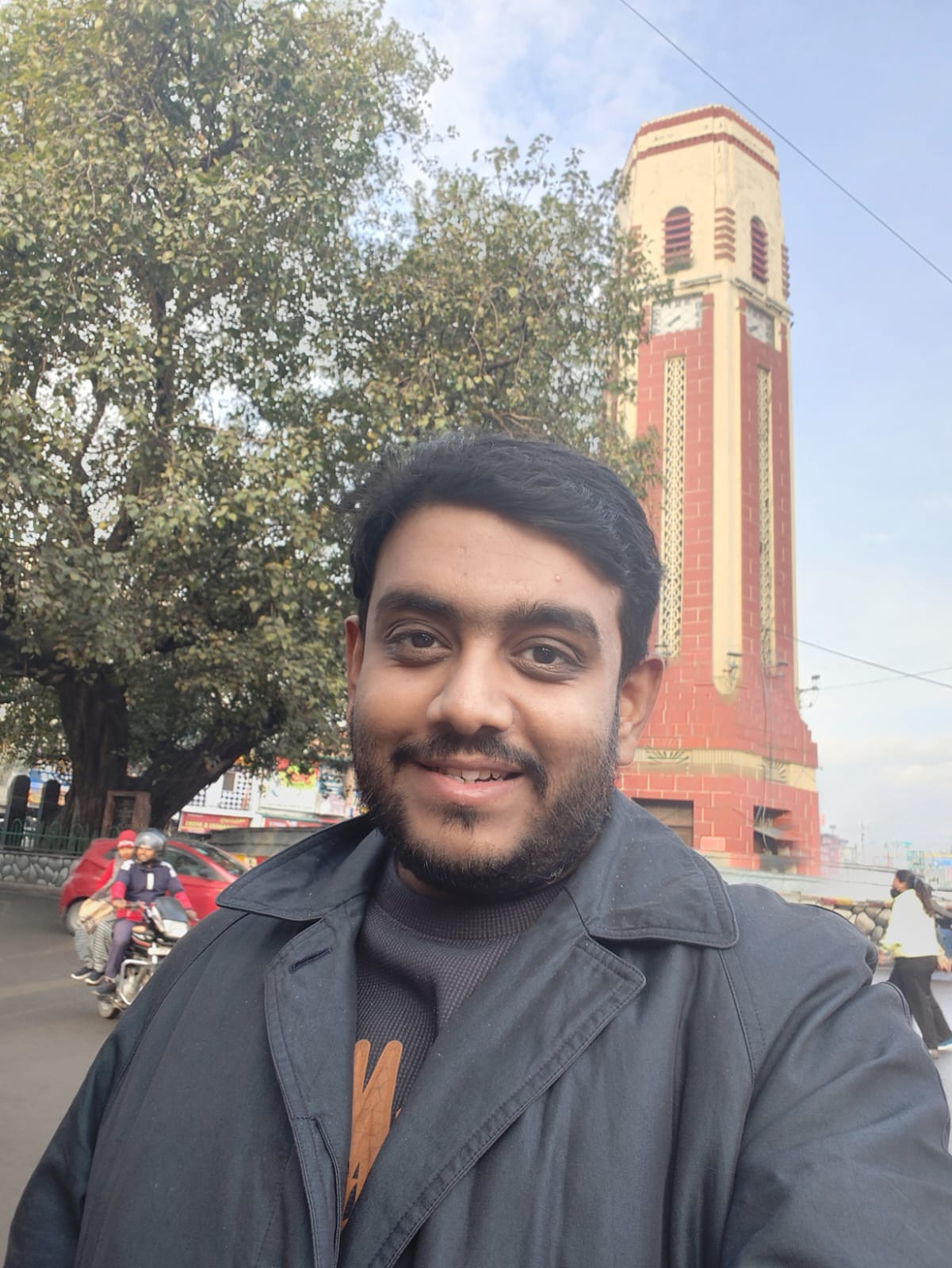
Dr. Akash’s Timeline at a Glance
- June: Internship completed
- July: FMGE cleared
- August onwards: ICU Junior Doctor
- December: Started AMC preparation
- October: Took a one-month study break
- November: Cleared AMC Part 1
No long sabbaticals. No burnout breaks. Just consistency.
Studying for AMC While Working in the ICU: Is it Possible?
Preparing for AMC alongside ICU duties is brutally realistic and Dr. Akash is candid about it. He could not attend live lectures due to rotating shifts and night duties. However, he smartly used our live feature to clear all his recurring doubts on difficult topics. Holistically, his entire preparation was built around:
- Seeking help from experts in our Discord community.
- Our recorded lectures
- Live lectures as a means of doubt clearance classes
- Topic-focused study
- Australian clinical guidelines
This approach made his preparation flexible, realistic and sustainable.
Decoding the Ultimate AMC Preparation Strategy
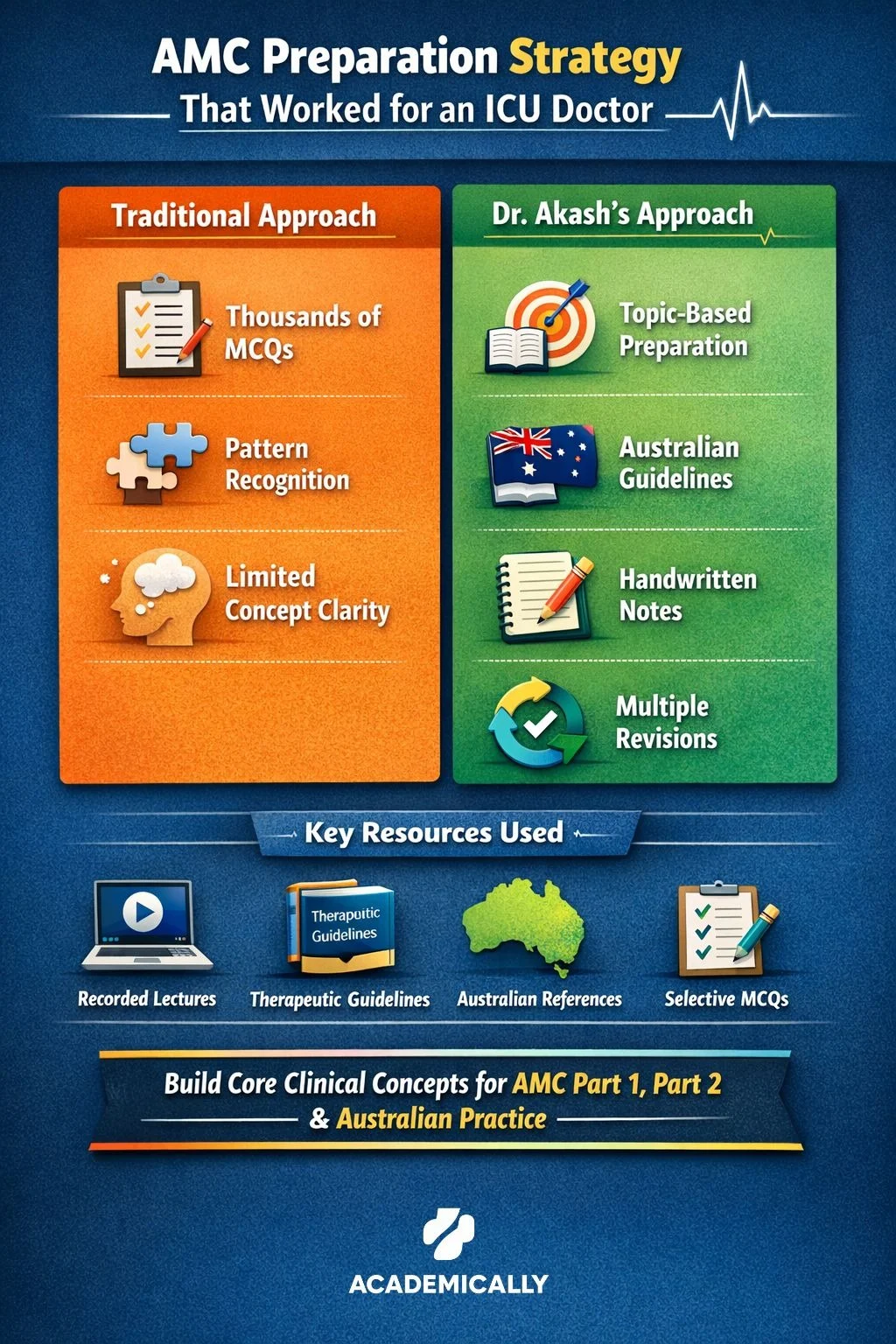
One of the most striking aspects of Dr. Akash’s journey is his unconventional study strategy. Unlike most AMC aspirants who attempt thousands of MCQs, Dr. Akash did very limited question practice.
Why Avoid Heavy MCQ Dependency
After reviewing common question banks, he realised:
- Many MCQs do not build core clinical concepts
- They often encourage pattern recognition rather than understanding
- They are insufficient for AMC Part 2 and job readiness
Instead, he asked a more important question:
“If I clear AMC Part 1, will I actually understand how Australian hospitals work?”
His answer shaped his strategy.
Dr. Ssnegdha, Academic Head of Medical Licensure Exams Abroad in Academically had a tete-a-tete with Dr. Akash. Let’s hear it from the candidate himself, unveiling all the deets.
The Core of His Preparation Strategy
1. Topic-Based Learning
Dr. Akash identified repeated and high-yield AMC topics and focused deeply on them rather than attempting everything superficially.
2. Australian Guidelines
His preparation was firmly rooted in:
- Therapeutic Guidelines (TG)
- Australian-based references
- RCGP and RACGP-aligned resources
- Australian orthopaedic references (e.g., OrthoBullets, adapted contextually)
Every subject, medicine, surgery, orthopaedics and emergency was studied from an Australian clinical perspective.
3. Handwritten Notes
For every topic, Dr. Akash made his own handwritten notes from our lectures.
These notes:
- They were concise but concept-heavy
- Aligned with Australian practice
- Became his primary revision tool
He admits to forgetting topics repeatedly. But instead of panic, he relied on multiple revisions of the same notes. By the final month, these notes became his strongest asset.
4. Selective MCQs, not Endless MCQs
Rather than daily MCQ targets, he:
- Looked at previously repeated topics
- Studied those topics in depth
- Used MCQs only as a topic identifier, not the core learning method
This method helped him build confidence, not just for AMC Part 1, but for AMC Part 2 and interviews.
Revision Time
The last month before the exam was intense. Dr. Akash took a one-month break from ICU duties, acknowledging that deep revision is nearly impossible during night shifts. This month was dedicated to:
- Revising handwritten notes multiple times
- Strengthening weak areas
- Revisiting Therapeutic Guidelines
- Consolidating recall-based knowledge
There was no last-minute panic; only structured repetition.
The Final Showdown: Clearing AMC After a Night Shift
Perhaps the most powerful moment of this journey is the result day itself. Dr. Akash had just returned from an exhausting ICU night duty. Tired, drained, but hopeful, he checked his results and saw that he had cleared the AMC Part 1 exam. No dramatic celebration. Just quiet relief, validation and the knowledge that his sacrifices were worth it.
What’s Next: AMC Part 2 and Beyond
With AMC Part 1 cleared, Dr. Akash is now focused on:
- English proficiency exam (IELTS/PTE/OET)
- Applying for jobs and hospital roles
- Simultaneously preparing for AMC Part 2 Clinical Exam
His clarity is commendable. He understands that AMC Part 2 needs more rigorous preparation and strong conceptual knowledge; not rote MCQs will be the differentiator.
What Dr. Akash’s Journey Teaches Every AMC Aspirant
This story carries powerful lessons for international medical graduates:
- You can clear AMC while working full-time
- ICU experience strengthens your clinical foundation
- Self-paced content is brilliant if you are consistent in attending to it
- MCQs are tools, not the strategy
- Australian guidelines are non-negotiable
- Handwritten notes + revisions are priceless
- Consistency beats speed
Most importantly, there is no single “right” strategy. It is only the one that fits your reality.
To Conclude with…
Dr. Akash’s success is not about shortcuts or brilliance. It is about quiet discipline, intelligent planning, and trusting the process, even when exhausted. For every doctor working long hospital shifts and wondering if the AMC dream is realistic, this story is your answer. It is possible.