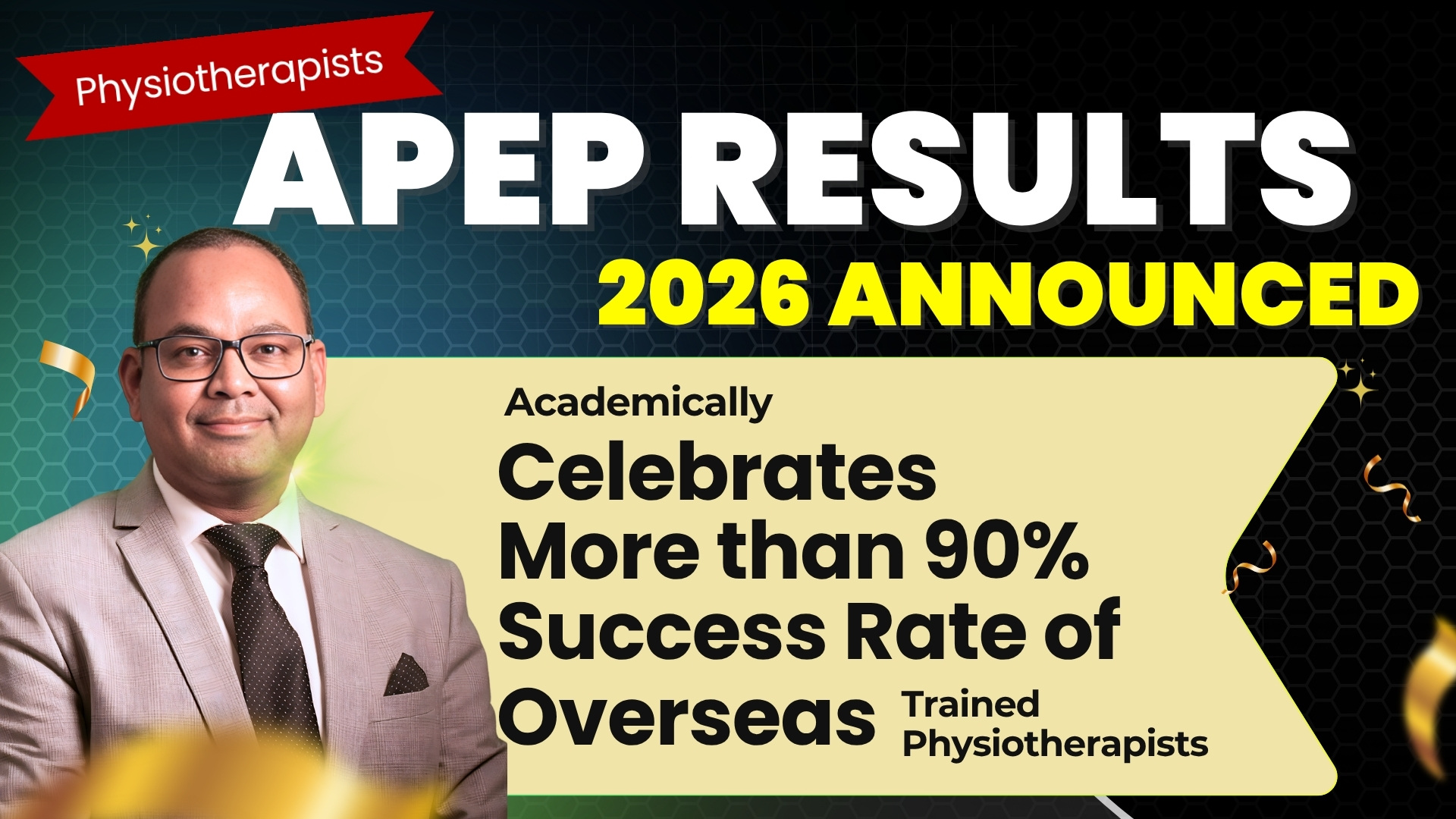
Every healthcare professional remembers the day their career changed forever. This day marks one such milestone for overseas-trained physiotherapists worldwide. The latest Australian Physiotherapy Entry Pathway (APEP) results just went live. We are thrilled to announce that Academically’s APEP candidates have achieved a remarkable 90%+ success rate.
Behind this achievement are months of disciplined preparation. Students and teachers both have shown utmost dedication in clinical studies. The unwavering belief in making a global dream come true was visible throughout the session. APEP is more than an assessment pathway. It represents international recognition and the opportunity to practise physiotherapy within one of the world’s most advanced healthcare systems, Australia.
Today’s success belongs not only to us but to every physiotherapist who once questioned their life’s purpose. Let’s read the success stories and get inspired.
Founder’s Foreword

“Results day is always emotional. Messages start pouring in from different time zones, physiotherapists telling us they passed. Some are parents, some are frontline clinicians, and some are preparing after long work shifts. Every message carries years of hard work behind it.”
Dr. Akram Ahmad (PhD in Medicine, University of Sydney, Founder and CEO of Academically Global) has consistently believed that global healthcare education should remove barriers rather than create them. Having trained healthcare professionals across multiple countries, his philosophy remains simple. Talent is universal. Opportunity should be too. The APEP success rate reflects this vision, empowering physiotherapists from diverse backgrounds to transition confidently into international practice.
Stories Behind the Huge Success
Statistics tell one part of the story. Human journeys tell the real one. This year’s successful candidates came from different continents, clinical backgrounds, and personal circumstances. Behind every APEP result is a physiotherapist who chose persistence over doubt.
Some were full-time hospital physiotherapists preparing after exhausting shifts. Some balanced family responsibilities while revising musculoskeletal cases late at night. Others were reattempt candidates who transformed previous setbacks into structured success.
What united them was not identical preparation time or background but a shared commitment to disciplined, guided learning.
Minal Manjrekar: Journey of an Overworked Clinician in Pune to a Global Physiotherapist
Aisha Verma, a physiotherapist from Pune, India, had nearly seven years of clinical experience in orthopaedic rehabilitation. Despite strong hands-on exposure, she struggled initially with the analytical style of Australian clinical scenarios. Her biggest challenge was clinical reasoning articulation, explaining why a treatment choice was appropriate rather than simply knowing what to do.
Working six days a week in a busy hospital meant study time often started after 10 PM. Recorded sessions and structured weekly study targets became her lifeline. She focused heavily on AI-based mock assessments and repeated case discussions.
When her APEP result arrived, Aisha described it as “the moment years of professional experience finally translated into global recognition.” For her, success meant opening doors to advanced practice roles in Australia while securing a better future for her family.
Mohd. Shadab: Failed APC Standard Pathway at First and then….
Mohd. Shadab from Sharjah had attempted the traditional APC pathway. He travelled to Australia to appear for the exam, but alas, he failed on his first attempt. He didn’t give up. He joined the preparation again with one clear decision. He completely changed the preparation strategy.
Instead of passive reading, Mohammed adopted performance tracking through mock tests and monitored his own feedback sessions. He analysed every incorrect response, rebuilt weak clinical areas like cardiorespiratory management, and practised timed assessments weekly.
The transformation was visible. Anxiety gradually turned into exam confidence. Passing APEP on his next attempt became proof that setbacks are rarely failures. They are often in preparation stages, waiting for the right guidance.
Grace Bitok: How a Kenyan Physiotherapist Showed Immense Courage
Grace Bitok, a physiotherapist from Kenya, prepared during one of the busiest phases of her professional life. Staff shortages at her rehabilitation centre meant extended working hours, leaving limited study time.
Internet instability and unpredictable schedules could have delayed her plans. Instead, she relied on flexible recorded lectures, peer discussion groups, and late-night revision sessions.
Grace credits collaborative learning discussions for helping her adapt to Australian patient safety frameworks and ethical decision-making expectations. Clearing APEP represented more than a migration opportunity. It symbolised professional validation on an international stage, a recognition that her clinical skills met global standards.
Swaralipi Banerjee: Balancing Parenthood and Physiotherapy Licensure Exam Preparation
Swaralipi Banerjee, a paediatric physiotherapist and mother of a young child, prepared during early mornings before work while managing family responsibilities. Her challenge was consistency.
Short, focused study blocks replaced long study hours. Structured handouts helped her revise high-yield concepts efficiently, while grand mock tests improved time management under exam pressure.
Swaralipi often shared that the biggest shift in her preparation was understanding how Australian physiotherapy evaluates decision-making rather than rote learning. The day she cleared APEP, she described it as “a career reset button”, letting her practise in a healthcare system known for clinical autonomy and professional growth.
How did the APEP Batch 2026 attain global success?
Across nearly all successful students, a recurring pattern emerged:
- Structured study planning instead of random preparation
- Consistent mock-test practice aligned with the APEP format
- Regular exposure to clinical case discussions
- Mentorship-driven performance feedback
- Gradual transition from theoretical learning to applied clinical reasoning
Many candidates initially found the shift from traditional physiotherapy education to Australian-style clinical reasoning challenging. The APEP assessment evaluates not only knowledge but also safe, ethical, patient-centred decision making.
With guided preparation, uncertainty was transformed into clarity, and confidence replaced hesitation. Preparation became purposeful rather than overwhelming.
For several physiotherapists, passing APEP represents far more than career advancement. It signifies financial stability, international mobility, professional respect, and the ability to provide stronger opportunities for their families.
Perhaps most importantly, it reflects a growing global community of physiotherapists proving that talent, when supported by structured mentorship and the right preparation ecosystem, can cross any border.
What Makes Academically’s APEP Preparation Different?
Success rarely happens by chance. It follows systems designed around real learner challenges. Academically’s APEP Preparation Course was developed specifically for overseas physiotherapists navigating unfamiliar assessment standards.
1. Structured Clinical Curriculum
Over 100+ hours of guided learning cover all major APEP domains:
- Musculoskeletal physiotherapy
- Neurology
- Cardiorespiratory practice
- Lifespan physiotherapy
- Professional and ethical practice
The curriculum mirrors Australian Physiotherapy Council competency expectations rather than textbook memorisation.
2. AI-Based Mock Testing & 4,000+ Practice Questions
Students repeatedly highlighted adaptive mock tests as a turning point in preparation.
These simulations help candidates:
- Identify weak clinical areas
- Improve time management
- Develop case-based reasoning skills
- Reduce exam anxiety through familiarity
3. Faculty with International Practice Insight
Training is delivered by physiotherapy educators experienced with Australian clinical standards. Students learn not only what to study but how Australian assessors expect answers to be structured.
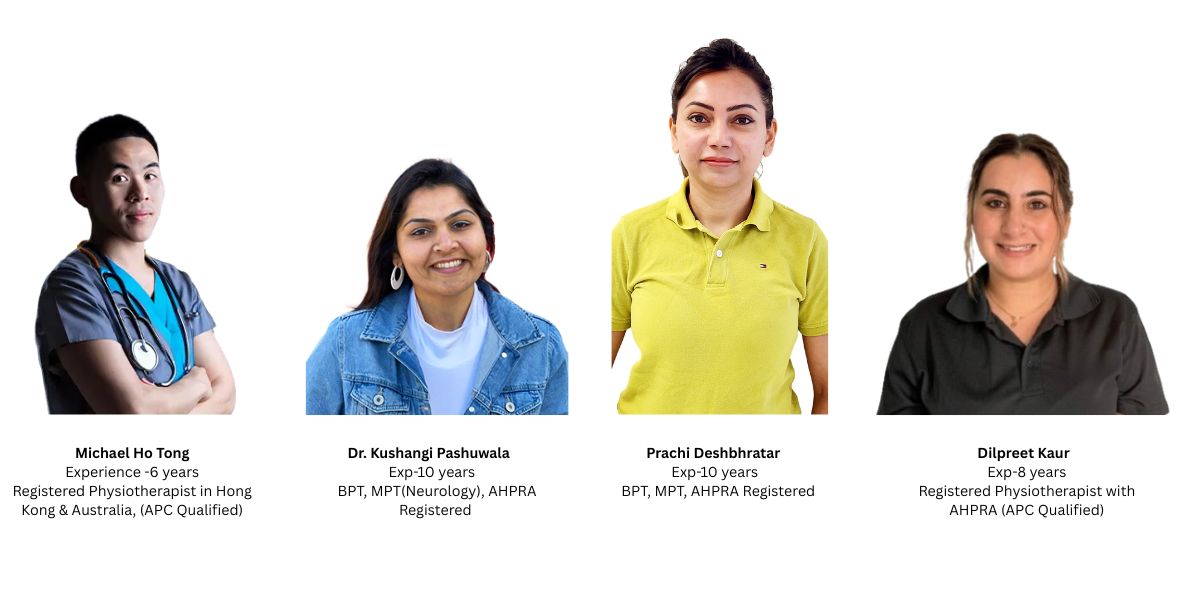
Faculty members with 40+ years of clinical experience and who have gone down the same licensure path, and now live and practice physiotherapy in Australia, have been mentoring our candidates over the years. Candidates mention:
4. Designed for Working Professionals
Most APEP aspirants continue clinical practice during preparation. The course integrates:
- Live sessions
- Recorded lectures
- Flexible revision access
- Continuous app-based support
Learning adapts to the professional, not the other way around.
5. End-to-End Registration Guidance
Preparation extends beyond exam theory.
Candidates receive support for:
- Documentation review
- Interim certificate process
- Assessment strategy planning
- Registration pathway clarity
This holistic mentorship often becomes the difference between confusion and confidence.
Beyond lectures and mock tests, students consistently credit the learning environment itself. Key elements include:
- 14-week intensive preparation roadmap
- 1:1 doubt-clearing sessions
- Alumni mentorship from successful physiotherapists
- Peer community discussions on Discord
- Extended course access for long-term revision
Preparation becomes collaborative rather than isolating, a factor many healthcare professionals find crucial while balancing demanding clinical schedules. For candidates seeking accelerated preparation, Academically also offers an APEP Crash Course, designed as a fast-track, assessment-focused pathway aligned with real exam scenarios.
Why are more and more overseas physiotherapists moving to Australia through the APEP?
Australia currently faces a significant demand for physiotherapy professionals across hospitals, rehabilitation centres, community health services, and private practice settings.
Key factors driving international interest include:
- Average physiotherapist salaries around AUD 95,000 annually
- Thousands of active job openings nationwide
- Skilled migration opportunities for healthcare professionals
- High professional autonomy and evidence-based practice culture
The introduction of the Australian Physiotherapy Entry Pathway (APEP) has transformed how international physiotherapists enter Australia’s healthcare workforce.
One can appear for written assessments and capability assessments from the comfort of their home. So technically, more than 90% of the steps are already done from their home country without having to travel to Australia. The APEP pathway has opened doors for thousands of professionals who previously faced logistical and financial barriers.
How different is the APEP pathway?
Unlike the traditional standard pathway, APEP evaluates:
- Clinical reasoning
- Evidence-based practice
- Ethical decision-making
- Patient safety competence
- Real-world physiotherapy application
The APEP assessments are among the easiest exams and have one of the highest success rates among licensure exams. Candidates do not feel much pressure because they can attempt it from the comfort of their home. Neither do they have to travel to any exam centre nor book an expensive flight ticket to Australia with uncertainty.
Candidates who pass the APEP exam on the first attempt religiously follow structured preparation. Exam familiarity, guided mentorship and knowledge on Australian clinical standards strongly shape this year’s outstanding outcomes.
To Conclude with…
Heartiest congratulations to every candidate who cleared APEP this cycle. You studied after long shifts, and you revised when motivation felt low. You trusted the process even when outcomes were uncertain. Your success will inspire thousands of physiotherapists now beginning their own journey toward Australia.
Wherever your professional path leads next, hospitals, rehabilitation centres, community care, or private practice, remember that you carry not only clinical expertise but the courage to pursue global excellence. That is what truly defines a healthcare professional without borders.