There is a whirlwind of emotions that descends the morning AMC exam results of April 2026 are released. Candidates are juggling hospital duties, family responsibilities, and the unspoken pressure of being so far from home while studying for a new country's licensing exam, waking up and checking their phones with a kind of controlled dread. Then the email arrives. And everything changes.
This March, that moment of relief and joy repeated itself across hospital wards, OPDs, and living rooms from Chennai to Hyderabad. At Academically, we were watching and we got to witness the reaction firsthand, in four separate interviews conducted by Dr. Ssnegdha Sharma, our Academic Head for Medical Licensing Studies, with candidates who had just seen "PASS" appear on their screens.
What follows is a deep look at how they did it, what changed in their preparation this time, and why if you are still on this road, there is more reason than ever to stay on it.
Over 90% Pass Rate!!! What a Proud Moment
Before we get into the success stories, let us read it again for you (because, why not!) More than 90% of Academically candidates who sat the AMC MCQ exam in March 2026 have qualified. This is not a fortunate fluke. It is the result of an intensive, months-long effort on both sides of the screen.
Students who showed up every day, and the Academically’s internal teams that spent the weeks before the exam updating question banks, releasing new-pattern MCQs, and building out comprehensive mock tests for candidates that reflected exactly what the actual paper would look like.
90%+
Candidates who qualified
150
MCQs in the actual exam
5
Months avg. prep time
250+
Passing score on 0–500 scale
The AMC raised its passing standards earlier this year, a move that sent a ripple of anxiety through the candidate community. When that notification went out, our phones lit up. But our preparation for this shift had already been underway, in the form of updated MCQ patterns, new sentinel tests, and comprehensive papers built on the most recent recalls from November and February sessions.
The outcome, as these doctors will tell you, was that candidates walked into the exam room already familiar with the territory.
How Indian Medical Doctors Passed AMC Exam 2026? Let’s Get Inspired
Dr. Ssnegdha Sharma (Academic Head of Medical Licensing Courses, Academically) sat down with our AMC candidates who passed the March-April 2026 session with flying colours. Everybody had something unique to tell and extremely helpful for aspirants who are preparing for the next session. Stick around.
Dr. Shravani: The Second Attempt That Changed Everything

A postgraduate doctor who had cleared her MD with first class, Dr. Shravani came to the AMC with an impressive academic record and a devastating first attempt. She missed the passing mark by just three questions. "I lost it by three marks. I could have attempted one more question correctly and would have cleared it," she said. The gap between what she knew and what the exam demanded was not a knowledge gap. It was a method gap.
For her second attempt, Dr. Shravani did something that is genuinely hard for Indian medical graduates to do. She stopped reading theory or at least, she stopped making it the centre of her day. Her previous routine had been 60% theory, 40% MCQs. She flipped that entirely. By the time January arrived, she was solving around 200 questions a day not to learn new content, but to train her brain to move quickly, confidently, and without panic.
The strategic pivot that made the biggest difference, she says, was differential diagnosis. The AMC is notorious for presenting you with two options that both feel right. Dr. Shravani stopped trying to identify the single correct answer and started practising the elimination of wrong ones.
She worked through rheumatology, pulmonary embolism, DVT, conditions where the symptoms overlap and built a mental system for ruling out rather than ruling in.
She also spent a focused week on ethics, a subject that catches most graduates from the Indian subcontinent off-guard. "We are not taught about transgender healthcare or sexual assault procedures the way Australia expects," she noted. She used a combination of the new-pattern MCQs on public health and ethics from Academically, external research, and AI tools to understand the Australian healthcare context, not just to memorise answers, but to build an instinct for how an Australian doctor thinks.
Dr. Pratyusha: Recalls are a Topic Map, Not a Cheat Sheet
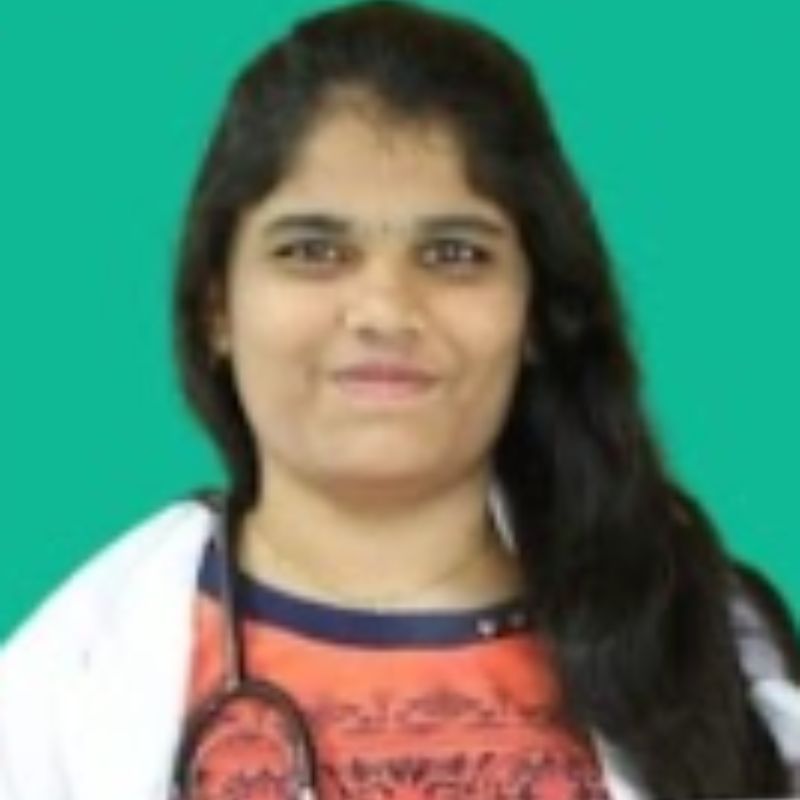
Dr. Pratyusha finished her exam a full hour before time was up. In an exam where time management is a constant source of anxiety, she was done at the 2.5-hour mark and she knew she was going to pass even before she saw the result. That confidence came from one key insight she had developed for her second attempt: recalls are a topic map, not a question bank.
"I didn't follow the recall questions. I took the topic from the questions and read it, then practised questions from that topic. That is what helped me," she explained. Many candidates approach the pre-exam recall posts on Telegram and in group chats as a shortlist of likely questions to memorise.
Dr. Pratyusha understood that the AMC does not repeat questions, it repeats topics. She used every recall mention of, say, small intestine obstruction as a signal to revise the entire subject, from pathophysiology to first-line investigation.
Having trained initially in the Caribbean and prepared for the USMLE, Dr. Pratyusha also offered one of the sharpest comparisons between the two exams we have heard. The USMLE, she noted, twists questions in complex ways and relies heavily on consolidated resources.
The AMC is more direct but what it demands in directness it makes up for in procedural depth. “In AMC, they ask what is the first investigation, the next best investigation, the first-line treatment, the best treatment. You have to remember the entire SOP at every step.”
Her advice for the last month before the exam was unequivocal. Do not start new topics. Revise everything you already know, and practise questions until the process is automatic.
Dr. Vijila Johnson: Benefits of Having Study Group and Five Days of Intensive Revision for AMC Exam

A graduate of CMC Vellore currently serving her service bond at a mission hospital, Dr. Vijila started her serious AMC preparation in October 2025 and sat the exam in March 2026, five months of structured study while managing full-time clinical duties. She worked through all recorded Academically classes at 2x speed, made extensive handwritten notes, and eventually circled back to the platform's new-pattern MCQs in the final weeks before the exam.
What sealed her preparation and her confidence was something she found on her own which is a study partner group. After joining the Telegram community of Academically alumni, toppers, faculty and registered medical experts, she connected with five or six other candidates and, in the final five days before the exam. They ran daily Google Meet revision sessions. Not deep study, but rapid-fire surface revision, moving through topic after topic, covering the landscape without getting lost in any single page.
She also credited the grand tests as a decision-making tool. When she was considering pushing her exam date back, she sat a grand test and scored around 75%. That number told her she was ready. She booked her slot and did not look back. "The comprehensive second exam was majorly focused on the latest recalls," she noted. “It was like a life thing, it gave me a full revision of everything I needed in one sitting.”
Dr. Bhuvaneswari: 50 Days, Four Rounds of Mocks, and a Method Built on Repetition
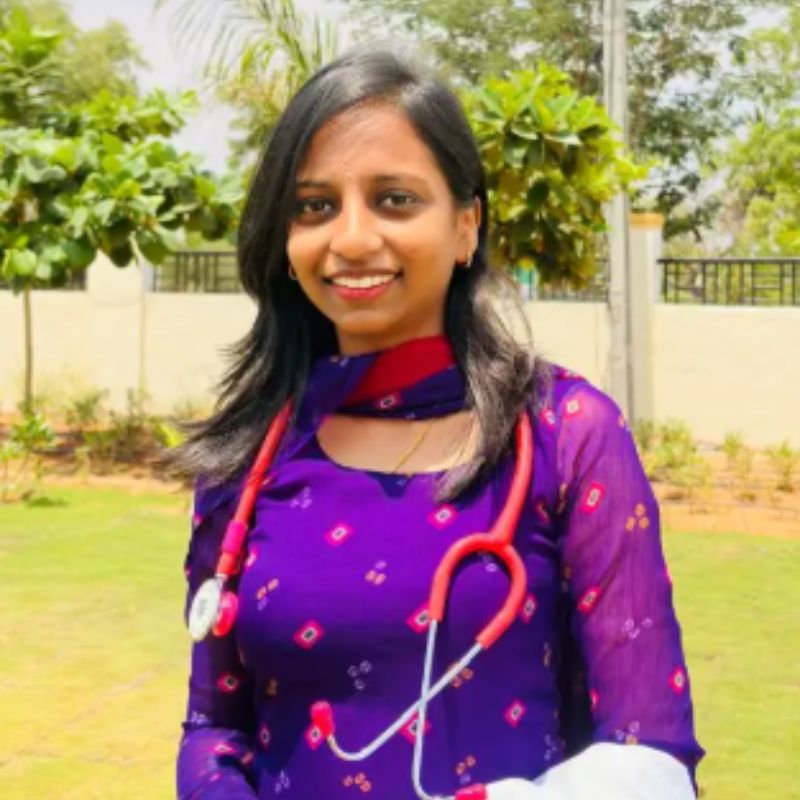
Of all the stories we heard this session, Dr. Bhuvaneswari's might be the most instructive for candidates who feel they are running out of time. Working a 9-to-4 non-clinical job, she had exactly 50 days of focused preparation before her exam. In her early grand tests, she was scoring in the 49–52% range. She did not panic. She doubled down on what was already working.
Her strategy was deceptively simple. She logged into the Academically dashboard and accessed the mocks, revision, and even more mocks. She went through the subject-wise mocks not once but four times.
She even made her own condensed notes from the mock explanations, three to four pages per topic, structured so she could revise an entire subject in an hour. She attempted every centennial test available on our LMS, every comprehensive test, and attempted every grand test. When she sat the actual paper, the experience felt familiar.
Perhaps most impressively, she observed that her speed during the exam was a direct product of the repetition she had built through mocks. "If you read repeatedly, in the exam, within a fraction of a second, you can mark the question," she said. "It is that fraction of a second that gets you the correct or wrong answer." There is a reason active recall through questions beats passive reading for this type of exam and Dr. Bhuvaneswari lived it.
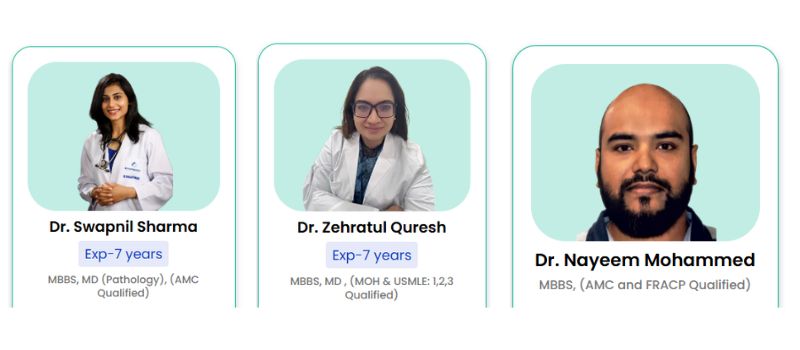
When you have star faculties with 20+ years of clinical experience and have gone down the same path, qualifying licensing exams like AMC, USMLE, PLAB (now UKMLA) and settled in respective countries and practicing,you know you are in good hands.
The Ultimate AMC Exam Preparation Strategy: Tried and Tested by Qualifiers
Across the interviews, conducted independently, with candidates of different backgrounds, preparation timelines, and exam histories, the same themes emerged. Not because we coached them to say it, but because the exam itself demands these approaches.
Why the AMC Pathway is Worth Every Bit of Effort
None of these doctors went through this process for fun. They did it because Australia represents something genuinely worth working for. A medical career with structure, respect, and reward that is hard to find in many other contexts.

Dr. Gaddam Govardhan Reddy, another candidate who qualified this session, put it bluntly: "Abroad options were better for me. Coming to the UK, I don't think the NHS is very good at least for now. Australia seemed like a better option." Dr. Pratyusha, who trained in the Caribbean and had first-hand experience with the US healthcare environment, chose Australia deliberately, “The competition for residency is very high in the US. Many of my seniors are trying for two, three years to match.”
Australia has more than 5,000 active openings for registered doctors right now, and medicine is on the skilled occupation list. It means passing the AMC and securing employment puts you on a direct path to permanent residency. For international medical graduates, this is not just a career move. It is a complete life move.
Do You Want to Become the Next Success Story?
Join international medical graduates who are already preparing with Academically's structured AMC MCQ course with live classes, recorded sessions, adaptive mock tests, and faculty with 20+ clinical experience.
What’s Next After the AMC MCQ Part I Exam?
The journey is far from over for our newly qualified candidates. But the path is clear and each step is achievable. The immediate priorities are English proficiency certification (IELTS, PTE, or OET), followed by the AMC Clinical Exam (Part II). It is now conducted fully in-person in Melbourne. Once both parts are cleared, AHPRA registration and employment can follow.
At Academically, we are taking care of the next steps for our March qualifiers. This week, they joined a live celebration session with the full cohort. Next week, they will attend a focused session with Dr. Swapnil on CV writing, cover letter development, CPD activities, and the two job cycles in Australia. The goal is not just to pass the exam. The goal is to get you practising.
- Clear your English proficiency test (IELTS Academic/PTE/OET) if not already done.
- Begin clinical experience in emergency or casualty departments to prepare for AMC Part II.
- Book your AMC Clinical Exam slot early. Slots fill up and scheduling can take time.
- Start building your Australian CV and professional network through healthcare-based job portals like Jobslly.
- Consider the Workplace-Based Assessment (WBA)/PESCI pathway if you want to begin working in Australia sooner.
Are You Preparing for AMC Part I for the Next Cohort?
If you read through these inspiring stories and found yourself identifying with the anxiety before results day, know that you are not alone. The self-doubt after a missed attempt, the difficulty of breaking old study habits may have happened but it’s a thing of the past now.
Every one of these doctors felt exactly that. Dr. Shravani missed by three marks. Dr. Pratyusha walked into her first attempt not knowing what to expect. Dr. Bhuvaneswari was scoring 49% on her grand tests six weeks before her exam.
They cleared the exam with flying colours. The reason they cleared is not a mystery. They changed what was not working, they leaned into the resources available to them, and they kept going.
The AMC is a difficult exam. It is designed to be. Australia holds its registered doctors to a high standard, and that standard is reflected in the salary, the working conditions, and the respect the profession carries.
But it is an exam worth sitting for. It will actually teach you so much more as an IMG. Candidates who prepare with clarity and consistency, the pass rate among our cohort proves it is very passable indeed.