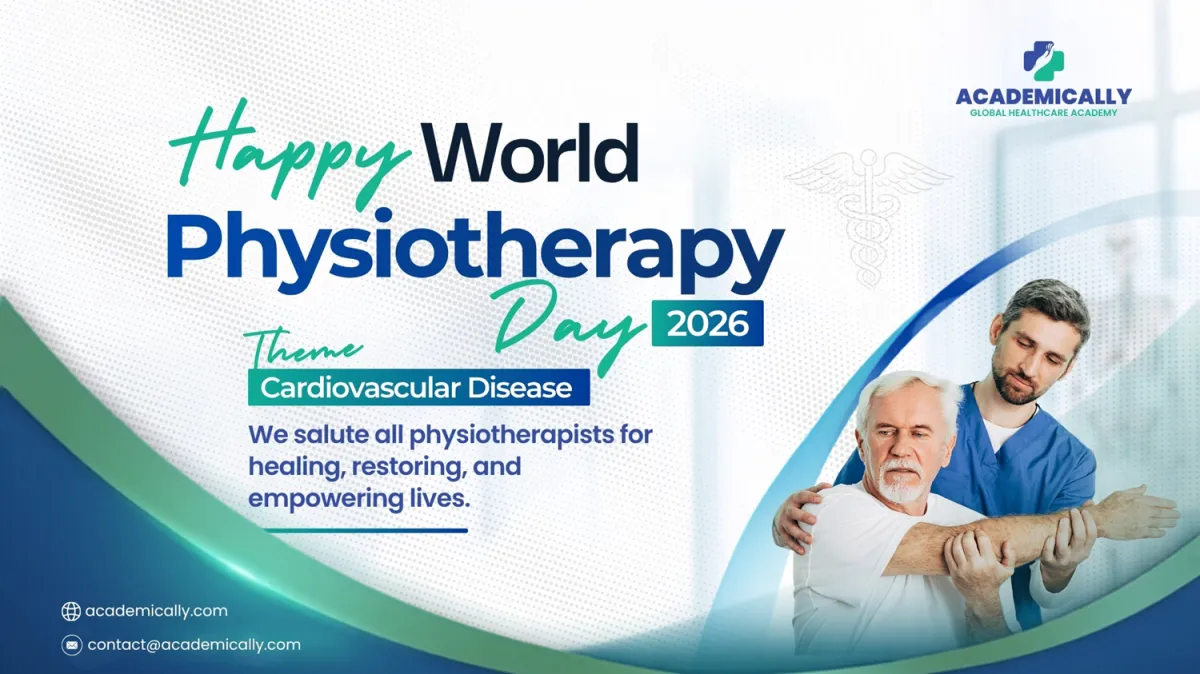
Every 8 September, the physiotherapy world celebrates World Physiotherapy Day. It is a moment to recognise everything physiotherapists do for mobility, rehabilitation and quality of life across the globe. This year, though, the observance lands right in the middle of one of healthcare's toughest ongoing battles: the rising tide of non-communicable diseases.
The World Physiotherapy Day 2026 theme zeroes in on how physiotherapy and physical activity help prevent, manage and rehabilitate cardiovascular disease and stroke. It's also the opening chapter of a four-year World PT Day campaign built entirely around non-communicable diseases (NCDs).
This year's theme isn't just celebrate an awareness day and hold campaigns. It says something real about where the profession is headed. The role is stretching well past "recovery after injury" into disease prevention, physical activity promotion, chronic condition management, long-haul recovery support and major global healthcare careers abroad.
For anyone eyeing an international career in the field, the timing couldn't be better. Health systems everywhere are waking up to just how badly they need skilled rehabilitation professionals.
What Is World Physiotherapy Day?
World Physiotherapy Day falls on 8 September each year. It is the very same date World Physiotherapy itself was founded, back in 1951. The day officially became "World PT Day" in 1996, and since then it's grown into a global moment for recognising physiotherapists' work and raising awareness of what they actually contribute to patients, communities and health systems.
It's also a chance for the wider physiotherapy community to push for better access to rehabilitation, champion evidence-based practice, and remind everyone how much physiotherapists add to broader public-health goals.
Every year, the campaign spotlights a different area where physiotherapy can genuinely move the needle. For 2026, that spotlight falls on cardiovascular disease and stroke.
So What's the Theme for 2026?
The role of physiotherapy and physical activity in preventing, managing and rehabilitating cardiovascular disease and stroke. This also kicks off a new four-year NCD-focused campaign, laid out like this:
- 2026: Cardiovascular disease and stroke
- 2027: Cancer
- 2028: Diabetes
- 2029: COPD and respiratory disease
Taken together, the campaign reflects just how central prevention, physical activity and rehabilitation have become in managing long-term health conditions.
Why Cardiovascular Disease and Stroke, Specifically?
Because the numbers are hard to ignore. Cardiovascular disease is the leading cause of death worldwide, responsible for more than 20.5 million deaths a year. Over 30% of all deaths globally. Roughly 85% of those deaths come from heart attacks and strokes, and more than three-quarters happen in low- and middle-income countries.
The WHO backs this up, naming cardiovascular disease the world's top killer and flagging physical inactivity as one of the major behavioural risk factors behind heart disease and stroke.
Stroke on its own tells a similarly sobering story. WHO estimates put the number of people living with stroke at 93.8 million globally in 2021, with 11.9 million new cases that same year. Lifetime risk has climbed too. It's now thought that roughly one in four adults will experience a stroke at some point in their life.
Numbers like these make it pretty clear. Prevention and rehabilitation can't be treated as an afterthought in healthcare planning.
How Physiotherapy Helps Prevent Cardiovascular Disease
Most people think of physiotherapy as something you turn to after an injury or surgery. But physiotherapists actually play a much bigger role in getting people moving and keeping them active.
As movement specialists, physiotherapists can help people become and stay more physically active. Depending on their setting and scope of practice, that might look like:
- Spotting individuals who may be at higher cardiovascular risk
- Building safe, personalised exercise plans
- Encouraging consistent physical activity
- Helping people manage long-term conditions day to day
- Pushing for early action when warning signs show up
- Guiding gradual improvements in strength, endurance and function
- Reducing the risk of future cardiovascular events
World Physiotherapy calls out personalised exercise, physical activity, early detection and long-term management as key ways physiotherapists contribute here and it points to a real shift in how healthcare works. Physiotherapy isn't just stepping in after something goes wrong anymore. It's increasingly part of stopping things from going wrong in the first place.
What Role Does Physiotherapy Play in Stroke Rehabilitation?
A stroke can hit movement, balance, coordination, strength and independence hard. For a lot of survivors, the real work starts once the acute medical crisis has passed. That's where rehabilitation comes in, helping people rebuild function and get back to everyday life.
Physiotherapists support stroke recovery in several ways, helping patients:
- Improve mobility and walking
- Rebuild strength and endurance
- Regain balance and coordination
- Recover functional movement
- Avoid complications that come from inactivity
- Become more independent day to day
- Reconnect with their communities
- Improve overall quality of life
exercise-based physiotherapy can boost physical function, mobility, balance and quality of life at every stage of stroke recovery, from the hospital bed all the way through to long-term community-based care.
Prevention matters just as much here. Regular physical activity as a way to cut stroke risk. WHO lists physical inactivity among the major modifiable risk factors tied to stroke.
Why This Year's Theme Matters for Physiotherapists
The 2026 campaign reinforces something the profession has been saying for a while. Physiotherapists aren't just there to help people bounce back after an injury. They're also woven into prevention, physical activity promotion, chronic disease management, cardiac and neurological rehabilitation, and long-term functional health.
That puts physiotherapy squarely at the centre of multidisciplinary healthcare. Think about someone recovering from a stroke or managing cardiovascular disease. Their care usually involves physicians, nurses, physiotherapists, occupational therapists, speech and language therapists, psychologists and dietitians, all working in tandem. Physiotherapists sit right at the intersection of medical treatment and functional, long-term recovery.
Where Can Physiotherapists Take Their Careers Globally?
As rehabilitation, chronic disease management and physical activity climb up the healthcare agenda, opportunities for physiotherapists are opening up across a wide range of settings. Hospitals, rehabilitation centres, neurological and cardiac rehab, community and home healthcare, aged care, sports medicine, private practice, research, public health, and even digital health and tele-rehabilitation.
International roles, in particular, appeal to physiotherapists who want exposure to different healthcare systems and clinical cultures. But moving abroad takes more than picking a country with good prospects.

What Does It Actually Take to Practise Abroad?
Every country runs its own regulatory process for physiotherapists trained elsewhere. Depending on where you're headed, that could mean qualification assessments, document verification, competency exams, English language proficiency requirements, supervised practice, or registration with a local regulatory body.
Take Australia as an example. Internationally qualified physiotherapists usually go through the Australian Physiotherapy Entry Pathway (APEP), which involves an eligibility check, a written assessment, a capability assessment and a clinical workshop before registration is granted.
The Written Assessment tests applied physiotherapy knowledge, clinical decision-making and problem-solving. The Capability Assessment digs into communication, clinical reasoning, risk management, interpreting assessment findings and professional conduct.
In other words, brushing up on theory alone won't cut it. Candidates need to understand exactly how their knowledge is going to be tested and how clinical reasoning is applied within that particular healthcare system.
This is where choosing the right preparation strategy becomes just as important as choosing where to go.
Academically's physiotherapy licensing courses are built around pathways like Australia's APEP and the UK's HCPC registration guidance series, with preparation tailored to each pathway's specific demands. Candidates work with experienced, internationally registered physiotherapy faculty through structured, exam-focused learning, clinical reasoning and case-based practice, mock assessments, and AI-powered practice sessions, alongside personalised academic support. Several faculty members are practicing in abroad as licensed physiotherapists, bringing firsthand insight into what international assessments and practice actually expect.
Where Physiotherapy Is Headed: Prevention, Rehabilitation and Global Healthcare
World Physiotherapy Day 2026 is really a signal of where the profession is going. As health systems grapple with a growing burden of non-communicable diseases, physiotherapists are becoming central not just to rehabilitation, but to prevention, physical activity, chronic disease management and helping people stay independent.
The four-year World PT Day campaign makes that trajectory explicit, cardiovascular disease and stroke this year, then cancer in 2027, diabetes in 2028, and COPD and respiratory disease in 2029.
That broader scope should open up opportunities across clinical practice, community healthcare, rehabilitation, research, education and public health. It also means physiotherapists thinking long-term might want to build skills beyond core clinical knowledge: evidence-based practice, communication, multidisciplinary collaboration, digital healthcare, and a solid understanding of international professional standards.
For anyone considering a career overseas, professional registration and licensing will stay a key part of that path.
To Conclude with...
World Physiotherapy Day 2026 puts cardiovascular disease and stroke right at the heart of the global conversation on physiotherapy, physical activity and rehabilitation. The theme makes one thing obvious. Physiotherapists are far more than professionals who help people recover after an injury. They help prevent cardiovascular disease, support physical activity, manage long-term conditions, and help stroke survivors rebuild mobility, independence and quality of life.
At the same time, the growing global focus on rehabilitation and noncommunicable diseases is opening real doors for physiotherapists looking to build international careers.
If working abroad is on your radar, start by understanding the registration pathway for wherever you want to practise, then prepare specifically for what it demands. Whether that's Australia, the UK, or somewhere else entirely, the right mix of clinical knowledge, pathway-specific preparation and professional guidance can make the whole journey feel a lot more achievable.
This World Physiotherapy Day, the message is simple. The future of this profession isn't just about helping people recover. It's about helping people prevent disease, stay active, regain independence, and live healthier lives. Wherever they happen to be in the world.