adopting an identity. You sacrifice your twenties to endless study sessions and gruelling clinical rotations, with the promise of the white coat.
The road seems simple: work hard enough, and your trajectory will be secure and lifelong.
Well, life isn't a bed of roses.
Whether brought on by family pressures, sudden financial catastrophes, or unforeseen personal crises, stepping away from clinical practice can feel like an existential shock. The degree remains on the wall, but financial autonomy and a sense of professional purpose can evaporate overnight.
Yet, a hiatus or forced detour does not have to mean the end of your story.
14 Years of Clinical Practice to ₹14 LPA at IQVIA
While family pressure forces many talented doctors and pharmacists to pause their careers entirely, family responsibilities often compel others to reimagine what success looks like.
For Dr. Sireesha, that breaking point did not come during a frantic ward round; it came at her own front door, listening to the heartbreaking sound of her 20-month-old daughter crying on the other side as she rushed off to yet another mandatory meeting.
Standing outside her home with her heart aching made one truth painfully clear: she needed a change.
She had spent 14 years building a diverse clinical practice; earning her MBBS degree in China, clearing her FMGE in 2012, and pouring her energy into Indian healthcare across government and private hospitals, emergency care, critical care, diabetology, and HIV/AIDS programs.
Yet, despite nearly a decade and a half of selfless service, the unregulated working hours, and constant fatigue were taking a heavy toll. She needed a non-clinical role that could offer true work-life balance, allowing her to restart her career as a non-clinical specialist without walking away from her passion for healthcare.
This isn't fiction. Like her, this has been the reality of many clinicians. It can be yours too.
Exploring Non-Clinical Career Horizons for Doctors and Pharmacists
Transitioning away from clinical practice opens doors to specialized fields where healthcare expertise directly impacts patient outcomes at scale. I have jotted down six high-growth non-clinical career pathways that offer financial stability, intellectual fulfilment, and excellent long-term career progression.
I am going to explain each so that you can make an informed decision.
1. Clinical Drug Development
Clinical Drug Development represents the engine of global pharmaceutical innovation. Professionals in this sector design, manage, and monitor clinical trials across Phase I through Phase IV studies. Roles range from Clinical Research Associates (CRAs) to Clinical Trial Managers (CTMs) and Medical Monitors.
Your clinical experience gives you a distinct advantage in evaluating protocol feasibility, assessing patient safety metrics, and understanding investigator site dynamics.
Understanding the end-to-end clinical research ecosystem will help you identify where your clinical skill-set aligns best. Exploring the detailed clinical drug development process and career opportunities for healthcare graduates provides clear guidance on navigating entry points across CROs and biotech firms.
Dr. Sireesha’s story is a living proof of this transition. Despite having 14 years of clinical experience, she had zero prior exposure to pharmaceutical frameworks or medical review. Driven by the need for flexibility to be present for her 20-month-old daughter, she searched online for non-clinical alternatives and discovered Academically Global through student reviews and online testimonials. She took the leap and enrolled in Academically’s Executive Programme in Clinical Drug Development.
Master the Science of Drug Development
Bridge your clinical background with international regulatory standards through Academically’s Executive Programme in Clinical Drug Development. Gain hands-on exposure to trial management, ICH-GCP protocols, and corporate clinical research.
2. Market Access
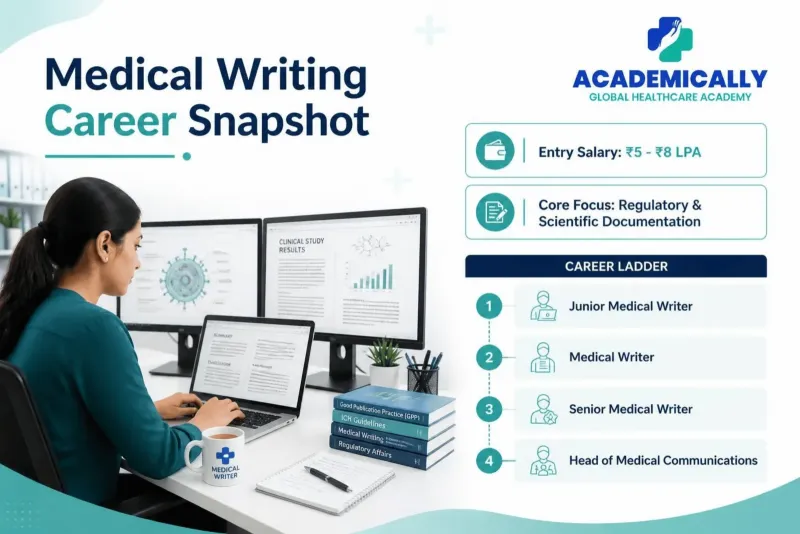
Developing an effective drug is only half the battle; ensuring patients can actually access and afford it is equally critical. Market Access specialists analyse the cost-effectiveness of new treatments and negotiate reimbursement strategies with governments, insurance companies, and healthcare systems.
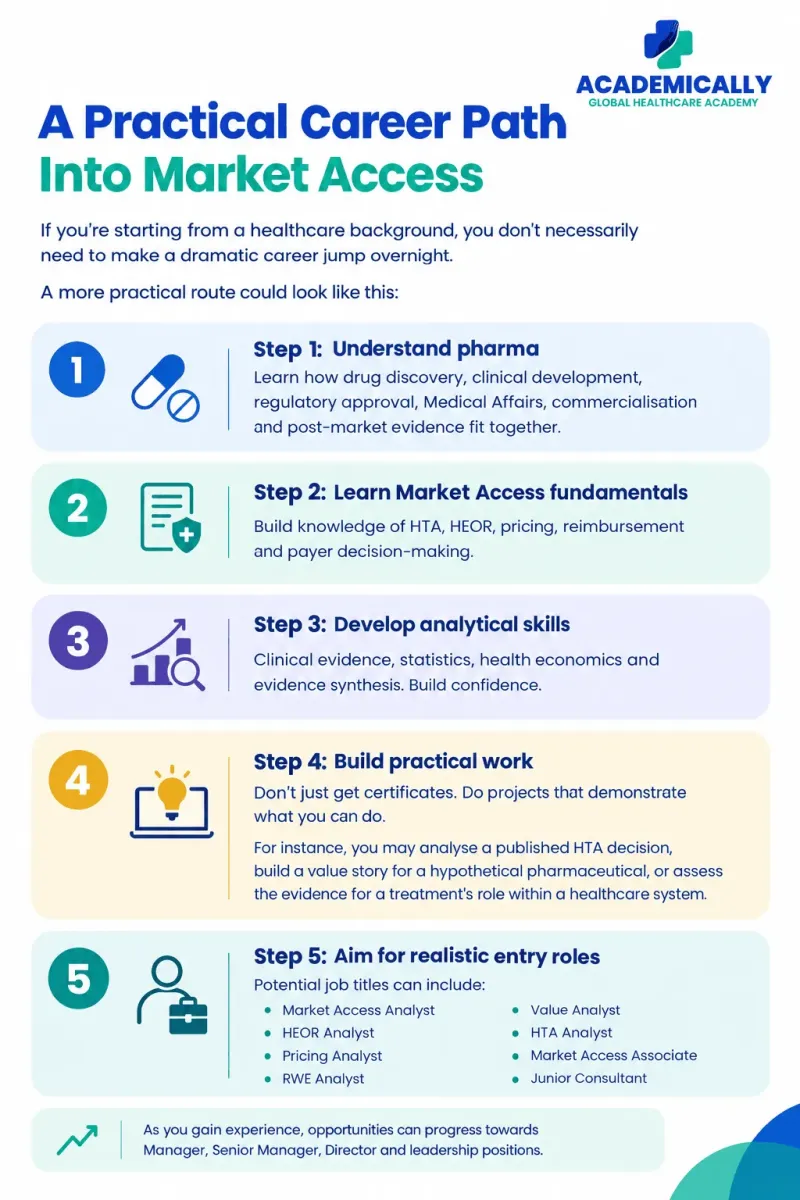
If you enjoy strategic problem-solving and macroeconomic analysis within healthcare, this domain offers rapid career advancement and impressive remuneration packages. Reviewing a completeguide to market access careers in pharma will help you discover how your clinical perspective can drive pharmaceutical commercial success.
3. Medical Affairs & Medical Science Liaison (MSL)
Medical Affairs serves as the scientific bridge between pharmaceutical companies, healthcare providers, and key opinion leaders (KOLs).
Unlike medical representatives who focus on sales targets, MSLs operate on purely scientific grounds. Your clinical background gives you immediate credibility when discussing complex disease mechanisms with doctors, researchers, and regulatory bodies.
To land one of these competitive positions after a career break, apart from learning the skills, you must craft a resume that emphasizes your scientific communication, analytical capabilities, and clinical authority. Understanding how to write a Medical Affairs or MSL resume that gets shortlisted allows you to showcase your clinical background effectively to corporate recruiters.
Take inspiration from the remarkable career journey of Dr. Manasa Shyamala, an MBBS graduate with seven years of rich clinical experience as a Gynecologist and Fertility Consultant.
Success Spotlight: Course Completed: Executive Program in Medical Affairs, Academically Global Healthcare Academy "Healthcare has always been about understanding the science behind conditions to create meaningful patient outcomes. Transitioning into Medical Affairs allowed me to bridge clinical evidence with real-world medical strategy." |
Ready to step into Medical Affairs?
Gain industry-aligned certification, real-world case studies, and corporate networking guidance with Academically's Executive Programme in Medical Affairs. Transform your clinical knowledge into a high-paying corporate career.
4. Medical Writing
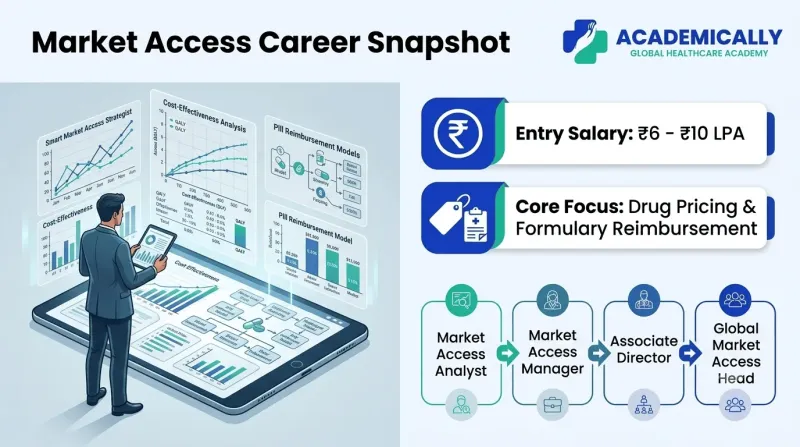
If you possess a knack for structured communication and clear scientific exposition, medical writing offers an exceptional path back into professional work. Medical writers translate complex clinical trial protocols, research manuscripts, regulatory dossiers, and patient education materials into clear, structured documents.
Pharma companies, Contract Research Organizations (CROs), and medical communication agencies actively recruit doctors and pharmacists because you possess native medical vocabulary.
Medical writing offers flexible working arrangements, including full-time remote roles and freelance consulting. This flexibility makes it an attractive choice for professionals rebuilding their careers while managing personal or family commitments.
5. Medical Education Manager
Medical Education Managers design, structure, and oversee educational programs for physicians, pharmacists, healthcare personnel, and sales forces. They collaborate with scientific experts to develop accredited Continuing Medical Education (CME) modules, scientific symposia, and digital learning programs.
In this capacity, you utilize your deep clinical knowledge to curate accurate, engaging, and compliant educational content. You bridge the gap between complex clinical updates and accessible professional training.
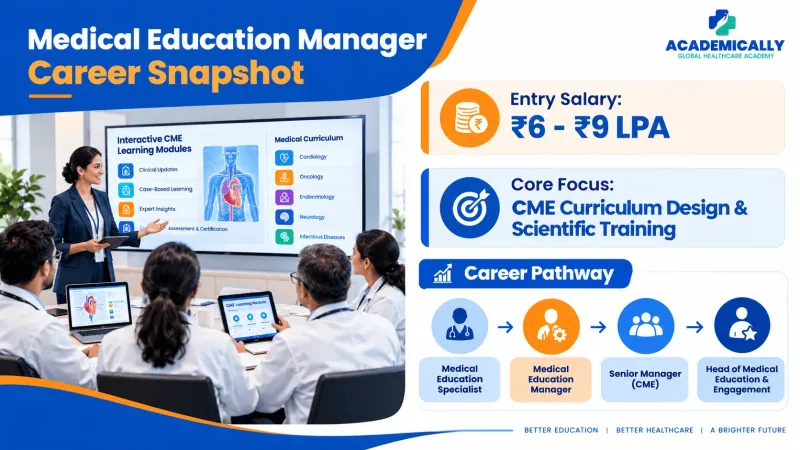
This career choice suits clinicians who enjoy teaching, academic presentation, and instructional curriculum design. Reviewing detailed resources on Medical Education Manager jobs, skills, salary, and career growth will give you clear insights into how pharmaceutical companies and medical societies recruit for these roles.
6. Biostatistician & HEOR
Healthcare generates immense volumes of data. Biostatistics and the field of Health Economics and Outcomes Research deal with statistical analysis plans, evaluate epidemiological trends, and analyse clinical trial outcomes to ensure safety and efficacy.
If you enjoy working with quantitative data, software platforms (such as SAS, R, or Python), and analytical frameworks, this pathway offers excellent job security and competitive compensation. Your clinical background allows you to understand the biological meaning behind data points, enabling you to identify anomalies that purely technical programmers might miss.
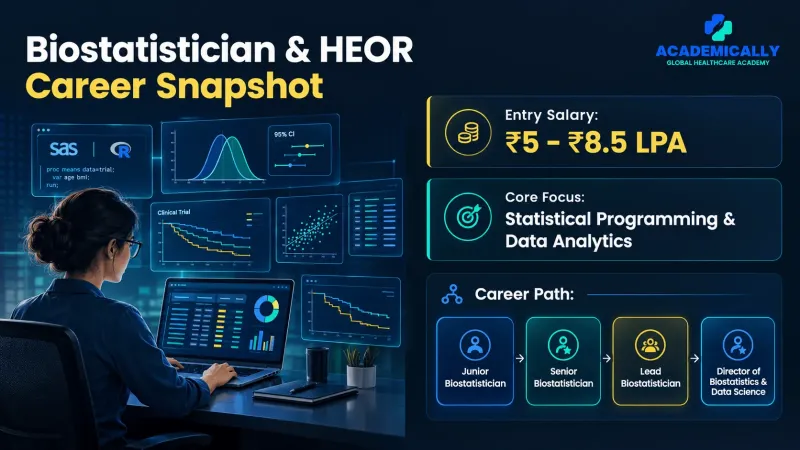
Learn more about biostatistician jobs in clinical research, required skills, and salary expectations to evaluate if this quantitative path fits your career goals.
By learning statistical methodologies and clinical data management software, you can re-enter the workforce in a high-demand, tech-driven role either in Biostatistics or in HEOR.
A quick overview of the careers discussed above:
| Non-Clinical Career Path | Role Description | Target Backgrounds | Key Transferable Clinical Skills |
| Medical Affairs / MSL | Scientific engagement with Key Opinion Leaders (KOLs), medical strategy, data presentation. | MBBS, BDS, PharmD, MD, MPharm | Clinical authority, doctor-to-doctor communication, deep disease knowledge. |
| Medical Writing | Authoring regulatory documents, clinical study reports, publications, and patient literature. | PharmD, MPharm, MBBS, BDS | Understanding medical literature, therapeutic terminology, structured synthesis. |
| Clinical Drug Development | Managing and monitoring Phase I–IV clinical trials, protocol design, patient safety oversight. | MBBS, BDS, PharmD, BPharm | Patient safety assessment, protocol adherence, disease progression monitoring. |
| Market Access | Formulating pricing strategies, health economic evaluations, reimbursement submissions. | PharmD, MPharm, MBBS, BDS, MPH | Understanding treatment pathways, clinical trial endpoints, healthcare cost impact. |
| Biostatistician & HEOR | Statistical programming, biostatistical analysis of trial data, data management. | PharmD, MPharm, MBBS | Biological data interpretation, critical appraisal of clinical data. |
| Medical Education Manager | Designing CME courses, internal sales training, digital educational tools for clinicians. | MBBS, BDS, PharmD, MPharm | Teaching ability, clinical curriculum design, academic presentation skills. |
Salary Expectations Across Experience Levels in India
Corporate healthcare offers strong financial stability, clear performance metrics, and structured salary progression.
The table below outlines compensation structures (in Lakhs Per Annum - LPA) for non-clinical positions across corporate healthcare in India:
| Non-Clinical Career Path | Entry-Level (0–2 Years) | Mid-Level (3–5 Years) | Senior-Level (6+ Years) |
| Medical Science Liaison (MSL) | ₹8 - ₹12 LPA | ₹15 - ₹25 LPA | ₹30 - ₹45+ LPA |
| Medical Writer | ₹5 - ₹8 LPA | ₹10 - ₹18 LPA | ₹20 - ₹35+ LPA |
| Clinical Drug Development (CRA/CTM) | ₹4.5 - ₹7.5 LPA | ₹9 - ₹16 LPA | ₹18 - ₹30+ LPA |
| Market Access Specialist | ₹6 - ₹10 LPA | ₹12 - ₹22 LPA | ₹25 - ₹40+ LPA |
| Biostatistician & HEOR | ₹5 - ₹8.5 LPA | ₹11 - ₹19 LPA | ₹22 - ₹32+ LPA |
| Medical Education Manager | ₹6 - ₹9 LPA | ₹11 - ₹18 LPA | ₹20 - ₹35+ LPA |
Note: Salaries vary based on geographic location, multinational versus regional corporate profile, educational qualifications, and individual negotiation.
How Academically Empowers Your Career Transition
Bridging the gap between clinical healthcare practice and corporate pharmaceutical expectations requires structured guidance.
Many returning doctors and pharmacists struggle with self-doubt, outdated resume formats, and unfamiliar corporate jargon.
This is where Academically transforms your transition journey.
Take Dr. Sireesha’s transition as a prime example. When she connected with Academically, she brought 14 years of clinical practice but lacked corporate exposure. Dr. Akram Ahmad (PhD from the Faculty of Medicine and Health, University of Sydney, Founder & CEO of Academically Global) recognized what so many traditional systems miss: a brilliant doctor who didn't lack competence, but simply needed structured guidance to navigate the pharmaceutical ecosystem.
Academically provides tailored upskilling programs designed specifically for healthcare professionals restarting or pivoting their careers. Through expert-led curriculum, practical case studies, and corporate interview preparation, Academically ensures you do not enter the corporate world as an unprepared candidate, but as a skilled medical expert.
- Targeted Curriculum: Learn industry practices.
- Resume & Portfolio Redesign: Transform clinical duties into corporate-ready metrics.
- Corporate Mentorship: Learn directly from seniors who successfully navigated similar career pivots.
- Interview Coaching: Build confidence with realistic mock corporate interviews, salary negotiation tactics, and business communication training.
There are a lot more success stories of graduates transitioning into well paying non-clinical roles after getting the required guidance from Academically. Watch this video to get a boost of confidence. If they can, so can you.
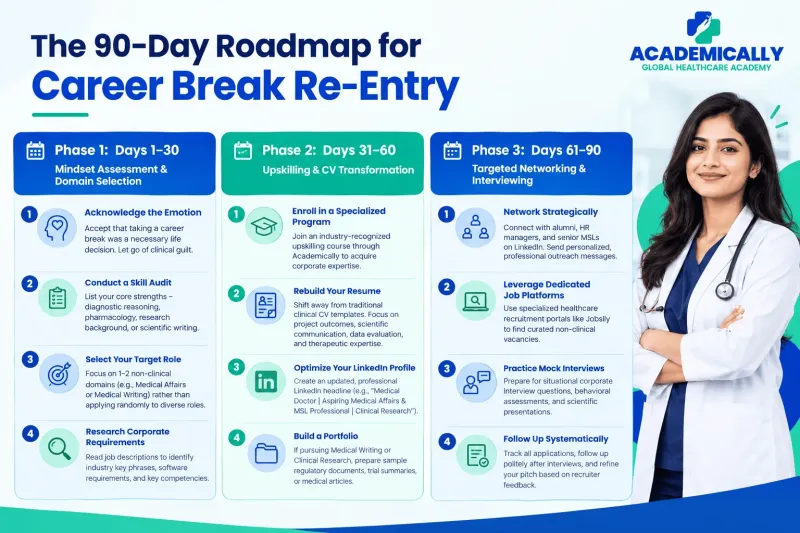
The 90-Day Re-Entry Roadmap for Returning Professionals
To avoid feeling overwhelmed, divide your career restart into structured 30-day phases. Follow this step-by-step roadmap to rebuild your professional confidence and land a high-growth non-clinical role:
Landing Non-Clinical Roles Easily with Jobslly
Navigating conventional job boards can feel frustrating when searching specifically for non-clinical healthcare roles. Generic job sites often clutter search results with unrelated vacancies or unpaid internship projects.
Jobslly provides a centralized platform built specifically for healthcare graduates seeking employment opportunities.
Centralized Job Hub: Access verified non-clinical openings across Medical Affairs, Pharmacovigilance, Medical Writing, Clinical Trials, and Market Access in one place.
Professional CV Assistance: Tailor your resume to meet Corporate Applicant Tracking System (ATS) requirements so your profile gets past automated screeners.
100% Job Guidance: Receive direct job application tracking, corporate referrals, and interview support designed to accelerate your hiring timeline.
By combining structured learning through Academically with job discovery through Jobslly, you gain an end-to-end support system that guides you through every step of your career restart.
Reclaim Your Narrative: Your White Coat Was Just the Beginning
If you are reading this while staring at a gap on your resume, feeling hesitant and uncertain about your future, pause, take a deep breath.
Your break isn't the end of your career, and it definitely does not define your limits. It represents a temporary detour and a chance to reset your professional journey.
Today, Dr. Sireesha works as an Associate Medical Data Review Manager at IQVIA with a ₹14 LPA package from the comfort of her home; present for her daughter while continuing to safeguard patient outcomes worldwide.
It proves that resilience, combined with strategic upskilling, redefines what is possible.
You possess the same capacity to turn your detour into a major career breakthrough. You have it in you. You have to believe in yourself!
The corporate healthcare industry is expanding rapidly, and it desperately needs your clinical perspective, diagnostic mindset, and scientific precision. Move with confidence, invest in your skills, and reclaim what's yours... your future.
Unsure Which Non-Clinical Path Fits Your Goals?
You can book a personalized, one-on-one session with our senior career counsellor today. They will analyse your background, evaluate your transferable skills, and build a tailored roadmap for your corporate career re-entry.