"The future belongs to those who believe in the beauty of their dreams." - Eleanor Roosevelt
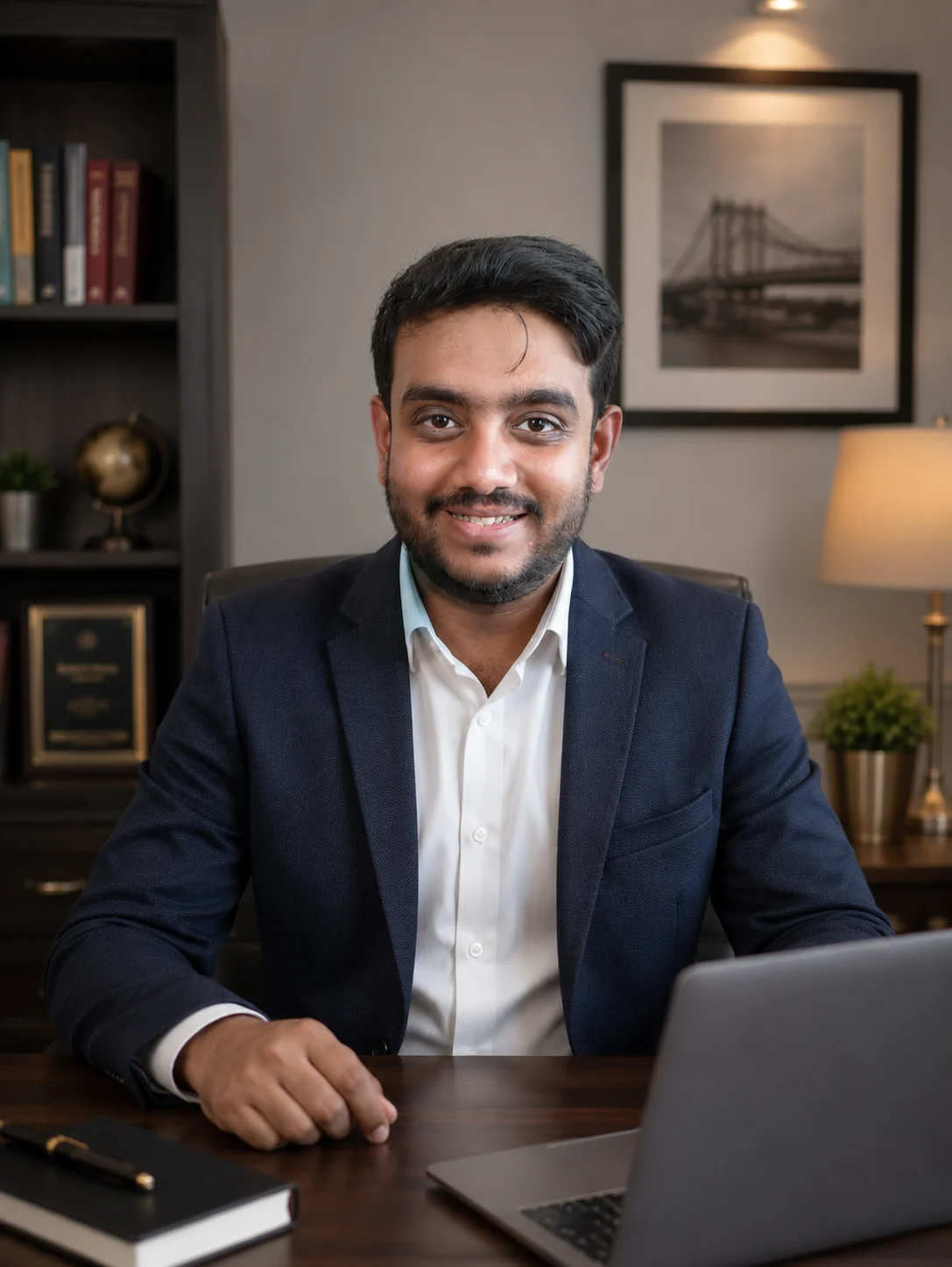
For decades, that belief for AYUSH graduates in India has been squeezed into two narrow boxes. Open a clinic, or chase a government medical officer post that may never come. Dr. Vivek Kumar, a 2013-batch BHMS graduate from Kushinagar, Uttar Pradesh, just proved there's a third path and it pays.
Within three months of enrolling in a non clinical course, he walked into Tata AIA, cracked three rounds of interviews, and walked out with an offer of ₹5 LPA. Not as a medical officer, not as a clinician. As a corporate professional in India's booming insurance and pharma ecosystem.
His story isn't a fluke. It's a signal, one that thousands of BAMS, BHMS, and BUMS graduates need to hear before they spend another year waiting for a government vacancy that statistically may never arrive.
Why AYUSH Graduates Cannot Easily Penetrate the Government Jobs in India
In Uttar Pradesh, the last BHMS-related government vacancy notification came out in 2019. The next one didn't arrive until 2026 and when it did, it carried a total of just 172 vacancies statewide.
Now compare that to the supply side. Nearly every district in Uttar Pradesh now has its own homeopathic medical college. Multiply that across India's AYUSH ecosystem, Ayurveda, Yoga, Unani, Siddha, and Homeopathy and you get thousands of graduates entering the job market every single year, competing for a vacancy count that can be counted on two hands' worth of hundreds.
Dr. Vivek put it simply. The government simply cannot hire everyone. It's not a controversial statement, it's basic arithmetic. Yet an entire generation of AYUSH graduates continues to treat government recruitment as the only legitimate destination for their degree, while a parallel universe of corporate healthcare roles sits largely undiscovered.
Success Story of a BHMS Graduate Who Transitioned into a Non Clinical Career
Dr. Vivek's academic journey started the way it does for many Indian students, not entirely by his own choice. Despite a strong personal interest in science and even scientific research, it was his father's dream that steered him toward medicine. He cleared the CPMT entrance exam and secured a seat in BHMS.
The BHMS curriculum itself is far more comprehensive than most outsiders assume. Beyond homeopathic subjects like Materia Medica, Repertory, Organon, and Homeopathic Pharmacy, students study the same foundational sciences as any allopathic degree: anatomy, physiology, microbiology, biochemistry, pathology, surgery, medicine, ENT, and ophthalmology. The only major exception is allopathic pharmacology. In other words, BHMS graduates carry a genuinely broad medical knowledge base, one that is rarely leveraged outside clinical practice.
After completing his degree, Dr. Vivek didn't want a single year to go to waste, so he pursued a Master of Public Health (MPH) from the University of Lucknow in 2020, largely to keep a postgraduate qualification in hand while researching better career options. He was preparing for medical officer exams when a friend, who had joined a Medical Science Liaison/Medical Affairs course, introduced him to Academically Global.
That single conversation changed everything.
Ask Dr. Vivek what's actually holding AYUSH graduates back, and he doesn't hesitate: it's not a lack of jobs, it's a lack of information. Most students genuinely don't know that pharma companies, insurance firms, and healthcare corporates actively hire AYUSH-qualified doctors for non clinical roles. Roles in medical affairs, clinical operations, medical science liaison work, and drug safety.
Colleges rarely teach this. Corporate communication, professional email etiquette, LinkedIn positioning, resume building for non clinical roles. None of it appears in a standard BHMS syllabus. So students default to what they know. Open a clinic, or wait for a government notification. Dr. Vivek was candid about this gap. Corporate communication skills are almost non-existent among AYUSH graduates by the time they graduate, simply because nobody ever taught them how to write a professional email or build a LinkedIn presence that recruiters can actually find.
This is precisely the gap that structured upskilling programmes are designed to close and it's exactly where Academically Global's Executive Programme in Clinical Drug Development enters Dr. Vivek's story.
How Upskilling Can Help AYUSH/BAMS/BHMS/BUMS Doctors Get a Corporate Job?
Before joining, Dr. Vivek admits his knowledge of the pharmaceutical and clinical research industry was vague at best. He had a rough idea that opportunities existed, but no real understanding of the roles, the extensive experimentation and clinical trial processes involved, or how much time and rigour the industry demands.
The four-month Executive Programme in Clinical Drug Development changed that step by step. It didn't just cover clinical trial fundamentals and drug development processes. It built the exact soft-skill scaffolding that AYUSH graduates are never taught in college:
- Interview readiness
- How to carry yourself in front of a hiring panel?
- When and how to negotiate salary without panicking?
- How to talk about a career switch honestly, without sounding like you're settling for a fallback option.
There was the piece Dr. Vivek called out as the most valuable revelation of the entire course. It is LinkedIn optimization. Two dedicated sessions taught him something most job seekers never consciously think about. It is that every professional on a digital platform leaves a footprint, and if you're not intentionally building that footprint, you're invisible to the recruiters searching for you.
Post consistently, structure your profile systematically, because a recruiter cannot hire someone they cannot find.
This same philosophy of building genuine industry fluency alongside real-world professional readiness runs through Academically's parallel offering, the Executive Programme in Medical Affairs, designed for AYUSH and allopathic graduates alike who want to break into medical affairs, MSL, and scientific communication roles within pharma and healthcare organizations.
Where the Clinical Drug Development programme builds depth in trial design, regulatory processes, and drug safety, the Medical Affairs programme sharpens the communication, stakeholder engagement, and scientific storytelling skills that corporate medical teams actively look for. Together, they map almost exactly onto the two things Dr. Vivek says made the difference for him: technical industry knowledge, and the professional polish to present it.
Clinical vs Non Clinical Career Options for AYUSH Graduates 2026
| Career Path | Employers | Skills Needed | Indicative Salary* | Growth Potential |
| Private Practice | Own clinic | Clinical skills, patient management | Variable (depends on practice) | Slow to moderate |
| Government Medical Officer | State/Central Government | Competitive exam, clinical knowledge | As per state pay scales | Limited vacancies |
| Medical Affairs | Pharma companies | Scientific communication, medical knowledge | ₹5–15+ LPA (entry to mid-level) | High |
| Clinical Research | CROs, Pharma | GCP, clinical trials, documentation | ₹4–10+ LPA | High |
| Medical Reviewer | Pharma, Healthcare companies | Medical review, documentation | ₹5–13+ LPA | High |
| Drug Safety (Pharmacovigilance) | Pharma, CROs | Case processing, drug safety | ₹4–12+ LPA | High |
| Health Insurance Medical Officer | Insurance companies | Medical assessment, underwriting | ₹5–8+ LPA | Moderate to High |
| Medical Science Liaison (MSL) | Pharma, Biotech | Scientific presentations, stakeholder engagement | ₹8–20+ LPA | Excellent |
*Indicative salaries vary based on company, city, experience, qualifications, and skills.
What Happens in an Interview for Non Clinical Jobs
Dr. Vivek's path to Tata AIA started unusually, he travelled from Lucknow specifically for a walk-in interview, and the sheer effort of that journey visibly impressed the panel enough to give him preference over other candidates on the spot.
Round 1: HR Screening: The conversation opened with a direct question: was this a genuine career switch, or was he simply unable to find any other job? Dr. Vivek didn't dodge it. He explained transparently that he was mid-way through a Clinical Drug Development course, an upskilling and job-assistance programme and that the programme itself had recommended he attend this specific walk-in interview.
Salary expectations came up casually, and he stated a minimum expectation of ₹50,000 to ₹60,000 per month. HR countered that they couldn't match that, offering ₹35,000 per month instead, with an overall package of ₹5 lakh annually inclusive of EPF and gratuity.
Round 2: Technical/Medical Knowledge: This round was conducted by a company doctor and focused on core medical reasoning, for instance, how would a candidate diagnose a blockage in the heart, and what investigations would be recommended.
The questions were short-form and practical, testing whether his BHMS-trained medical foundation could translate into corporate healthcare contexts.
Round 3: Final Interest Assessment: The final round wasn't about knowledge at all. It was about conviction. The panel wanted to be certain this wasn't a candidate treating the offer as a backup plan while secretly waiting for a hospital job to come through.
Dr. Vivek was direct. He had no interest in hospital-based clinical work and genuinely saw better growth and a better quality of life in the corporate sector. That honesty, delivered with visible enthusiasm rather than desperation, sealed the offer.
Total time from walk-in interview to job offer. A matter of weeks, arriving within three months of starting his upskilling course.
Personalised Advice for any BHMS/DUMS/BAMS/AYUSH Graduates Looking for Non Clinical Jobs
Dr. Vivek's advice for anyone still on the fence is refreshingly unpolished and practical, and it breaks down into a few concrete lessons every AYUSH student should internalise.
Stop assuming clinical practice is your only option. A BHMS, BAMS, or BUMS degree carries genuine medical knowledge that corporate healthcare, pharma, and insurance sectors actively value, you simply need to know where to look and how to position yourself.
Treat your digital presence as part of your job search, not an afterthought. An invisible LinkedIn profile means recruiters simply never find you, no matter how qualified you are. Systematic, timely posting and a properly structured profile are non-negotiable in 2026's job market.
Be transparent about your career switch, but show real conviction. Every recruiter in Dr. Vivek's process asked, in some form, whether he was genuinely interested or just settling. Honesty about your reasons, paired with visible enthusiasm, consistently outperforms vague or evasive answers.
Structured upskilling compresses years of trial and error into months. Dr. Vivek himself notes that many candidates in his cohort landed jobs within two to four weeks of completing the systematic, step-by-step Clinical Drug Development curriculum and many, including him, continued the course even after securing employment, because the depth of industry knowledge it builds pays off well beyond the first job offer.
Realistic salary negotiation matters more than pride. Dr. Vivek entered expecting ₹50,000-60,000 monthly and settled at a ₹5 LPA package. That's not a defeat. That's a foothold in an industry with far greater long-term earning potential than most clinical government roles offer, especially once you factor in career growth trajectories in medical affairs and clinical operations over a five-to-ten-year horizon.
To Conclude with...
India produces far more AYUSH graduates every year than its government hospitals and health departments can possibly employ. That's not going to change. What can change is how prepared, informed, and digitally visible the next generation of BAMS, BHMS, and BUMS graduates chooses to be.
Dr. Vivek Kumar didn't have a corporate background, a network in pharma, or prior industry exposure. What he had was a willingness to seek out structured guidance, a transparent approach to interviews, and the discipline to complete a systematic upskilling program instead of waiting for a government notification that took seven years to reappear. Within three months, that decision put him inside Tata AIA drawing a ₹5 LPA package, proof that the corporate door for AYUSH graduates isn't locked. It's just rarely pointed out.
If you're an AYUSH doctor wondering whether a corporate career is realistically within reach, the answer from someone who's lived it is simple: it already is. The only question is whether you'll take the same first step Dr. Vivek did.