Ireland is becoming one of the increasingly interesting destinations for internationally qualified pharmacists who want to build their career in Europe. When I talk about moving abroad as a healthcare professional, one of the biggest questions is usually not "Can I do it?" but "How much will the entire process actually cost me and how long will it take?”
That difference is important.
The cost of becoming a pharmacist in Ireland includes qualification recognition, the PSI examination where needed, English-language testing, document verification, travel, immigration and registration. Once employment is found there are also relocation costs like rent, deposits, transport and daily living expenses.
This guide gives a practical Ireland pharmacist cost and timeline breakdown, especially for pharmacists who are qualified outside the EU/EEA, including Indian B.Pharm and Pharm.D graduates.
Who needs to follow the TCQR pathway in Ireland?
The first step is to find out your registration pathway.
Pharmacists who got their qualification outside the EU/EEA usually have to apply through the Third Country Qualification Recognition (TCQR) process for PSI Pharmacy Equivalence Exam with the Pharmaceutical Society of Ireland (PSI). The process checks if the applicant’s qualification and professional skills are suitable for pharmacy practice in Ireland.
Qualified pharmacists therefore need to look at the TCQR route rather than assuming that an Indian pharmacy degree automatically works in Ireland.
The process includes qualification recognition followed by registration. Depending on the result of the assessment an applicant may also need to take the PSI registration examination.
That makes early financial planning significant.
Ireland Pharmacist Registration: The Cost Breakdown
Here is the most useful way to look at the costs: separate mandatory regulatory fees from expenses that depend on your personal situation.
| Expense | Current amount/ planning range | In USD | In INR |
| TCQR Stage 1 application | €500 | $573.82 | INR 54,971.50 |
| TCQR holistic assessment | €1,000 | $1147.63 | INR 1,09,943 |
| Professional examination, if required | Up to €3,000 | Up to $3442.90 | Up to INR 3,29,829 |
| PSI first registration | €698 | $801.05 | INR 76,740.21 |
| English-language test | Variable | Variable | Variable |
| Document certification/ translation | Variable | Variable | Variable |
| Travel and accommodation for examination | Variable | Variable | Variable |
| Employment visa | €1,000, subject to payment arrangements | $1147.63 | INR 1,09,943 |
| Irish employment visa | €60 single entry / €100 multiple entry | $68.86 single entry/ $114.76 multiple entry | INR 6596.58 single entry/ INR 10,994.30 |
| Irish immigration registration | €300, where applicable | $344.29 | INR 32,982.90 |
| Accommodation and living expenses | Highly variable | Highly variable | Highly variable |
PSIs current fee schedule lists €500 for Stage 1, €1,000 for the holistic assessment and €3,000 for the examination stage. These TCQR fees were not increased in the PSIs 2026 general fee increase.
1. TCQR application: €500
The first major cost is the €500 TCQR application fee.
This is paid after the formal application is submitted, following PSIs payment instructions. Applicants should remember that the fees are not paid all at once on day one; payments happen as the candidate moves through the stages.
2. Holistic Assessment: €1,000
Once an application is considered complete and eligible to proceed the holistic assessment fee is €1,000.
This assessment is important because it decides what happens next. Not every applicant goes through the examination in the same way. The result determines if an applicant needs to complete the relevant examination component or components.
A €300 appeal fee can also apply if an applicant appeals a Stage 2 holistic assessment result. That is not a must-have cost. Should be considered a backup rather than part of the main budget.
3. PSI professional examination: up to €3,000
Applicants who need to take the examination should plan for €3,000 under the current PSI fee schedule.
The exam is run by the Royal College of Surgeons in Ireland (RCSI) on behalf of PSI.
The current exam has two parts:
- MCQ, including pharmaceutical calculations and applied pharmacy practice.
- OSCE assessing clinical and professional skills.
Depending on the holistic assessment, candidates may need one part or both. PSI exam results are usually out 4–6 weeks after the exam.
RCSIs current published structure says €2,250 for the MCQ part alone, €2,750 for the OSCE alone and €3,000 when both parts are needed.
4. First PSI registration: €698
Passing the qualification-recognition process does not automatically mean you can start working.
Once your qualification is recognized you still need to register with the PSI.
The PSIs updated fee schedule is that the first registration fee increased from €540 to €698 from 1 May 2026. Renewal registration is currently €491.
That brings the PSI cost to:
€500 + €1,000 + €3,000 + €698 = €5,198
This assumes the applicant has to take the full exam.
At about ₹110/€1 that is ₹5.7 lakh before language tests, documents, travel and relocation.
This is one of the important numbers an Indian pharmacist should know before starting the journey.
English-Language Test Cost
English proficiency is another requirement that should be part of the budget.
Applicants who studied pharmacy outside Ireland need to demonstrate that they have the required language skills unless they meet one of the specified alternative conditions.
The PSI currently accepts tests like IELTS, TOEFL, Cambridge C1 and OET Pharmacy with a level of CEFR C1.
The test fee changes depending on the test, country, centre and format so there is no figure that can be quoted.
My advice is to plan for:
one test attempt + a backup amount for a second attempt.
This matters because PSI needs the scores to meet its rules. A second test can add another fee and more study time. So, to reduce another addition of fees to the process and to save more time you need to prepare in the best manner for first attempt itself. Academically provides English proficiency courses for graduates to improve their English language proficiency to step up with excellence.
Applicants should also know that there is a 2026 change: from 1 June 2026 PSI no longer accepts a university letter saying the pharmacy course was taught in English as proof of language ability.
Document Preparation: The Hidden Cost
Many international applicants focus on PSI fees and forget the smaller costs that come up during document preparation.
Your budget may need to include:
Academic document certification or verification, professional registration documents, certificates of good standing statutory declarations, photos, courier fees, certified translations where needed and other document-related charges.
The exact amount depends on your university, state pharmacy council, country of practice and document needs.
That is why I suggest keeping a document processing buffer rather than thinking the PSI fee is the full cost of recognition.
How Long Does It Take to Become a Pharmacist in Ireland?
This is where applicants need to be especially careful.
There is no guaranteed set timeline from TCQR application to Irish pharmacist registration.
PSI does not show a fixed end-to-end processing time for every TCQR applicant. Application quality, assessment queues, individual results and exam availability can change the journey. PSI exam spots are limited and candidates may not always get a place at the session they apply for.
A realistic planning timeline therefore looks like this:
Step 1: English preparation and documentation
Time needed: around 1–3 months
This stage includes getting your records, professional documents and language test requirements ready.
Candidates who already have their documents in order can shorten this stage.
Step 2: TCQR application
Time needed: depends on the completeness of the application and PSI processing
Your application must be complete and have the required documents before it can move forward.
Incomplete documents can cause delays, which's why document preparation should not be ignored.
Step 3: Holistic assessment
Time needed: varies
Once the application moves to the assessment, PSI checks the applicants qualifications and background.
The result determines whether the applicant needs to move to the exam stage.
Step 4: Examination preparation
Time needed: several months
This is not an official PSI processing period. It is a time frame that applicants can use when making their own plan.
The exam covers applied pharmacy practice, calculations and clinical or professional skills so preparation should be planned and not left to the minute.
Step 5: Examination waiting period
PSI exam results are usually out 4–6 weeks after the exam. The exam calendar also matters.
PSI currently lists a 16–17 February 2027 session with July and September 2027 dates to be confirmed.
Step 6: PSI registration
Once your qualification is recognized and any required exams are done you can apply for registration.
Evidence of language ability must also be sent when applying for registration.
Understanding the cost is half the challenge. The other half is not having a plan that leads to repeated attempts, more travel and lost time.
Academically's PSI Pharmacy Equivalence Exam (TCQR) course is made specifically for non-EU-trained pharmacists getting ready for the process.
The current program has 12 weeks of sessions, 120 hours of live online teaching, 3,000+ recall questions, study materials, mock tests, a final PSI grand test, one-on-one feedback and trainer support until you pass. The program also gives live and recorded learning access to mentors and a preparation group.
The curriculum covers topics like pharmacology, pharmacy practice, basic science and pharmaceutical calculations matching the areas tested in the exam.
For a pharmacist, the benefit of a structured plan is not just academic. An organized attempt can help lower the financial cost from repeated exam fees, extra travel and time away from work.
Immigration Costs After Registration
Registration is one milestone. Moving to Ireland is another financial step.
Pharmacist/ Industrial pharmacist roles are currently included on Ireland's Critical Skills Occupations List.
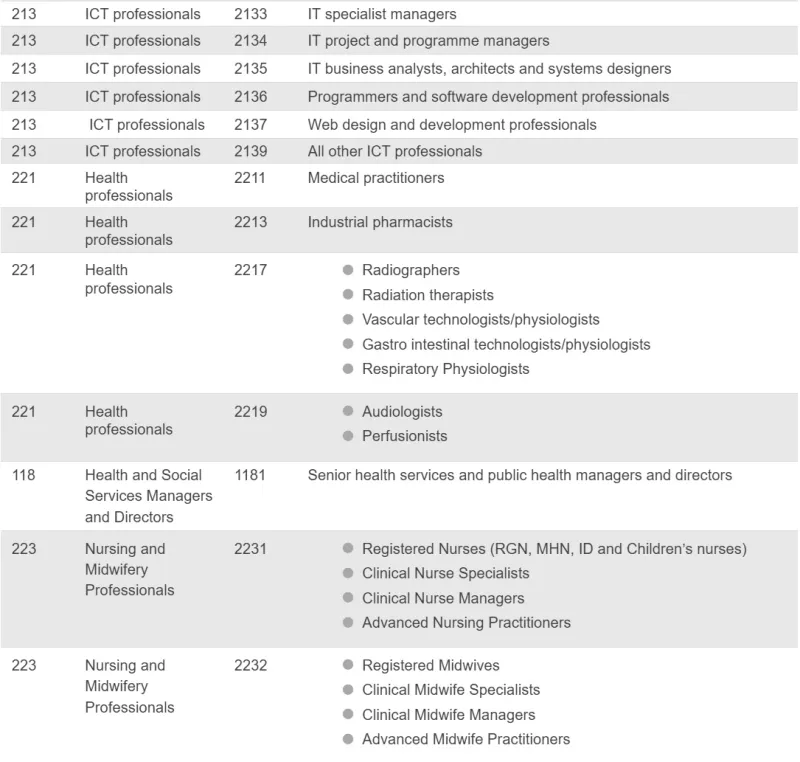
A Critical Skills Employment Permit usually needs a job offer and certain salary conditions. The 2026 minimum annual salary for a CSEP role requiring a degree is €40,904 with specific rules and exceptions, for different categories.
The current CSEP application fee is 1000 euros. The employer or employee can handle payment depending on the situation. When the employer is the one applying, current rules stop the employer from getting permit-related charges back from the person who got the permit.
Irish Visa and Immigration Registration Costs
Visa-required applicants need an employment visa after getting the right employment permission.
Ireland currently has visa fees of:
- 60 euros for a single-entry visa
- 100 euros for a multiple-entry visa
Additional local service charges might happen depending on where the documents are sent.
Applicants can expect an employment visa decision in 8 weeks but processing can take longer if the documents need checking or are not complete.
After arriving in Ireland and registering the immigration permission a registration fee of 300 euros might be needed.
The Biggest Relocation Expense: Accommodation
A real plan cannot ignore housing.
Ireland's rental market changes a lot depending on where you're, what kind of place you want and how available it is.
The RTB/ESRI Rent Index said that the average rent for tenancies in the first quarter of 2026 was 1,839 euros a month.
Dublin can be more expensive depending on the area and the kind of place.
A pharmacist moving alone must decide if the plan includes an apartment, shared living or a place outside the centre of Dublin.
A deposit and advance rent also need to be considered. A landlord usually cannot ask for more than two months rent upfront, which covers a deposit and one months rent in advance.
That means a person renting a place for 1,800 euros a month could need up to 3,600 euros at the start for the deposit and advance rent before buying furniture getting transport and other setup costs.
What Should Your Total Budget Look Like?
A smart budget should have three parts.
Part 1: Professional registration
About 5,198 euros if the full TCQR path, including the 3,000 euros exam stage and 698 euros first registration is needed.
Part 2: Preparation and migration
Add your English test, document checks, translations, exam prep, travel, exam stay, visa and employment-permit costs.
The exact amount changes a lot between people.
Part 3: Relocation emergency fund
Keep enough money to cover housing, food, local transport, insurance and other living costs as you get settled in Ireland and start working.
A smart idea is to have a 3-month living cost reserve, rather than arriving with only enough money to cover the fees.
Final Ireland Pharmacist Cost and Timeline Checklist
Before starting I would keep this checklist next to your financial plan:
Registration: 5,198 euros if the full TCQR path and first registration apply.
Englishtest: Budget separately and check what PSI accepts now.
Documents: Have an amount for certification, verification, translations and courier fees.
Examtravel: Include flights, accommodation and local transport if you need to go for the exam.
Employmentpermit: CSEP fee is 1,000 euros when needed.
Visa: 60 euros for single entry or 100 euros for multiple entry plus possible local charges.
Irish immigration registration: 300 euros when needed.
Housing: Plan for deposit and advance rent plus a few months of living costs.
Timeline: Do not build your plan on a "six-month" or "one-year" promise. TCQR processing, assessment queues and exam dates can change. Use the PSI's current info and exam calendar when planning.
To Conclude with...
Becoming a pharmacist in Ireland is best seen as a -step professional and migration project, not just an exam.
The biggest money mistake is only budgeting for the PSI test. A real plan includes recognition of qualifications, English skills, documents, preparation, registration, immigration and several months of living costs.
The good news is that once the costs are broken into stages the journey is much easier to plan.
Start with the amount you need to finish the professional-registration process. Then build a fund for exam and migration costs. Finally have a relocation fund so you are not financially relying on getting your Irish salary right away.
This way the question changes from "How much does Ireland cost?" to a more useful one:
"How much do I need at each stage and when will I need it?"
That is the financial clarity an international pharmacist needs, before starting the Ireland journey.