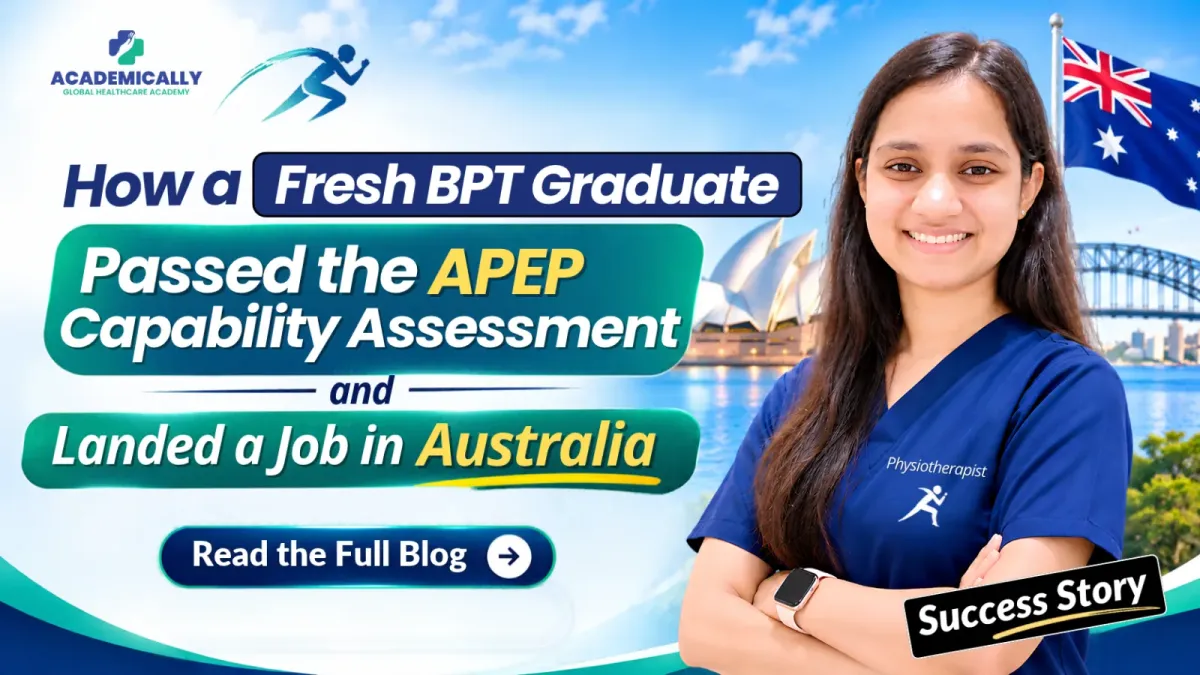
Why Choose Australia for a Physiotherapy Career After BPT?
Many overseas physiotherapy graduates initially consider countries like the UK, Canada, or the US before deciding where to build an international career. Dr. Charul originally planned to move to the UK, but Australia stood out as the more practical option once she aligned her clinical goals with a Master of Health Management degree at Deakin University.
Several practical advantages make becoming a physiotherapist in Australia especially appealing for Indian graduates:
- Strong migration demand: In a recent Subclass 189 visa invitation round, physiotherapists were invited at as low as 70 points, reflecting growing demand across regional areas and the government healthcare sector.
- Better hiring outlook than the UK: With hiring slowdowns across the UK's NHS leaving many international master's graduates returning to India even after spending 40 to 50 lakh INR, Australia offers a steadier settlement outlook.
- Lifestyle and proximity: Being closer to India with a smaller time difference makes staying connected with family far easier during the transition.
- Flexible pathway for freshers: Enrolling in a master's degree in Australia allows fresh BPT graduates to gain local exposure while completing their licensing exams along the way.
How to Prepare for the APEP Written Assessment
Before reaching the APEP Capability Assessment, candidates must clear the written stage, a step many Indian graduates underestimate.
"Just by reading your physiotherapy bachelor's books will not be enough. The written exam is totally about case-based scenarios and what your practical application would be."
Key Differences Between Indian BPT Exams and Australian Physiotherapy Assessments
Indian undergraduate physiotherapy education relies heavily on literature and theoretical recall, whereas Australian assessments test how you apply clinical knowledge to live patient situations. Gaining hands-on clinical exposure while still in India helps considerably, since Australian clinics look for safe clinical practitioners rather than high academic percentages.
The biggest adjustment, however, is cultural and communication-driven:
- Patient safety comes first: A large portion of exam questions evaluate clinical safety and risk awareness.
- Patient autonomy over persuasion: In India, physiotherapists are often taught to convince patients to accept a treatment because it is clinically beneficial. In Australia, care is strictly patient-centered—even if a treatment is the best clinical option, you cannot proceed if the patient declines it.
- Informed consent at every step: Clinicians must be transparent about what they plan to do and seek explicit consent before assessing or even touching a patient.
APEP Capability Assessment Exam Pattern and Format
TheAPEP Capability Assessment functions as an online clinical viva rather than a traditional theory test. Instead of asking whether you remember isolated anatomy facts, assessors present patient scenarios and ask what you would do at that moment or how you would assess the patient.
| Assessment Section | Case Format | Duration | Details |
| Part 1 | 3 short clinical cases | 30 minutes total | Concise, scenario-based clinical questions testing immediate assessment and reasoning. |
| Part 2 | 1 long clinical case | 45 minutes total | Typically includes 5 to 6 structured questions, with possible follow-up questions if time remains. |
Because the exam runs as an online viva with strict time limits 30 minutes for three short cases and 45 minutes for one long case practicing an effective open-book strategy helps you navigate reference materials quickly during the long case without losing momentum.
What Assessors Evaluate in the Online Viva
Assessors grade candidates directly against the criteria listed in the official assessment booklet, focusing heavily on communication, patient safety, and clinical reasoning.
Many candidates worry that the viva panel will feel intimidating, yet Dr. Charul found the opposite. Even though she felt nervous before starting, her assessor was polite, supportive, and actively helped her relax, reminding her to stay calm and take her time so she could think clearly.
Effective Preparation Tips for the APEP Capability Assessment
Clearing the APEP Capability Assessment while balancing full-time university coursework and a job requires active, deliberate practice rather than passive reading.
Dr. Charul relied on three daily habits to build viva fluency:
- Consistent class attendance: Attending every scheduled session diligently kept her preparation structured alongside university deadlines.
- Peer mock vivas: She repeatedly practiced with friends, asking them to throw clinical questions at her as if they were real assessors.
- Self-recording and review: Recording her spoken answers and playing them back helped her spot weak areas in her reasoning, safety checks, and verbal clarity.
How Structured Coaching Helps You Pass Faster
Guided practice makes a measurable difference when converting textbook knowledge into structured viva responses. During her APEP Capability Assessment coaching at Academically, mentors maintained a priority schedule for students whose exam dates were closest, giving them the first opportunity to walk through complete cases from start to finish.
Crucially, other learners in the batch even in a group of seven were never left as silent observers. Mentors directed follow-up questions from the same case to everyone else in the session, ensuring every candidate got regular speaking practice across multiple clinical scenarios.
How to Get a Limited Registration Physiotherapist (LRP) Job in Australia
Securing a supervised Limited Registration Physiotherapist (LRP) position is often the most stressful step after clearing the exams. Dr. Charul began by emailing clinics directly to share her Indian BPT background, her student visa status, and her progress through the licensing process.
Her breakthrough arrived through networking when a fellow Indian graduate introduced her to a clinic that intentionally hires two to four LRPs every year because they understand how challenging it is to secure that first supervised role. Rather than grilling her on textbook trivia, the clinic held a relaxed interview focused on patient interaction and supported her through the extensive registration paperwork.
In-Person Networking vs. Online Applications
Relying solely on job boards like SEEK, Indeed, or cold emails often leads to unanswered applications.
- Deliver resumes in person: Australian clinic owners and practice managers strongly prefer face-to-face meetings and in-person resumes over online submissions.
- Map out local clinics: Compile a list of physiotherapy practices in your area (such as around Melbourne), walk in, and ask to speak briefly with the clinic owner or manager to express your interest.
- Treat job hunting as full-time work: Dedicating one to two focused weeks to visiting clinics consistently produces much stronger results than submitting a few scattered online applications.
Work Culture and Physiotherapist Salary in Australia
Working as a supervised physiotherapist in Australia reveals clear differences in clinical practice, patient engagement, and professional respect compared to India. While core physiotherapy education and therapeutic exercises remain the same, the standard of clinical delivery is markedly different.
- Dynamic 30-minute sessions: Clinic appointments typically last half an hour, requiring you to reassess the patient at every visit and address their primary acute concern for that day—rather than repeating a fixed protocol for one to two months.
- Engaged, compliant patients: Instead of daily clinic visits, patients usually attend once or twice a week, ask informed questions, build rapport, and genuinely follow their Home Exercise Programs (HEPs).
- Strong healthcare culture: Australians actively invest in their physical health, rarely miss appointments outside genuine emergencies, and receive strong support from employers when taking time off work for rehabilitation.
- Mutual respect: Both patients and clinicians are treated with professional respect, allowing physiotherapists to apply their full clinical training with pride.
- Base salary under supervision: A Level 1 physiotherapist (with less than one year of experience) receives a minimum base pay that recently rose to around $31 per hour, though employers can offer higher rates.
Final Tips for Aspiring Physiotherapists
Preparing for international physiotherapy licensing, especially while juggling work, studies, or self-doubt takes grit, but the exams are completely achievable with steady clinical practice. As Dr. Charul shares, nothing worthwhile is effortless, yet if a student can pass both assessments while studying full-time and working, consistent preparation can carry any dedicated BPT graduate across the finish line.
Start Your Physiotherapy Career in Australia with Academically
Transitioning from an Indian physiotherapy degree to practicing in Australia takes far more than revising undergraduate textbooks. Between adapting to Australian standards of patient safety and informed consent, mastering case-based clinical reasoning, and practicing the live online viva format of the APEP Capability Assessment, preparing without structured guidance can feel overwhelming especially alongside university classes or clinical work.
Yet, as Dr. Charul’s journey demonstrates, even fresh graduates without years of prior clinical experience can clear both assessments and step into a rewarding, supervised Limited Registration Physiotherapist (LRP) role in Australia with the right mentorship.
At Academically, our comprehensive APEP Preparation Course is built to bridge the gap between theoretical knowledge and Australian clinical standards:
- Case-based exam training: Learn how to approach real clinical scenarios with the exact safety checks, communication frameworks, and clinical reasoning Australian assessors expect.
- Interactive small-batch mock vivas: Practice speaking through full short and long cases with priority scheduling before your exam date and active follow-up drills in every session.
- End-to-end pathway support: Get step-by-step guidance from initial eligibility and written exam prep through the APEP Capability Assessment and your transition into Australian practice.
Enroll in Academically’s APEP Preparation Course today or connect with our healthcare career counsellors for a free one-on-one consultation to plan your next step.